Trust During War: How Ukraine Can Catch Up with Norway and Spain in Justice Rankings












In EU countries such as Spain and France, the level of trust in the police and courts traditionally far exceeds the rating of political parties. In Ukraine, however, the war has created a unique demand for maximum trust, yet there is a huge gap between citizens' personal experience in courts and the media perception of the system.
For a democratic state at war for survival, trust in institutions is not just a sociological indicator but an element of national security. Without citizens' trust in the police and courts, effective resource mobilization, law enforcement, and economic functioning are impossible.
International experience, particularly from OECD countries, shows a clear pattern: in stable democracies, law enforcement agencies and the judiciary are perceived as a foundation standing above political fluctuations. However, in Ukraine, the situation is much more complex and dynamic. From 2022 to 2026, we observe a transformation of social expectations, where the demand for justice becomes critical.
Police and courts are trusted more than politicians: what European countries' experience shows
In most European countries, citizens' trust in the police and judicial system significantly exceeds trust in political institutions. Such trends are demonstrated by sociological studies in Spain, France, Germany, Austria, and Norway.
In Spain, about 61% of citizens trust the police, while courts are trusted by 45%. At the same time, political parties have the lowest level of public support. Nevertheless, a significant portion of Spaniards express doubts about the impartiality of courts in high-profile cases involving senior officials: about 77% believe there may be risks of political influence in such processes.
In France, the level of trust in the police is about 67%, and in the judicial system — 50%. For comparison, only 34% of citizens trust the government, and 33% trust the parliament.
Even higher figures are recorded in Germany and Austria. In Germany, trust in the police ranges between 77–80%, and in courts — from 60 to 70%. In Austria, both institutions enjoy trust from over 80% of the population, which experts associate with low corruption levels, high professional standards, and judicial independence.
Norway is one of the European leaders in trust in the rule of law institutions. According to various estimates, about 81% of citizens positively assess the work of law enforcement and the judicial system.
A common feature of the European model is the perception of the police and courts as independent institutions tasked with ensuring security, law enforcement, and fair trial regardless of which political force is in power. Stability, professionalism, and independence of these bodies are key factors for a high level of public trust.
Media vs Real Experience
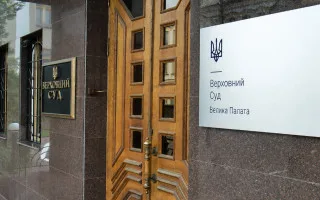
As of early 2026, Ukraine has a unique situation. The level of trust in the judicial system among the general population remains low — about 17-20%. However, detailed analysis reveals striking discrepancies.
The phenomenon of public trust in Ukraine's justice system is characterized by a deep gap between how the system is perceived by the population through the media lens and how it is evaluated by direct participants in court proceedings and legal professionals.
A significant portion of Ukrainians assess the work of the judicial system not based on their own experience but under the influence of information from media and social networks. Experts identify this as one of the main factors affecting the level of trust in justice.
According to research, about 45% of citizens admit that their attitude toward courts is mainly shaped by reports in mass media and social networks rather than personal experience in court proceedings.
Influence of "Opinion Leaders"
It is quite common that justice is de facto carried out not in courtrooms but by bloggers or civic activists on social media, creating a distorted image of the judiciary.
In the public space, situations increasingly arise where assessments of court decisions are formed even before the cases are concluded, and discussions on social networks effectively replace legal analysis.
A separate problem is the spread of populist approaches to covering court work. In such cases, criticism of individual court decisions often turns into personal attacks on judges, which experts believe negatively affects the perception of the judicial system as a whole.
Research also indicates a low level of trust in the motives guiding judges when making decisions. Only 17% of respondents believe judges primarily act according to the law. Meanwhile, 26% are convinced that personal gain is the main motive.
However, forming an objective assessment of the judiciary's work requires access to verified information, familiarity with full texts of court decisions, and distinguishing facts from public evaluations spread in the information space.
Experience Changes Attitudes: Court Participants Trust Courts Much More
Personal experience interacting with the judicial system significantly influences the level of trust in courts. Research results show a noticeable difference between the assessments of citizens who have participated in court proceedings and those who form their opinion solely from the information space.
According to studies, only about 11% of respondents have personal experience participating in court hearings. This category of citizens demonstrates a significantly higher level of trust in the judicial system.
Specifically, 71% of court participants consider the decisions made in their cases lawful and fair. These figures differ substantially from the general population's assessments, among whom trust in the judiciary traditionally remains lower.
Research also shows that among citizens who directly interacted with courts, the balance of trust in the system is positive, ranging from 16% to 26%. For comparison, among the general population, this indicator remains negative.
Experts note that one indirect indicator of trust in a court decision is the reaction of the parties after the case is concluded. If participants do not appeal the verdict, it may indicate its perception as lawful and fair, although this alone is not an unconditional confirmation of trust in the judiciary.
Personal experience with courts often forms a more balanced view of their work than information obtained from media or social networks.
Legal Professionals Trust Courts More: Research Results
Representatives of legal professions demonstrate a significantly higher level of trust in the judicial system than the general population. These conclusions were reached by researchers who analyzed assessments from prosecutors, lawyers, bailiffs, and other justice participants.
According to survey results, the highest level of trust in the judiciary is recorded among prosecutors — 79%. Among lawyers, 70% trust courts, and among bailiffs — 66%.
The study also revealed significant differences in perceptions of the motives guiding judges when making decisions. While only a small portion of the general population believes judges primarily act according to the law, among legal professionals, from 41% to 60% of respondents share this view depending on the professional group.
Judicial independence was also separately assessed. Most surveyed legal professionals believe that basic guarantees of judges' immunity are ensured in Ukraine and that conditions for their professional activity are adequate.
Experts explain this difference by the fact that lawyers work daily with the judicial system, have direct experience in court proceedings, and can evaluate its work considering legislative requirements and judicial practice, not only based on the public information field.
Impact of War on the Trust System
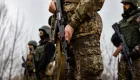
The full-scale Russian invasion has significantly affected Ukrainians' attitudes toward state institutions. Against the backdrop of war, the highest level of public trust remains with the Ukrainian Defense Forces. According to sociological research, about 90–94% of citizens trust the Armed Forces of Ukraine. High trust levels also remain for the Main Intelligence Directorate and the President of Ukraine.
At the same time, studies highlight changes in attitudes toward the judiciary. Compared to 2020, distrust in courts has decreased by approximately 9%. In wartime conditions, the judicial system is increasingly perceived as one of the elements of state functioning and law enforcement.
At the same time, the full-scale war has created new challenges for the judicial system. Among the main problems are increased court workloads, lengthy case consideration periods, and the need for effective documentation and judicial review of war crimes. Society increasingly expects fair punishment for those guilty of crimes related to Russian aggression.
Further strengthening of trust in the judicial system requires comprehensive changes.
Among the priority steps are the development of professional dialogue between judges, law enforcement agencies, lawyers, and the expert community. Open communication and interaction within the professional community are important prerequisites for enhancing the legitimacy of the judiciary.
Another direction may be the development of court specialization. According to surveys, 58% of Ukrainians support the restoration of military courts. Supporters of this idea believe that specialized judicial institutions will allow more effective consideration of cases related to military service and war crimes.
Experts also emphasize the need for modernization. In their opinion, courts should more actively use official social media pages, podcasts, messengers, and other digital channels to explain court decisions and counter disinformation.
An important reform direction remains communication between the judiciary and society and digitalization. Further development of state electronic services, registries, and automation of certain procedures, particularly in enforcement proceedings, can reduce human factor influence, increase transparency of government bodies, and lower corruption risks.
In summary, it can be stated that Ukraine is on the path to a European model of trust, where law enforcement and judicial systems become service-oriented and apolitical institutions. For a country at war, "maximum trust" is not the absence of criticism but the presence of constructive partnership between media, society, and authorities.
Subscribe to our Telegram channel t.me/sudua and to Google News SUD.UA, as well as to our VIBER and WhatsApp, Facebook page and Instagram to stay updated on the most important events.