A summons does not mean automatic assignment to any military unit: what conscripts need to know


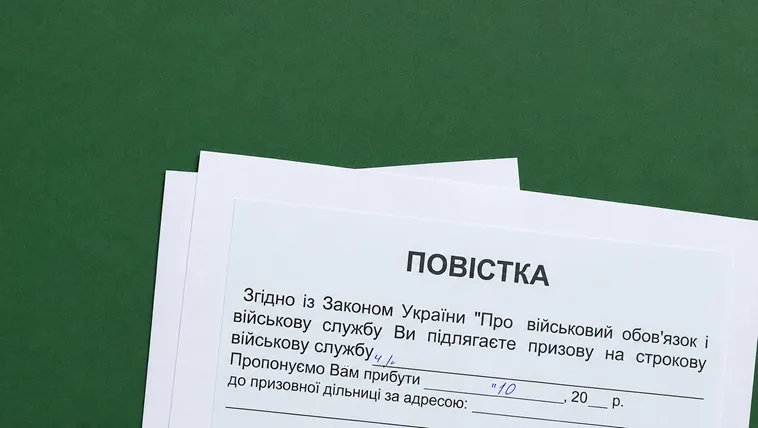










Many Ukrainians still perceive receiving a summons as the moment after which any opportunity to independently determine the place of military service is completely lost. In fact, this is not entirely true. The legislation regulating mobilization, as well as the recruitment system actively operating in Ukraine, provide the possibility to independently choose a military unit even after receiving certain types of summonses.
At the same time, this right exists only at a certain stage of the mobilization procedure. After passing the military-medical commission and receiving a mobilization order, the situation changes, and the ability to choose a unit effectively ceases. That is why it is important for conscripts to understand what types of summonses exist, what obligations they impose, and when it is still possible to use the recruitment mechanism.
What receiving a summons means
The procedure for delivering summonses is defined by the Resolution of the Cabinet of Ministers of Ukraine dated May 16, 2024, No. 560 (as amended), and the issues of military service are regulated by the Law of Ukraine "On Military Duty and Military Service" and the Law of Ukraine "On Mobilization Preparation and Mobilization."
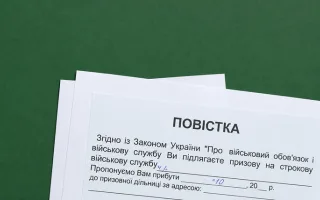
A summons is an official document by which the territorial recruitment and social support center calls a conscript to fulfill the duties defined by law. According to the provisions of Cabinet Resolution No. 560, a summons may be delivered personally, sent by registered mail, or generated through the Unified State Register of conscripts, conscripts, and reservists.
An electronically generated document has the same legal force as a paper form. Its authenticity is confirmed by a QR code that can be verified through electronic services.
At the same time, receiving a summons automatically imposes an obligation on the citizen to appear at the territorial recruitment center at the specified date and time. Ignoring the summons may have both administrative and criminal consequences depending on the type of summons received.
Types of summonses and when you can still independently choose a military unit
Ukrainian legislation provides for several types of summonses, and it depends on their purpose whether a conscript can still exercise the right to independently determine the place of service. The most common is a summons to clarify military registration data. It does not mean automatic mobilization and is issued to verify or update information about the conscript, undergo certain procedures, or be sent to the military-medical commission. At this stage, a person still has the opportunity to contact the recruitment center, choose a specific military unit, review available vacancies, and have an interview with representatives of the unit where they wish to serve.
Recruitment center specialists accompany the candidate at almost all stages—from the first consultation and choice of military specialty to the actual arrival at the designated unit. This approach helps avoid situations where a serviceman after mobilization receives a specialty that does not match their skills. For example, medics can be assigned to medical units, IT specialists to communications or cyber defense units, lawyers to legal services, and mechanics to repair companies. After the candidate’s approval, the recruitment center maintains contact with the conscript practically until their arrival at the military unit.
However, the situation changes drastically after passing the military-medical commission. If the conscript has already received a mobilization order, commonly called a "combat summons," it is no longer possible to independently choose a military unit through the recruitment system. Such a document means that the decision to assign to a specific unit has already been made, and the person must arrive at the designated place of service within the established timeframe.
Therefore, it is better not to delay contacting recruitment centers if a person plans to serve in a specific brigade or specialty. After the mobilization procedure moves to the next stage, the possibility of such a choice is no longer provided by law.
At the same time, recruitment does not exempt a conscript from the obligation to comply with mobilization legislation. If you have received a summons, you are obliged to appear at the territorial recruitment and social support center on the specified date and time, even if you are already undergoing selection through the recruitment center.
Is it necessary to appear at the TRSC if you have already found a military unit
One of the most common questions among military candidates is whether it is possible not to come to the TRSC if there is already an agreement with a specific brigade. The answer is unequivocal—no. According to Article 22 of the Law of Ukraine "On Mobilization Preparation and Mobilization," conscripts are obliged to appear upon the call of territorial recruitment and social support centers within the deadlines specified in the summons. Simply participating in recruitment does not exempt a person from this obligation.
On the contrary, recruitment center representatives recommend immediately informing TRSC staff that the candidate is already undergoing selection for a specific military unit. This allows the chosen service direction to be taken into account during further document processing.
If a conscript ignores the TRSC summons without valid reasons, the recruitment procedure may be terminated, and the person risks administrative or even criminal liability depending on the type of summons. That is why it is better not to oppose recruitment to mobilization.
In fact, these mechanisms work in parallel: recruitment helps determine the future place of service, and the territorial recruitment center ensures the fulfillment of all procedures provided by law.
What liability is provided for failure to appear on a summons
A summons may also be sent to the place of residence address indicated by the reservist or conscript during the clarification of registration data. If the reservist or conscript does not clarify their place of residence address, the summons may be sent to their registered place of residence. Men will have three days to collect the registered letter from the TRSC at the post office.
If the summons was signed for but the person cannot come to the TRSC within the required time, they must, as soon as possible but no later than three days from the date and time specified in the summons, notify the TRSC of the reasons for non-appearance by contacting the TRSC indicated in the summons or by any other means, with subsequent arrival within a period not exceeding seven calendar days.
Valid reasons for non-appearance include:
- natural disaster
- illness
- military actions and their consequences
- other circumstances that made it impossible to arrive at the specified place and time
- death of a close relative (parents, spouse, child, siblings, grandfather, grandmother) or a close relative of the spouse.
Non-appearance circumstances must be documented. If you did not receive the summons, evidence that the summons was indeed not delivered to you is required—for example, a certificate from the post office about the absence of the summons or a notification of its undeliverability. Then you can contact the TRSC, and the violation will be removed.
If a summons was properly delivered—personally or by mail—the person can be considered duly warned by the head of the TRSC about the consequences of non-appearance provided for by Articles 210, 210-1 of the Code of Ukraine on Administrative Offenses, as well as Articles 336, 337 of the Criminal Code of Ukraine.
In cases of violations of military registration rules, defense legislation, mobilization preparation, and mobilization, offenders face an administrative penalty in the form of a fine ranging from 17,000 to 25,500 hryvnias. In addition, a person who did not appear on a summons may be declared wanted.
Criminal liability arises in cases provided for by the Criminal Code of Ukraine, in particular for evasion of conscription during mobilization (Article 336 of the Criminal Code of Ukraine) or for other acts directly defined by law.
Ignoring a combat summons is evasion of conscription during mobilization. This entails not administrative but criminal liability under Article 336 of the Criminal Code of Ukraine, with imprisonment from 3 to 5 years.
In conclusion, receiving a summons does not yet mean that a person automatically loses the opportunity to influence their future place of service. That is why it is better not to delay contacting recruitment centers for those planning to join the Defense Forces. The earlier a person decides on the place of service and completes the necessary documents, the greater the chance to be assigned to the unit where their knowledge and professional skills will be most useful for the country’s defense.
Subscribe to our Telegram channel t.me/sudua and to Google News SUD.UA, as well as to our VIBER and WhatsApp, our pages on Facebook and Instagram to stay informed about the most important events.