When Bees Become a Problem for Neighbors: What Violations Can Lead to a Beekeeper's Fine


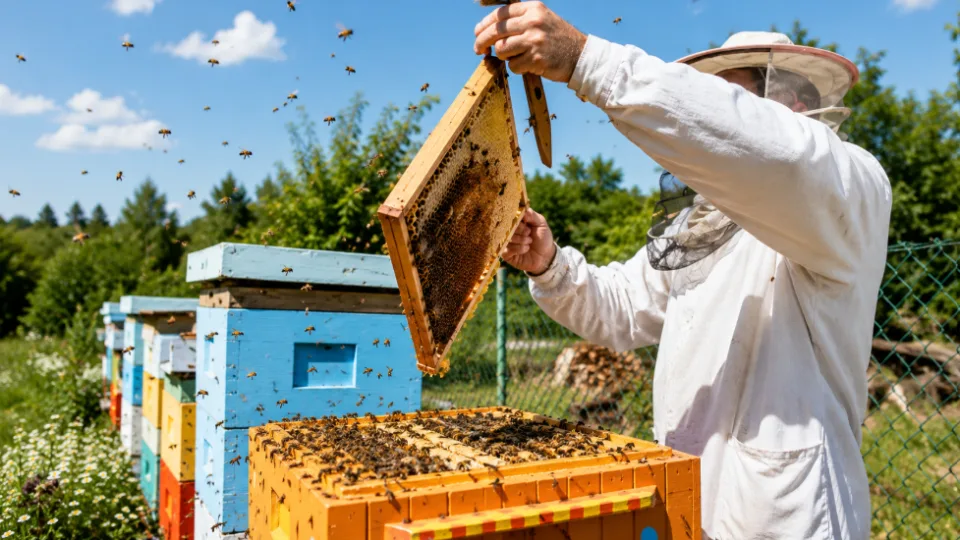










Despite the common belief that a landowner can place a beehive on their property without restrictions, Ukrainian legislation sets a number of mandatory requirements for its arrangement and maintenance. Failure to comply with these rules can lead not only to administrative liability but also to a court dispute with neighbors.
If a beehive poses a real threat to people’s lives or health or violates established veterinary and sanitary requirements, the court may oblige the owner to eliminate such violations, and controlling authorities may hold them administratively liable.
Who Has the Right to Engage in Beekeeping
According to Articles 11–13 of the Law of Ukraine "On Beekeeping," the right to keep bees and engage in beekeeping belongs to Ukrainian citizens, foreigners, stateless persons who have the necessary skills or special training, as well as legal entities.
No separate permit from an executive authority or local government body is required to engage in beekeeping.
An individual forms a beehive from bee families, which may include auxiliary premises, inventory, and equipment. The beehive is located on a land plot owned or used by the person.
The law does not set limits on the maximum number of bee families that individuals or legal entities may keep.
At the same time, each beehive must have a veterinary-sanitary passport issued for the registration of beehives and the implementation of preventive and therapeutic measures.
Additionally, the beehive must be registered at the place of residence of the individual or the location of the legal entity in the local council, following the procedure defined by the central executive authority in the field of agricultural policy.
Requirements for Beehive Placement
The requirements for placement, arrangement, maintenance, feeding, and breeding of bees are defined by the Instruction on the Prevention and Elimination of Bee Diseases and Poisoning, approved by the order of the Chief State Inspector of Veterinary Medicine of Ukraine No. 9 dated January 30, 2001.
According to clause 1.3 of the Instruction:
- The territory of a stationary beehive must be fenced and planted with fruit trees and bushes;
- When determining the area for the beehive, it should be calculated that one bee family requires 30–35 m², depending on the method of bee placement;
- If the beehive is located on a household plot, it must be fenced with a solid fence at least 2.5 meters high to raise the flight level of bees above people.
Are There Distance Requirements from the Beehive to a Neighbor’s House?
Current legislation does not establish a minimum distance at which a beehive must be located from residential buildings or neighboring land plots.
Likewise, the law does not prohibit placing beehives on household land plots.
However, the absence of such restrictions does not exempt the beehive owner from complying with other legal requirements, including veterinary-sanitary rules and good neighborliness rules.
Can a Beehive Owner Be Fined?
Yes. If the beehive owner violates the legal requirements for its maintenance, they may be held administratively liable.
One example is a case considered by the courts of Khmelnytskyi region, where the beehive owner was held administratively liable under Article 107 of the Code of Ukraine on Administrative Offenses.
Judicial Practice: Neighbor Demanded to Limit the Number of Bee Families Due to Health Threat
A resident of one of the villages in Kamianets-Podilskyi district of Khmelnytskyi region filed a lawsuit to eliminate violations of good neighborliness rules due to a beehive located on the neighboring land plot.
The plaintiff stated that bees constantly sting him, and due to an allergic reaction, the stings pose a real threat to his health.
Following the man’s complaint, the State Service of Ukraine on Food Safety and Consumer Protection conducted an inspection and found that 12 bee families were placed on a 120 m² household plot.
During the inspection, it was established that:
- The beehive was not registered;
- There was no solid fence;
- Laboratory tests were not conducted.
For the identified violations, the beehive owner was held administratively liable under Article 107 of the Code of Ukraine on Administrative Offenses and fined.
Despite paying the fine, the beehive owner did not respond to the city council’s letter regarding the need to comply with good neighborliness rules. According to the plaintiff, when he raised concerns about the bees and tree trimming, the neighbor responded with threats of physical violence.
Therefore, the man asked the court to oblige the neighbor to:
- Keep bees at a rate of no more than one bee family per 30 m²;
- Fence the beehive with a solid fence;
- Or remove it;
- And also cut down five trees growing too close to his property.
What Did the Courts Decide?
The Dunaivtsi District Court of Khmelnytskyi region partially satisfied the claim in case No. 674/169/24.
The court obliged the beehive owner to:
- Maintain bees at this address at a rate of 30–35 m² per bee family;
- Fence the beehive with a solid fence at least 2.5 meters high.
The beekeeper filed an appeal, arguing that the law does not establish a distance from the beehive to neighboring buildings, and the plaintiff did not prove that it was his bees that stung him.
He also claimed that keeping a beehive itself does not violate the neighbor’s right to safe living conditions, and the local court’s decision effectively deprives him of the opportunity to engage in beekeeping.
Why Did the Appellate Court Uphold the Decision?
The panel of judges of the Khmelnytskyi Appellate Court agreed with the conclusions of the court of first instance.
The court noted that the requirements of the Instruction on the Prevention and Elimination of Bee Diseases and Poisoning provide for the necessity of:
- Approval of land allotment for beehive placement;
- Compliance with the norm of 30–35 m² per bee family;
- Installation of a fence at least 2.5 meters high on the household plot.
In fact, the defendant placed 12 bee families on an area of 120 m², meaning only 10 m² per bee family instead of the 30–35 m² required by the Instruction, and the beehive was not properly fenced.
The appellate court also rejected the argument that the plaintiff did not prove the stings came from the defendant’s bees. The court noted that the beehive owner did not provide evidence of other beehives nearby.
Moreover, the court recognized that the location of the beehive on the adjacent land plot poses a health threat to the plaintiff, who has an allergic reaction to bee stings, and therefore he has the right to protect his rights in court.
Subscribe to our Telegram channel t.me/sudua and to Google News SUD.UA, as well as to our VIBER and WhatsApp, our pages on Facebook and Instagram to stay updated on the most important events.