Monetary allowance of a missing serviceman cannot be considered as income for alimony — Supreme Court


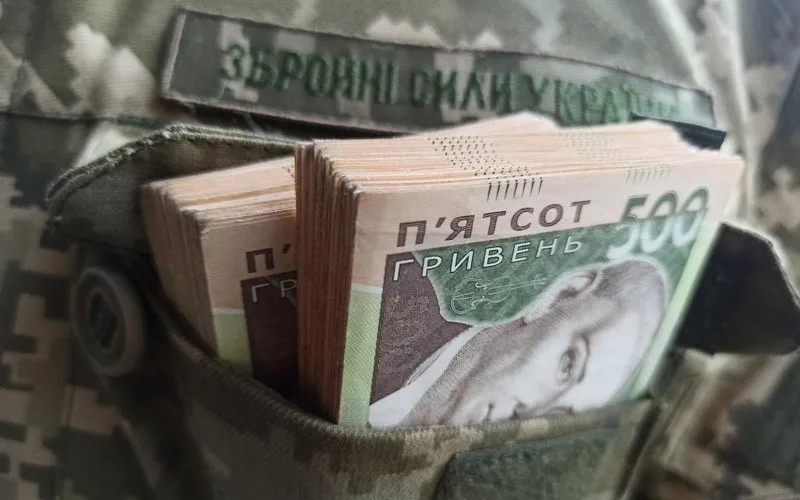










Payments received by a family member as the monetary allowance of a missing serviceman, by their legal nature, remain the personal property of the latter. Since alimony calculated as a share of earnings must be based solely on the actual income of the debtor, this state aid cannot serve as a basis for calculating the debtor’s alimony obligations.
These conclusions were reached by the Supreme Court in the composition of the panel of judges of the First Judicial Chamber of the Cassation Civil Court.
In the case under review, the dispute arose due to the claimant’s appeal against the actions of the state executor, who, when calculating alimony arrears, did not include in the debtor’s (father’s) total income the monetary allowance of his eldest son, a serviceman missing in action, which the father actually received from the military unit.
The court of first instance partially satisfied the complaint, obliging the executor to recalculate the alimony taking these payments into account. However, the appellate court overturned this decision, explaining that the funds received by the father from the military unit as allowance for the missing son are the personal property of the serviceman, not the debtor’s income from which alimony for the younger child should be withheld.
The Cassation Civil Court of the Supreme Court left the appellate court’s ruling unchanged and made the following legal conclusions.
According to parts 1, 3, 4, 6, 8 of Article 71 of the Law of Ukraine "On Enforcement Proceedings," the procedure for collecting alimony is determined by law. The executor collects alimony from the debtor in the amount specified by the enforcement document, but not less than the minimum guaranteed amount provided by the Family Code of Ukraine.
The determination of the amount of alimony arrears awarded as a share of earnings (income) is made by the executor in the manner established by the Family Code of Ukraine.
According to parts 1 and 3 of Article 195 of the Family Code of Ukraine, alimony arrears awarded as a share of earnings (income) are determined based on the actual earnings (income) that the alimony payer received during the period when alimony was not collected, regardless of whether such earnings (income) were received in Ukraine or abroad.
According to part 6 of Article 9 of the Law of Ukraine "On Social and Legal Protection of Servicemen and Their Families," as amended at the time the son was declared missing, servicemen captured as prisoners of war or hostages, as well as interned in neutral states or missing, retain payments in the amount of the official salary at the last place of service, military rank allowance, length-of-service bonus, other monthly additional types of permanent monetary allowance, and other types of monetary allowance considering changes in length of service and monetary allowance norms. The families of such servicemen receive monthly monetary allowance, including additional and other types of monetary allowance, in the manner and amounts established by the Cabinet of Ministers of Ukraine.
Thus, the monetary allowance of missing servicemen may be paid, in particular, to: the serviceman’s parents; servicemen from the day of release from captivity or hostage status; and may be included in the inheritance.
The Cassation Civil Court of the Supreme Court noted that, as a general rule, the monetary allowance is paid from the military unit’s appropriations directly to the serviceman undergoing military service. The fact that the state pays these funds to the family members of a missing defender does not change the legal nature of these funds as the property of the serviceman himself.
Therefore, monetary assistance to families of missing defenders is not a type of income to be considered when calculating alimony obligations. Such payments are a special social guarantee supporting the military family and are not included in the list of incomes from which funds are legally withheld for another child.
Reference to the ruling of the Cassation Civil Court of the Supreme Court dated July 22, 2026, in case No. 211/3391/20 (proceeding No. 61-7452св26).
Subscribe to our Telegram channel t.me/sudua and to Google News SUD.UA, as well as to our VIBER and WhatsApp, Facebook page and Instagram to stay informed about the most important events.