Does the Right to Alternative Service Apply During Mobilization: The Grand Chamber Will Consider the Jehovah's Witness Case


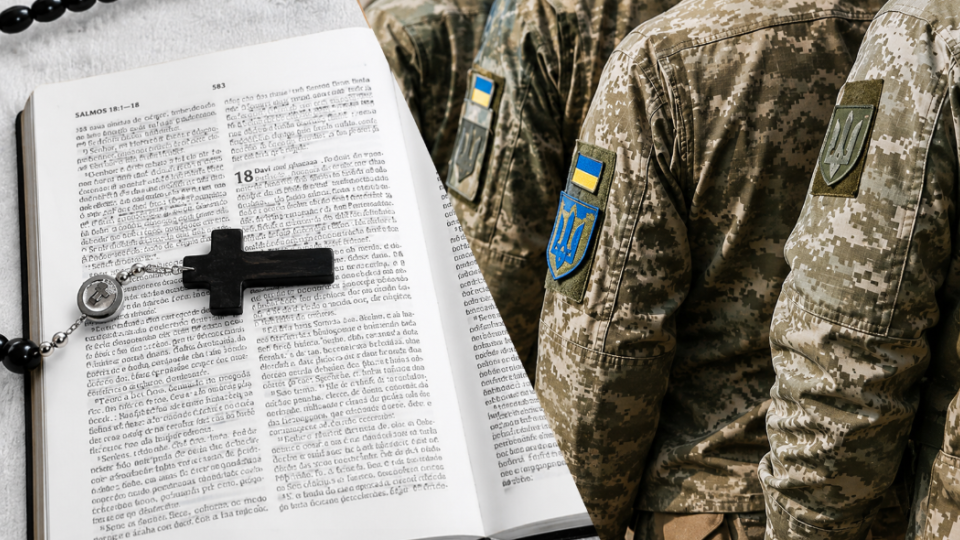










The Criminal Cassation Court of the Supreme Court referred the case of a serviceman — a member of the religious organization Jehovah's Witnesses, convicted of unauthorized leaving of a military unit during martial law — to the Grand Chamber. The panel of judges concluded that the case contains an exceptional legal issue that requires the formation of a unified approach regarding the implementation of the right to alternative (non-military) service during mobilization and its correlation with criminal liability for military offenses.
Circumstances of the case
According to case materials No. 676/2395/25, the Kamianets-Podilskyi City District Court of Khmelnytskyi region found the serviceman guilty under Part 5 of Article 407 of the Criminal Code of Ukraine and sentenced him to five years imprisonment. The Khmelnytskyi Court of Appeal upheld the verdict.
The courts established that the man served in the military by conscription during mobilization as a cadet of a training unit. In January 2025, he left the military unit's location without command permission and stayed at his place of residence until March 2025. These actions were qualified as unauthorized leaving of a military unit for more than three days, committed under martial law conditions.
In the cassation appeal, the defense insisted that the convicted person is a member of the Religious Association of Jehovah's Witnesses, and his religious beliefs do not allow him to perform military service. The lawyer referred to Article 35 of the Constitution of Ukraine, according to which the fulfillment of military duty should be replaced by alternative (non-military) service if it contradicts the citizen's religious beliefs. The defense also argued that the state did not provide a mechanism to realize such a right for persons mobilized during martial law.
Position of the lower courts
The courts of first and appellate instances rejected these arguments. They reasoned that the Law "On Alternative (Non-Military) Service" provides for the possibility of alternative service instead of compulsory military service, but does not establish such a mechanism for military service by conscription during mobilization for a special period.
Moreover, the courts took into account the legal conclusion of the United Chamber of the Criminal Cassation Court of the Supreme Court, set out in the ruling dated October 27, 2025, in case No. 573/838/24. It stated that Ukrainian legislation does not provide for the possibility of refusing conscription military service during mobilization on religious grounds, and such beliefs do not exempt a person from criminal liability for evading mobilization.
Why the case was referred to the Grand Chamber
Considering the defense's motion, the panel of the Criminal Cassation Court of the Supreme Court concluded that the case contains an exceptional legal issue significant for the development of law and the formation of a unified law enforcement practice.
The court noted the provisions of Article 35 of the Constitution of Ukraine, international treaties, the practice of the European Court of Human Rights, the UN Human Rights Committee, decisions of the Constitutional Court of Ukraine, and the Venice Commission's opinion of March 2025 regarding the implementation of the right to alternative service under martial law conditions.
In particular, the panel noted that the Presidential Decree on the introduction of martial law does not include the right to freedom of worldview and religion, guaranteed by Article 35 of the Constitution of Ukraine, among the rights that may be restricted. The court also cited international standards according to which the right to conscientious objection to military service is part of freedom of conscience and religion, and the state must provide appropriate mechanisms for its implementation.
Separately, the panel drew attention to the Venice Commission's opinion of March 18, 2025, which indicated the inadmissibility of completely excluding alternative service even during martial law and emphasized that a person refusing military service on grounds of conscience cannot under any circumstances be forced to carry or use weapons.
The court also considered the defense's arguments that as of February 2026, there were 1,044 criminal proceedings against individual Jehovah's Witnesses related to refusal of military service due to religious beliefs. According to the panel, this indicates not only a qualitative but also a quantitative criterion of an exceptional legal issue.
What the Supreme Court decided
The Criminal Cassation Court did not decide on the guilt or innocence of the convicted person and did not review the legality of the verdict on the merits.
Instead, the court granted the defense's motion and referred the criminal proceedings to the Grand Chamber of the Supreme Court.
Thus, the Grand Chamber is to consider the legal issues raised in the case and formulate a legal position regarding the application of constitutional guarantees of freedom of religion, the right to alternative service, and criminal law norms under conditions of mobilization and martial law.
The ruling of the Criminal Cassation Court of the Supreme Court is final and not subject to appeal.
Subscribe to our Telegram channel t.me/sudua and to Google News SUD.UA, as well as to our VIBER and WhatsApp, our page on Facebook and on Instagram to stay informed about the most important events.