Is the mere fact of property destruction sufficient to terminate ownership rights — the Grand Chamber will determine a unified approach


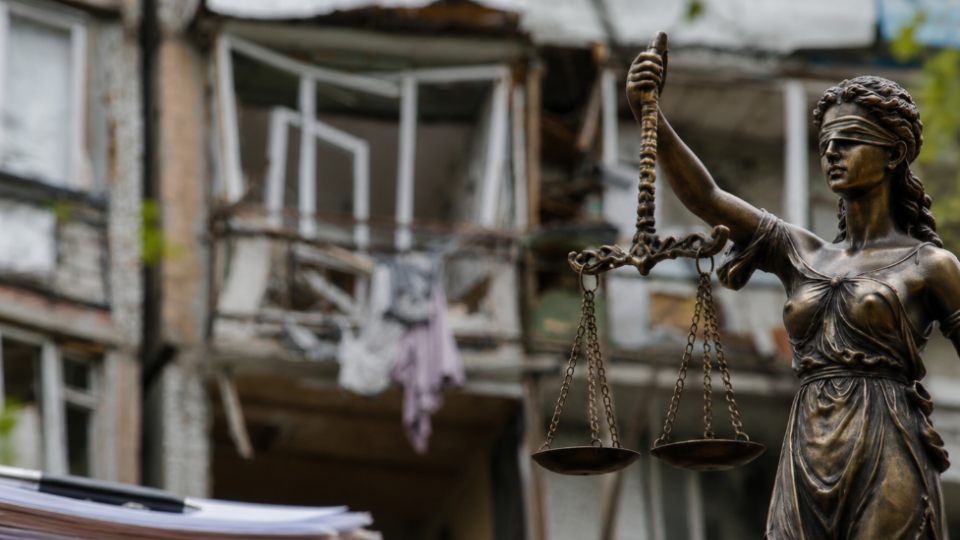










The panel of judges of the Civil Cassation Court of the Supreme Court referred to the Grand Chamber of the Supreme Court a case concerning the consequences of the destruction of immovable property and the termination of ownership rights to it. The reason for the referral was the existence of different legal approaches in the Supreme Court's practice regarding the appropriate method of judicial protection in such disputes.
Case circumstances
The dispute arose after the dismantling in Odesa of a non-residential premises with an area of 43.2 sq. m, whose owner applied to the court.
The plaintiff claimed that she lawfully acquired the premises in 2018, and the ownership right was registered in the State Register of Property Rights. According to her, local government authorities repeatedly received information that the disputed object was immovable property and not a temporary structure, yet in October 2021 the district administration dismantled it. The owner requested to recognize these actions as illegal, to oblige not to hinder the restoration of the premises, and to recover over UAH 703,000 in restoration costs.
The Odesa City Council filed a counterclaim. It stated that the disputed object was completely destroyed by fire in November 2020, and therefore the ownership right to it ceased according to Article 349 of the Civil Code of Ukraine, although the record about it remained in the State Register of Property Rights. Additionally, the city council noted that the initial state registration of ownership was based on a court ruling that was later annulled, and the declaration of readiness of the object for operation contained false information. Considering this, it requested to recognize the ownership right as terminated and to close the corresponding section of the State Register of Property Rights.
Decisions of the courts of first and appellate instances
The court of first instance, whose conclusions were upheld by the appellate court, denied the plaintiff's claim and satisfied the counterclaim of the Odesa City Council.
The courts established that the disputed object was completely destroyed by fire on November 7, 2020. After the fire, another structure appeared in the same place, but no permits for its construction were issued. This object was dismantled in October 2021 based on the district administration's order. At the same time, the courts concluded that the documents that initially formed the basis for the ownership right to the non-residential premises did not comply with legal requirements, since the court ruling approving the settlement agreement was later annulled, and the declaration of readiness for operation contained false information.
Under these circumstances, the courts recognized the plaintiff's ownership right to the non-residential premises as terminated from November 8, 2020 — after its destruction by fire.
Why the Civil Cassation Court of the Supreme Court referred the case to the Grand Chamber
When considering the cassation appeal, the panel of judges of the Civil Cassation Court did not resolve the dispute on the merits. Instead, it concluded that the case should be referred to the Grand Chamber of the Supreme Court to ensure uniformity of judicial practice.
The panel noted that currently there are different approaches in the Supreme Court's practice regarding the application of Article 349 of the Civil Code of Ukraine.
One approach, set out in a number of rulings of the Commercial Cassation Court, is that ownership rights terminate by the mere fact of property destruction. Under this approach, a claim to recognize ownership rights as terminated may be filed not only by the owner but also by any person if the existence of the ownership record violates their rights or legitimate interests. State registration in this case only confirms the legal fact of termination of the right, not its creation.
At the same time, in the Commercial Cassation Court's ruling dated February 18, 2026, a different approach was formulated. It stated that the proper method of protection is a claim to cancel the state registration of ownership rights with the closure of the corresponding section of the State Register of Property Rights, rather than a claim to recognize ownership rights as terminated.
Position of the Civil Cassation Court of the Supreme Court
The panel of judges of the Civil Cassation Court noted that to ensure uniformity of judicial practice, the Grand Chamber of the Supreme Court must determine the proper method of protection in disputes of this category. For this reason, the panel deemed it necessary to refer the case to the Grand Chamber to resolve the issue of the possibility of departing from the conclusion set out in the Commercial Cassation Court's ruling of February 18, 2026.
In the ruling, the panel expressed the position that the condition for termination of ownership rights under Article 349 of the Civil Code of Ukraine is the established fact of property destruction, i.e., such an impact on the object that causes it to cease to exist. Also, according to the panel, the law does not limit the circle of persons who may file a claim to terminate ownership rights: such a claimant may be not only the owner of the property but also any person whose rights or legitimate interests are violated by the existence of such a right. The final conclusion on this issue is to be made by the Grand Chamber of the Supreme Court.
The Civil Cassation Court referred case No. 947/38633/21 to the Grand Chamber of the Supreme Court.
Subscribe to our Telegram channel t.me/sudua and to Google News SUD.UA, as well as to our VIBER and WhatsApp, our pages on Facebook and Instagram to stay updated on the most important events.