300 Electricians, Plumbers, and Welders Must Be Ready 24/7 to Eliminate the Consequences of Attacks: The Cabinet of Ministers Launches New Rules


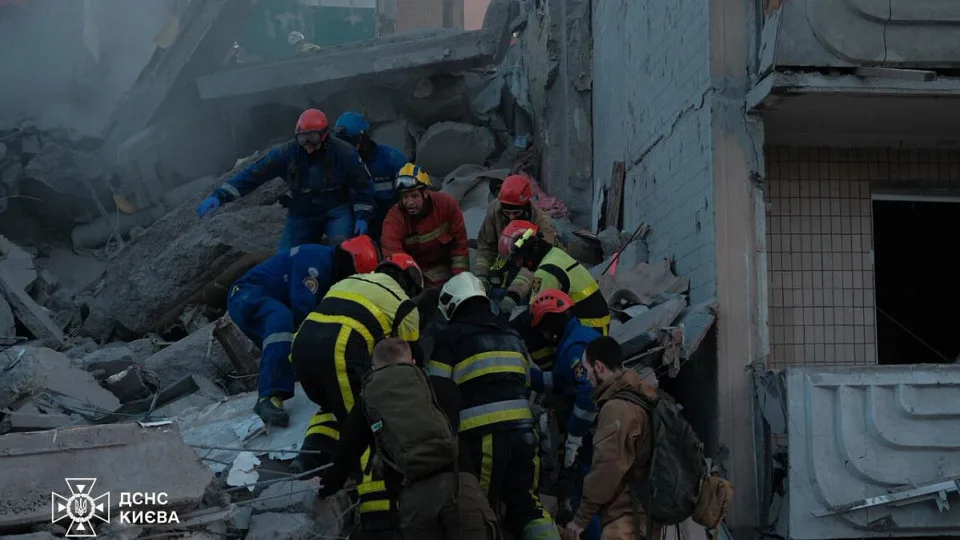










After thousands of Russian shelling incidents, the rapid restoration of residential buildings, water supply, heating networks, and other critical infrastructure has emerged as one of the key challenges. In order to expedite the recovery process after attacks, the Cabinet of Ministers passed resolution No. 909, initiating a two-year experimental project to establish national recovery brigades. These brigades will not only consist of employees from "Ukrzaliznytsia" but also include specialists from other enterprises involved in emergency recovery operations nationwide.
On July 8, the Cabinet of Ministers adopted resolution No. 909 titled "On the implementation of an experimental project for the formation of national recovery brigades, their participation in emergency recovery operations, and the elimination of the aftermath of shelling and emergencies." The experimental project will span two years, with the Ministry of Community and Territorial Development assigned as the coordinator.
The plan involves setting up mobile units that can swiftly travel to regions following Russian attacks or other emergencies to restore crucial facilities.
The resolution outlines specific areas of work that the national brigades may be
-
engaged in, such as restoring heating supply
-
systems, water supply
-
networks, sewage
-
systems, housing
-
stock, and dealing with the consequences of
-
attacks and other emergencies.
A notable innovation is that these units will not only comprise employees of JSC "Ukrzaliznytsia." The brigades may include employees from any legal entities, irrespective of ownership, provided they possess the required expertise and are willing to participate. Participants in the experiment include JSC "Ukrzaliznytsia," regional and Kyiv city military administrations, local self-government bodies, housing and communal services enterprises, condominium associations, housing construction cooperatives, and private enterprises.
The resolution stipulates a minimum of 300 participants in the national brigades, who will be organised into separate teams with varying numbers and skill sets based on the specific
task at hand. Emphasising round-the-clock readiness, the resolution requires the brigades to be available 24 hours a day for deployment following a decision to engage them.
Decisions to involve
the brigades will be made by the head of operations for mitigating state-level emergencies, the State Commission on Technogenic and Environmental Safety and Emergencies.
Additionally, the brigades can be commissioned to work after requests from military administrations, local councils, and regional administrations.
The document clarifies that representatives from the State Emergency Service of Ukraine will not be part of the national recovery brigades, highlighting a division of responsibilities between rescue operations conducted by SES and emergency restoration work managed by the national brigades.
Funding for the
project will come from various sources, including the state budget, local budgets, and other lawful avenues. Urgent work may initially be financed by "Ukrzaliznytsia" or other participating entities, with reimbursement possible upon submission of payment documents.
In practical terms, the government aims to establish a unified mechanism for swift response to the aftermath of large-scale attacks. Instead of individual communities independently seeking specialists following attacks, the state will have a pool of professional teams ready to be deployed promptly where needed. If the experiment proves successful, the Ministry of Development will propose legislative amendments to institutionalise this mechanism permanently.
Despite its name, the national recovery brigades are not a new state entity or separate service. They are temporary emergency response units established within the experimental project, comprised of employees from "Ukrzaliznytsia" and other enterprises, solely tasked with specific emergency recovery missions.
A significant aspect of the resolution is the inclusion of legal entities of any ownership form in emergency recovery work. This means that private construction companies, energy sector enterprises, water utilities, heat and communal energy companies, and other organisations with relevant expertise can participate in the
project voluntarily. Involvement of employees in the brigades will be based on the enterprise’s request.
While the document directly addresses the consequences of Russian armed aggression, its scope extends beyond this. The resolution permits the brigades to be utilised for addressing other emergencies as well, not limited to missile or drone strikes but also encompassing large-scale accidents in communal networks or natural disasters, subject to appropriate decision-making processes.
Subscribe to our Telegram channel t.me/sudua, follow SUD.UA on Google News , and join us on VIBER, WhatsApp, Facebook and on Instagram to stay informed about the important events.