The Supreme Court explained whether the village council has the right to oblige residents to install electricity meters


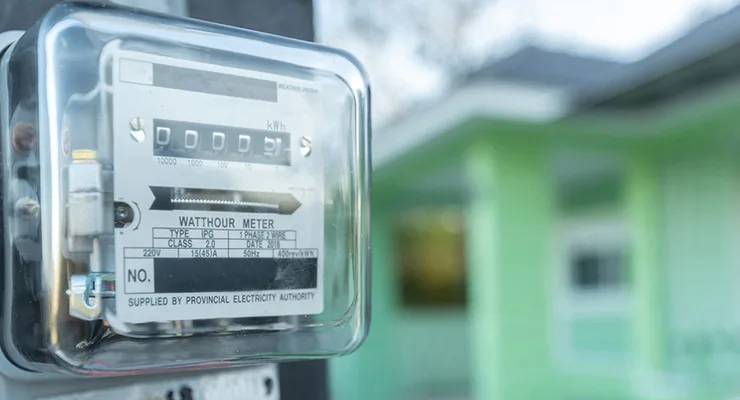










The Supreme Court, sitting as the Cassation Administrative Court, considered a case regarding the legality of certain provisions of the decision of the Divychky Village Council, which obliged residents of apartment buildings to install electricity metering devices, as well as determined the procedure for distributing the cost of electricity among consumers who do not have individual meters. The court examined whether the village council acted within its powers when adopting the relevant regulatory decision.
Case Summary
The dispute arose after the Ministry of Defense of Ukraine transferred part of the property of a military town, including six apartment buildings, to the communal ownership of the territorial community in 2019.
After accepting this property, the Divychky Village Council adopted decision No. 1085-24-VII dated February 6, 2020, which approved the Procedure for reimbursing costs for the provision of electricity, water supply, sewage, and heat supply services.
In particular, the decision stipulated the obligation of consumers to install electricity and water supply metering devices. Additionally, for buildings not equipped with individual meters, a procedure was established to determine the volume of electricity consumed as the difference of the imbalance between the readings of the general building meter and the total readings of individual metering devices, with subsequent distribution among consumers who did not install meters.
The plaintiff argued that the village council exceeded its powers because the legislation does not grant local self-government bodies the right to impose on consumers the obligation to install electricity meters or to determine a different calculation procedure for electricity than that provided by special legislation. He also sought compensation for moral damages.
Court Decisions
After the dispute was transferred to administrative jurisdiction, the Kyiv District Administrative Court partially satisfied the claim. The court recognized as unlawful and invalid the provision of the village council's decision that imposed on residents of apartment buildings the obligation to install commercial electricity metering devices. At the same time, the court denied other claims, including the cancellation of provisions on the procedure for distributing electricity imbalance and compensation for moral damages.
The Sixth Administrative Court of Appeal agreed with these conclusions and left the decision unchanged.
Legal Position of the Supreme Court
The Supreme Court emphasized that according to Article 19 of the Constitution of Ukraine, local self-government bodies and their officials are obliged to act exclusively on the basis of, within the powers, and in the manner defined by the Constitution and laws of Ukraine.
The panel of judges noted that legal relations in the field of production, transmission, distribution, purchase and sale, supply, and consumption of electricity are regulated by special legislation, including the Law of Ukraine "On the Electricity Market," the Commercial Electricity Metering Code, Retail Electricity Market Rules, and other regulatory legal acts adopted to implement these laws.
The court concluded that none of the mentioned regulatory legal acts provide local self-government bodies with the authority to impose on consumers the obligation to install individual commercial electricity metering devices. Therefore, the Divychky Village Council, by adopting the relevant provision of its decision, exceeded the powers granted to it by law, and thus it was lawfully recognized by the courts as unlawful and invalid.
At the same time, the Supreme Court agreed with the conclusions of the lower courts regarding the absence of legal grounds for canceling the provision of the Procedure concerning the determination of electricity consumption volumes in buildings not equipped with individual metering devices. The court noted that the contested provision itself does not establish new rules for the functioning of the electricity market or the procedure for commercial metering but only defines the mechanism for distributing the imbalance among consumers in the absence of individual meters.
Moreover, the Supreme Court agreed with the refusal to compensate for moral damages. The panel of judges noted that the plaintiff did not prove the fact of such damage, the causal link between the adoption of the contested decision and negative consequences, nor justified the amount of the claimed compensation.
The Supreme Court also denied motions to issue separate rulings concerning the Cabinet of Ministers of Ukraine, the presence of signs of a criminal offense, and the actions of judges, stating that these issues are not subject to consideration in this administrative case.
As a result of the cassation review, the Supreme Court dismissed the cassation appeal and left the appellate court's ruling unchanged.
The ruling comes into legal force from the date of its adoption, is final, and not subject to appeal.
Subscribe to our Telegram channel t.me/sudua and to Google News SUD.UA, as well as to our VIBER and WhatsApp, our page on Facebook and on Instagram to stay informed about the most important events.