The court obliged the State Migration Service to issue a child a passport-book: why the refusal was recognized as unlawful


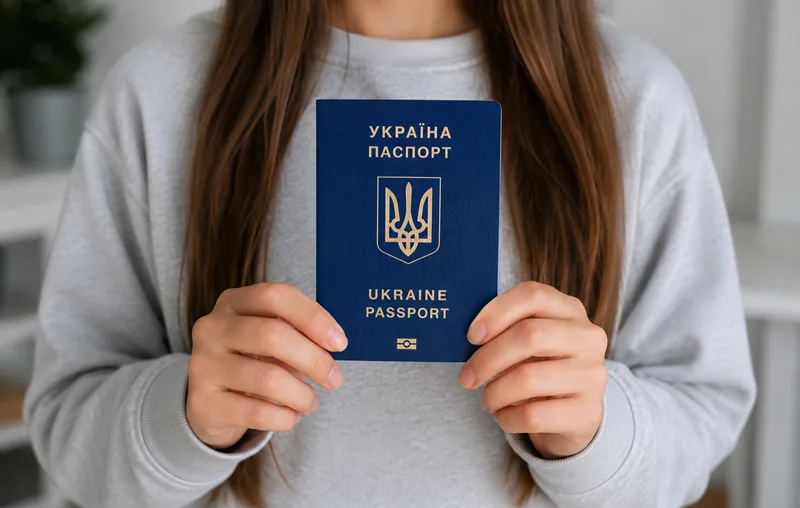










The Rivne District Administrative Court considered administrative case No. 460/6122/26 on the claim of a mother acting in the interests of a minor child against the territorial unit of the State Migration Service of Ukraine regarding the recognition of the refusal to issue a Ukrainian citizen’s passport in the form of a booklet as unlawful and the obligation to issue such a document. The court concluded that the SMS’s requirement to provide a prior court decision as a condition for issuing a passport in booklet form is not based on law, and therefore the refusal is unlawful.
The essence of the case
The mother of the minor child applied to the territorial unit of the State Migration Service with a request to issue a Ukrainian citizen’s passport in the form of a passport booklet in accordance with the Regulation on the passport of a citizen of Ukraine, approved by the resolution of the Verkhovna Rada of Ukraine dated June 26, 1992, No. 2503-XII. At the same time, the applicant informed about her refusal to issue a passport in the form of an ID card.
The SMS refused to issue the passport in booklet form, stating that the issuance of such a document is possible only if there is a court decision that has entered into legal force obliging the migration service to issue a Ukrainian citizen’s passport of the 1994 model. The absence of such a decision was indicated as the basis for refusal.
Disagreeing with this refusal, the plaintiff applied to the administrative court, believing that the actions of the territorial body of the SMS violate the child’s right to receive a passport in booklet form, as provided by current legislation. The defendant insisted in the response that the application was submitted in violation of the procedure established by law, and therefore there were no grounds for issuing a passport without the relevant court decision.
The court’s position and conclusions
The court noted that Ukrainian legislation provides for two forms of the Ukrainian citizen’s passport — a passport booklet and a passport card. At the same time, the Regulation on the passport of a citizen of Ukraine No. 2503-XII explicitly defines the possibility of issuing passports both in booklet form and in card form.
Analyzing the provisions of the Constitution of Ukraine, the Law of Ukraine "On the Unified State Demographic Register and Documents Confirming Citizenship of Ukraine, Identity or Special Status," the Law of Ukraine "On Personal Data Protection," and the Regulation on the passport of a citizen of Ukraine, the court pointed out that the legislation does not regulate the consequences of a person’s refusal to process personal data and effectively leaves no alternative for persons who do not consent to such processing. According to the court, the implementation of state functions should be carried out without forcing a person to consent to the processing of personal data, and citizens who refuse such processing should have the opportunity to use traditional methods of personal identification.
The court also took into account the legal conclusions of the Grand Chamber of the Supreme Court set out in exemplary case No. 806/3265/17. In this decision, the Grand Chamber concluded that the provisions of Law No. 5492-VI effectively narrowed the citizen’s right to receive a passport in booklet form, and depriving a person of the opportunity to obtain a passport in the traditional form and forcing them to obtain a document with a contactless electronic carrier constitutes a disproportionate interference with the right to private life guaranteed by Article 8 of the Convention for the Protection of Human Rights and Fundamental Freedoms. In this regard, the Grand Chamber recognized that the refusal of the SMS authorities to issue a passport in booklet form to persons who did not consent to the processing of personal data is unlawful.
The court separately noted that neither Regulation No. 2503-XII nor the Temporary Procedure for Issuing and Delivering a Ukrainian Citizen’s Passport, approved by the Ministry of Internal Affairs Order No. 456, establishes the obligation to submit a court decision obliging the SMS to issue such a passport together with the application for a passport in booklet form. Moreover, in the response to the application, the defendant did not refer to the non-compliance of the application with the established form or the absence of necessary documents. Therefore, the absence of a court decision cannot be a lawful basis for refusing to issue a Ukrainian citizen’s passport in booklet form.
Having evaluated all the evidence in the case, the court concluded that the claims were justified, recognized the refusal of the territorial unit of the SMS to issue a Ukrainian citizen’s passport in booklet form as unlawful, and obliged the defendant to issue the applicant a passport in accordance with the Regulation on the passport of a citizen of Ukraine, approved by the resolution of the Verkhovna Rada of Ukraine No. 2503-XII.