Driving to shelter during an air raid alarm: court denied cancellation of fine for passing a disabled traffic light section


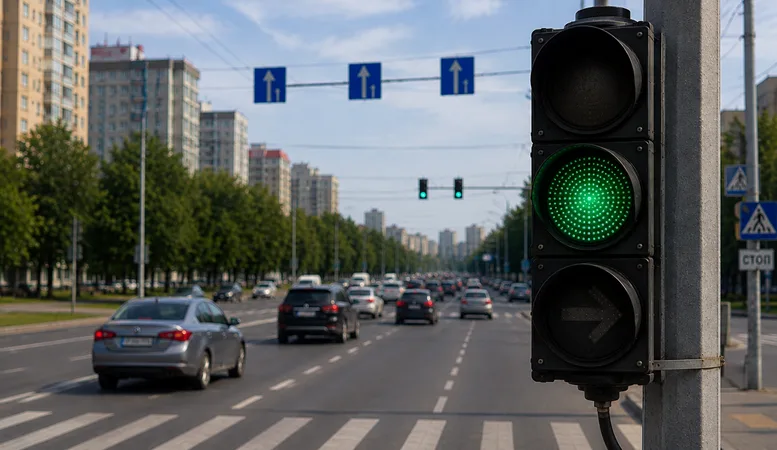










An air raid alarm does not exempt drivers from the obligation to comply with traffic rules; however, court practice increasingly raises disputes about whether it can be a basis for exemption from administrative liability. Another subject of judicial control is the police’s compliance with the procedure for considering cases and ensuring the person’s right to defense.
The Saltivskyi District Court of Kharkiv considered an administrative lawsuit by a driver to cancel a decision by the patrol police imposing a fine for passing a disabled additional section of a traffic light. The court examined arguments about the driver’s state of extreme necessity due to the air raid alarm, the legality of considering the case in his absence, and the sufficiency of evidence of the administrative offense.
Circumstances of the case
The plaintiff appealed the decision of the patrol police inspector, which held him administratively liable under part two of Article 122 of the Code of Ukraine on Administrative Offenses (CUAO) and imposed a fine of 510 UAH for violating clause 8.7.3 of the Ukrainian traffic rules, namely passing a disabled additional section of a traffic light.
In support of the claim, the driver stated that he learned about the decision only through the "Diia" app, and the copy was neither handed to him nor sent. He claimed he did not move through the disabled additional section of the traffic light, and after the air raid alarm was announced, he was driving with his family to a shelter. According to the plaintiff, the vehicle started moving only after the traffic light showed a permissive signal, after which he was stopped by patrol police officers.
After the vehicle was stopped, the driver filed a motion to postpone the case review to involve a lawyer. The inspector agreed and scheduled the case for another date. However, on the eve of the scheduled hearing, the plaintiff was hospitalized and sent a request to the Patrol Police Department for a repeated postponement, citing inpatient treatment. He believed the inspector was aware of this request but still considered the case without his participation, depriving him of the opportunity to provide explanations, examine evidence, and use legal assistance, which, according to the plaintiff, violated guarantees under Article 268 of the CUAO.
Additionally, the plaintiff emphasized that the decision incorrectly indicated the place of the administrative offense. To support his position, he submitted a response from a municipal enterprise stating that at the address specified in the decision, the additional traffic light section was absent. He believed this indicated the administrative offense itself was unproven. He also argued that the defendant did not provide proper and admissible evidence of traffic rule violations, and the decision without proper evidentiary support cannot confirm the offense.
Opposing the claim, the Patrol Police Department stated that the plaintiff actually passed the disabled additional section of the traffic light at another intersection, and the address in the decision was used as the nearest official address reference. To confirm the offense, the defendant referred to video recordings from the patrol car’s dashcam and a police officer’s body camera, which captured both the traffic violation and the plaintiff’s presence behind the wheel after the vehicle was stopped.
Regarding the repeated motion to postpone the case, the defendant explained it was sent by email after working hours and registered only on the first working day after the hearing. The patrol inspector did not have access to official email and could not have been aware of the motion before its official registration. Therefore, the defendant argued that the case was considered in the plaintiff’s absence in accordance with Article 268 of the CUAO.
In response, the plaintiff insisted that the defendant effectively admitted the discrepancy between the place of the offense indicated in the decision and the actual circumstances. He also claimed the video does not confirm the vehicle’s movement through the disabled additional section, and the police ignored his reference to the state of extreme necessity related to the air raid alarm and unjustifiably considered the case without him despite his motion to postpone.
Court’s position
After examining the case materials, the court first established that the fact of the administrative offense is confirmed by proper and admissible evidence. In particular, the video from the patrol car’s dashcam, provided by the Patrol Police Department and examined in court, recorded the driver’s passage through the disabled additional section of the traffic light. The court concluded that the administrative offense under part two of Article 122 of the CUAO occurred and was committed by the plaintiff.
Evaluating arguments about violation of the right to defense, the court noted that after the vehicle was stopped, the plaintiff exercised his right to file a motion to postpone the case to involve a lawyer. This motion was granted by the police, and the case was postponed to a date proposed by the plaintiff. Thus, the patrol inspector ensured the realization of the person’s right to legal assistance and complied with legal requirements.
At the same time, the court found that on the scheduled hearing day, the plaintiff did not appear, although he was duly notified of the date, time, and place. Indeed, he was hospitalized and sent a motion for a repeated postponement by email on February 6, 2026. However, this occurred after the working hours of the unit authorized to register incoming correspondence. Therefore, the motion was officially registered only on February 9, 2026—after the case was considered and the decision issued.
The court noted that according to Article 268 of the CUAO, a case may be considered in the absence of the person only if they were duly notified and no motion to postpone was received. Since at the start of the hearing the inspector had no registered motion to postpone, there were no legal grounds for a repeated postponement. Therefore, the case review without the plaintiff was lawful.
The court also emphasized that the manner of submitting the motion did not comply with the principle of good faith use of procedural rights. The motion was sent outside working hours, less than a day before the hearing, which at the plaintiff’s request was scheduled on a Saturday when the Patrol Police Department’s office was closed. The initial postponement motion was motivated by the need to involve a lawyer, but even during hospitalization, the plaintiff was not deprived of the opportunity to ensure his representative’s participation. The court believed there was enough time to involve a lawyer.
The court rejected arguments about the absence of the additional traffic light section. The response from the municipal enterprise "Kharkiv-Signal" submitted by the plaintiff concerned a different intersection and did not refute the circumstances recorded in the police video, where the presence of the additional traffic light section is obvious.
Arguments about incorrect determination of the offense location were also unsubstantiated. The court took into account the defendant’s explanation that building No. 16 on Universytetska Street is the nearest official postal address to the incident site. After verifying the intersections' locations, the court agreed that indicating this address in the decision does not mean the offense location was incorrectly determined.
Regarding the plaintiff’s reference to a state of extreme necessity due to the air raid alarm, the court cited Article 18 of the CUAO and noted that the air raid alarm itself does not exempt a person from complying with traffic rules. The court emphasized that moving on a red traffic light is a dangerous violation that threatens other road users. In this case, the air raid alarm was not recognized as a danger justifying traffic rule violations under Article 18 of the CUAO.
Moreover, the court pointed out an internal contradiction in the plaintiff’s legal position. On one hand, he denied the fact of the administrative offense, while on the other, he simultaneously claimed to have acted in a state of extreme necessity. The court found these arguments mutually exclusive.
Court conclusions
The court concluded that the patrol police inspector acted within the powers granted by law and followed the established procedure during the administrative offense case consideration. The plaintiff was given the opportunity to exercise the right to defense, as the case was postponed at his request to involve a lawyer. The repeated postponement motion was registered after the decision was made, so at the time of the hearing, the police had no legal grounds for another postponement.
The court also found the fact of the administrative offense proven. The decisive evidence was the videos examined in court, confirming the driver’s passage through the disabled additional traffic light section. The plaintiff’s evidence did not refute the recorded circumstances, and his objections regarding the offense location, absence of the additional section, and state of extreme necessity were deemed unfounded.
The court additionally addressed the issue of the proper defendant in cases challenging administrative offense decisions. Referring to the CUAO, the Law of Ukraine "On the National Police," the Regulations on the Patrol Police Department, and Supreme Court legal conclusions, the court noted that patrol police inspectors and territorial departments act not as independent authorities but on behalf of the Patrol Police Department. Therefore, the proper defendant in such disputes is the Patrol Police Department, not its territorial unit or individual police officer.
Based on case No. 638/4019/26, the court upheld the legality of the decision holding the driver administratively liable under part two of Article 122 of the CUAO and found no grounds for its cancellation. Accordingly, the administrative lawsuit was dismissed, and the fine decision remained unchanged. Court costs for the state fee were imposed on the plaintiff.
Subscribe to our Telegram channel t.me/sudua, Google News SUD.UA, as well as our VIBER and WhatsApp, Facebook page and Instagram to stay updated on important events.