Police Lost Physical Evidence: The State Will Return Not Only 36 Thousand Missing Dollars but Also 200 Thousand for Moral Damage


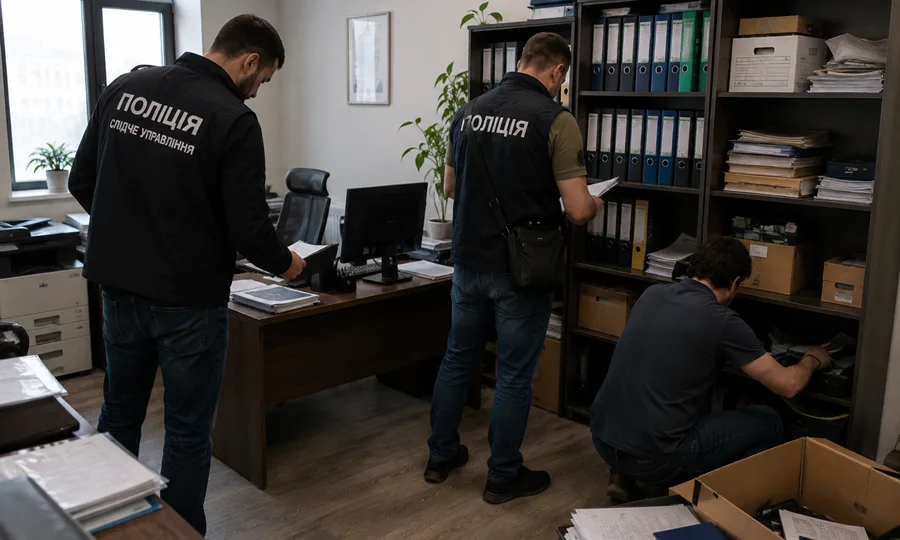










Search is one of the most common investigative actions, yet it often becomes a tool for pressuring businesses. The seizure of lorries from owners who are not even suspects, or their forced alienation, has presented a significant challenge to the legal system.
Temporary seizure of property is merely an initial procedural measure and must conclude either with the imposition of an arrest or the return of the property to its lawful owner. However, judicial practice reveals that, in some instances, seized property is not returned for extended periods, even in the absence of proper procedural grounds. Consequently, temporary seizure frequently devolves into years of property storage in impound lots or storage rooms.
The "Judicial-Legal Newspaper" has analysed three recent court decisions, ranging from the seizure of a fleet of lorries to the illegal special confiscation of flagship smartphones. We examine how courts protect property rights and when the state is obliged to compensate for damages incurred.
1.5 Million UAH for Dollars Lost During a Search: Case No. 521/8236/23
The Supreme Court partially upheld the police’s cassation appeal in a case concerning compensation for property and moral damages to an heiress. A portion of the money seized during a search had not been returned to her. The court affirmed the decision to recover 36,888 US dollars in property damage and 200,000 UAH in moral damage but altered the recovery order: the funds must be recovered directly from the State Budget of Ukraine.
The heiress of a deceased relative filed a lawsuit against the Main Directorate of the National Police, seeking to recover 36,888 US dollars in property damage and 200,000 UAH in moral damage from the State Budget.
Within a criminal proceeding against an individual accused of robbery, investigators conducted a search of the relative’s apartment. During the search, among other items, 52,600 US dollars were seized. The following day, the investigator recognised these funds as physical evidence and appended them to the case materials. An arrest on the property was imposed by a ruling of the investigating judge.
Subsequently, the relative died, and the claimant became her sole heiress. Later, the accused also died. By a district court ruling, the criminal proceeding was closed due to the death of the accused, the arrest was lifted, and the property (including the 52,600 US dollars) was subject to return.
The ruling was submitted for execution. However, only 15,712 US dollars (in various denominations) were returned. The remaining 36,888 US dollars were not. The police claimed that part of the funds (27,000 dollars), during an attempt to deposit them in a bank, were deemed suspicious and sent for examination to the National Bank of Ukraine, where they were declared counterfeit. Meanwhile, after seizure, the funds were improperly stored for a long time in the investigator’s office and were not timely transferred to the bank’s deposit account.
The claimant believed that due to a violation of the rules for storing physical evidence, the funds had either disappeared or been substituted, the court ruling was not executed, and the state was obliged to compensate for the damage.
The National Police, in their cassation appeal, requested a complete dismissal of the claim. They argued that the state should be the defendant, that funds are returned by amount rather than in the same bills, and that the moral damage was unsubstantiated.
The Supreme Court partially granted the cassation appeal.
The court confirmed the lower courts' conclusions that the seized funds were not returned in full due to a violation of the rules for storing physical evidence.
The funds should have been sealed and deposited into a bank account within three days. Instead, they were improperly stored for a long time. The defendant did not provide evidence that the original seized bills were counterfeit. Part 4 of Article 100 of the Criminal Procedure Code of Ukraine obliges the party in criminal proceedings, in the event of loss or destruction of physical evidence, to return the same item or compensate its value to the owner. The right to compensation arises based on Law No. 266/94-VR and Article 1176 of the Civil Code of Ukraine.
Regarding moral damage, the court agreed with the lower courts that the loss of funds compelled the claimant to exert effort in organising her life, caused mental suffering, and deprived her of the opportunity to use the money for a long time. Accordingly, the amount of 200,000 UAH was deemed justified.
Regarding the order of recovery, the court amended the decision. The defendant in cases of compensation by the state is the State of Ukraine. Funds are recovered from the State Budget of Ukraine.
The case confirms that the state is responsible for the loss of physical evidence due to violations of storage rules. Untimely transfer of cash to a bank deposit account creates a risk of loss and entails the obligation to compensate the cost. Special Law No. 266/94-VR and Article 1176 of the Civil Code of Ukraine apply in cases of illegal arrest and seizure. At the same time, recovery is always made from the State Budget, not from the accounts of a specific police body.
Seizure of Volvo and Mercedes Lorries: Case No. 522/759/25
Within a criminal proceeding concerning fraud (Article 190 of the Criminal Code), investigators conducted searches and seized an entire fleet: Volvo FH 500, Volvo FH13.500 lorries, a Mercedes-Benz CLA 220, as well as Koegel and Wielton semi-trailers.
An important detail is that the owner of all this property was an individual who had no procedural status in the case.
Courts established that the pre-trial investigation in the criminal proceeding was conducted on grounds of fraud committed by a group of persons on a particularly large scale. Investigating judges issued rulings permitting searches of vehicles used by the suspect. During these searches, investigators seized the vehicles themselves and their keys.
Subsequently, investigating judges refused to arrest this property, citing a lack of grounds for its use as evidence, that the property was not listed in the items planned to be found, and a lack of evidence that it was an instrument of crime or acquired illegally. Courts repeatedly emphasised that the owner was an individual who was not a suspect, and an arrest in such a case constituted interference with the right to peacefully possess one’s property. The property was returned only after a protracted court battle.
The court reiterated that temporary seizure of property during a search is regulated by Articles 234, 236, 167–169, 171, 173 of the Criminal Procedure Code of Ukraine. A search is conducted based on a ruling from the investigating judge. Items seized outside the list specified in the ruling are considered temporarily seized property. A motion for arrest must be filed within the established time limits; otherwise, the property must be immediately returned. In the event of a refusal to arrest, the property is also returned.
In this case, investigators received rulings to search vehicles used by the suspect. During the searches, the claimant’s property was seized. Later, investigating judges refused to arrest and ordered the return of the vehicles to the owner.
The Supreme Court referred to its own practice, specifically the ruling dated 23 September 2024, in case No. 757/67430/21. Thus, the basis for compensation for moral damage for unjustified detention of property as physical evidence is the establishment of the illegality of such actions within the criminal proceedings. The current Criminal Procedure Code provides ways to protect the rights of an owner who is not a participant in the proceedings. Civil proceedings are not intended to reassess these issues if illegality is not established in the criminal process.
The rulings of investigating judges contained only conclusions about the absence of grounds for arrest, not the establishment of the illegality of the temporary seizure itself. The appellate court correctly took into account that the fact of illegality of seizure in criminal proceedings was not established.
Since the claimant did not prove the unlawfulness of the actions of investigators and prosecutors, nor the causal link with moral damage, there are no grounds to satisfy the claim. The arguments of the cassation appeal concerning the necessity to recover 3 million UAH were rejected as being based on a reassessment of evidence, which is beyond the powers of the cassation court.
Procedural nuance regarding damage: Although the fact of unjustified detention of property was recognised, the Supreme Court noted that to recover moral damage under Article 1176 of the Civil Code (special norm), it is necessary that the illegality of the seizure itself be established by a separate procedural document within the criminal proceedings.
Important: owners of property who are not participants in the proceedings must not only demand the return of items but also seek from the investigating judge a finding of illegality of the investigator’s actions. This opens the way to compensation for damage for illegally seized property.
Within a criminal proceeding, during a search at the claimant’s residence, law enforcement seized cash and documents.
Later, the seized property was arrested, which the investigating judge partially lifted. After that, the owner repeatedly appealed to the pre-trial investigation body demanding the return of funds but received a response that they were lost due to improper control over the storage of physical evidence. Courts of first and appellate instances recovered property damage, inflation losses, and 3% annual interest from the state, totalling over 1.29 million UAH. The Supreme Court left these decisions unchanged, noting that failure to return funds seized during a search after lifting the arrest due to their loss is grounds for compensation by the state. The court also emphasised that for this, no separate court decision recognising the actions of the pre-trial investigation body as illegal is required: sufficient confirmation of illegality is the very fact of loss of property under state control. At the same time, the Supreme Court clarified that in such cases, state liability arises on general grounds according to Articles 1173, 1174, and part six of Article 1176 of the Civil Code of Ukraine.
When an iPhone 14 Is Not a "Tool": Case No. 357/9031/24
An individual was convicted of fraud by substituting a gold ring with costume jewellery at a "Nova Poshta" branch. The man ordered gold items (a ring and a chain) through OLX.ua, came to the "Nova Poshta" branch for inspection, and, after ensuring he was not watched, substituted the gold with pre-prepared costume jewellery, hiding the originals in his pocket.
The court of first instance imposed special confiscation of the iPhone 14 belonging to the convicted person.
The Supreme Court cancelled the decision on confiscation of the phone. The indictment, recognised as proven by the court, did not contain any reference that the convicted person used the iPhone 14 during the commission of the crime.
The prosecutor did not provide the court with evidence that the phone was a means or instrument of the crime or that it was used to perform the objective side of the fraud (the substitution process of the ring itself).
According to Article 96-2 of the Criminal Code of Ukraine, property can be confiscated only if it was prepared, adapted, or used as a means or instrument of the crime.
The Supreme Court ruled that since the role of the phone in implementing the criminal intent was not proven, its special confiscation was unfounded.
The mere presence of expensive equipment with a person during the commission of a crime does not give the state the right to seize it. If the indictment does not describe how the equipment helped commit the crime (for example, for communication, recording, access to accounts, etc.), it must be returned to the owner.
Additionally, read about details of case No. 752/29491/21, in which the Supreme Court concluded that if money seized during a search is not returned to the owner after lifting the arrest due to their loss by law enforcement, the state is obliged to compensate for the damage caused. In that case, the state was ordered to pay almost 1.3 million UAH in property damage.
Subscribe to our Telegram channel t.me/sudua, follow SUD.UA on Google News , and join us on VIBER, WhatsApp, Facebook and on Instagram to stay informed about the important events.