Legal Uncertainty in Demining: Why a Sown Field Does Not Mean a Safe Territory


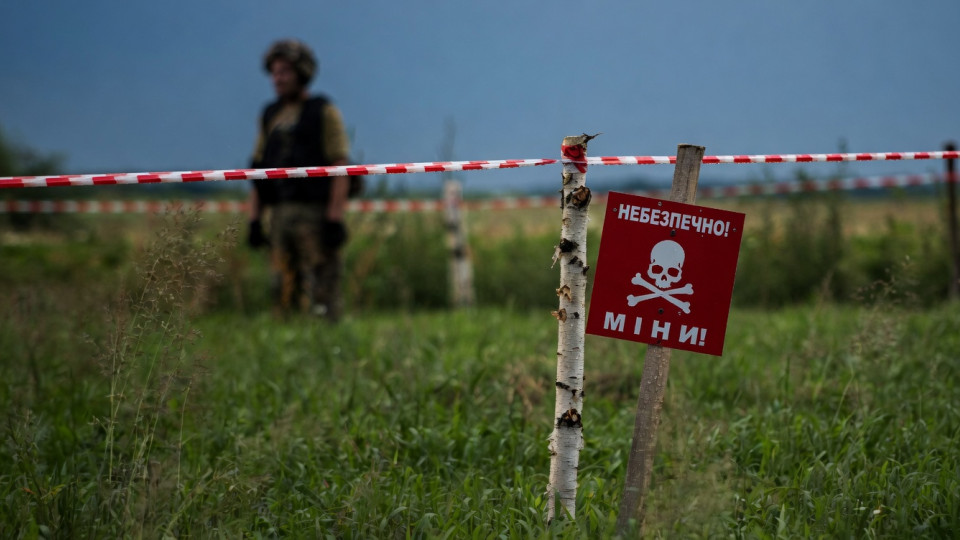










Humanitarian demining in Ukraine is gradually becoming not only a technical but also a complex legal issue. Despite the existence of state standards, operational procedures, and certified operators, law enforcement agencies and courts still lack established approaches to assessing completed work, determining responsibility, and interpreting certain concepts. The National Association of Advocates of Ukraine emphasizes that the scale of territory contamination and the development of the demining sector require the formation of clear legal rules and unified approaches to the application of legislation.
According to experts, from 138,000 to 175,000 square kilometers of Ukraine's territory remain contaminated or potentially contaminated with explosive devices. This raises the question of creating a clear legal framework for the work of demining operators, government bodies, law enforcement, farmers, and other land users.
Humanitarian Demining Requires Clear Legal Rules
As noted by the NAAU, the humanitarian demining sector already has a significant array of technical standards, regulations, and operational procedures. At the same time, legal regulation continues to develop and requires further improvement considering the scale of mine contamination and practical challenges faced by Ukraine.
Experts point out that today the country is effectively forming new law enforcement practice at the intersection of criminal law, international humanitarian law, and technical standards. The application of normative acts may create risks of excessive criminalization of professional processes in humanitarian demining.
How Humanitarian Demining Differs from Military Demining
The NAAU reminded that military, operational, and humanitarian demining are different legal institutions.
Humanitarian demining is considered an economic activity carried out by certified demining operators with the aim of completely freeing territories for safe socio-economic and agricultural use.
It is not a single action but a comprehensive technological process that includes:
- non-technical survey;
- technical survey;
- territory clearance;
- marking;
- external quality control.
Experts emphasize that each of these stages is a mandatory component of the territory release process and cannot be arbitrarily skipped.
Why the Absence of Found Mines Does Not Mean No Work Was Done
Special attention is given to the justification of expenses for conducting surveys.
The NAAU states that it is impossible to skip non-technical and technical surveys and proceed immediately to clearance and quality control. Therefore, the operator's expenses for such work are justified even when no mines were found or neutralized as a result of the survey.
Such work confirms the provision of safety assurance services, not just the fact of detecting or destroying explosive devices.
Can Land Be Removed from the Register of Contaminated Territories After Field Cultivation?
One of the key issues is determining the status of land plots entered in the register of contaminated or potentially contaminated territories.
Experts emphasize that neither cultivation of the land plot, nor a sown field, nor harvested crops, nor a certificate from an enterprise or farmer can be grounds for removing a plot from the register.
To change the status of a territory, it is necessary to undergo a set of demining measures established by law.
Why Disputes Arise Around Land Safety
The NAAU draws attention to the difference between everyday and professional understanding of demining.
It is common to believe that if a land plot is cultivated or used for economic activity, it is automatically safe. However, state standards for humanitarian demining provide a completely different approach.
In particular, there may be a situation where a territory is considered contaminated according to relevant information systems but is actually used by farmers. In such a case, the operator cannot confirm its safety without proper verification.
If a safety guarantee is given without following established procedures, and an explosion occurs on that territory in the future, questions about the operator's responsibility may arise. At the same time, conducting surveys on already cultivated fields may also become the subject of additional inspections and legal assessments.
What the Term "Fake Demining" Means
The NAAU also noted the use of the phrase "fake demining."
It is noted that this term is increasingly used in disputes related to humanitarian demining, but its meaning remains insufficiently defined.
Experts emphasize that some verdicts in criminal proceedings may later be used in other disputes. However, such decisions do not necessarily establish the guilt of demining operators or their officials.
Therefore, for a proper legal assessment of each situation, it is necessary to investigate specific circumstances and prove the presence of all elements of the relevant offense.
What Legislative Changes Are Proposed for the Demining Sector
Among possible directions for improving legislation are the refinement of draft law No. 15108-1, as well as amendments to the Criminal Code and the Criminal Procedure Code.
Additionally, it is proposed to:
- establish special rules for inspecting crime scenes in mine hazard zones;
- introduce a separate type of forensic examination in the field of demining;
- create a compensation mechanism for civilians affected by mines and other explosive devices.
The NAAU also notes that demining activity in this context has the characteristics of economic activity, since some entities provide services or perform work, and others pay for them. Accordingly, possible violations should be assessed according to general legal principles, and grounds for criminal liability can only be proven criminal offenses.
The National Association of Advocates of Ukraine emphasizes that further improvement of legislation and the formation of stable law enforcement practice will help avoid different interpretations of humanitarian demining procedures, ensure legal certainty for operators, and contribute to the safe return of contaminated territories to full use.
Subscribe to our Telegram channel t.me/sudua and to Google News SUD.UA, as well as to our VIBER and WhatsApp, our page on Facebook and on Instagram to stay informed about the most important events.