The Constitutional Court of Ukraine recognized the norm on mandatory detention of servicemen as unconstitutional


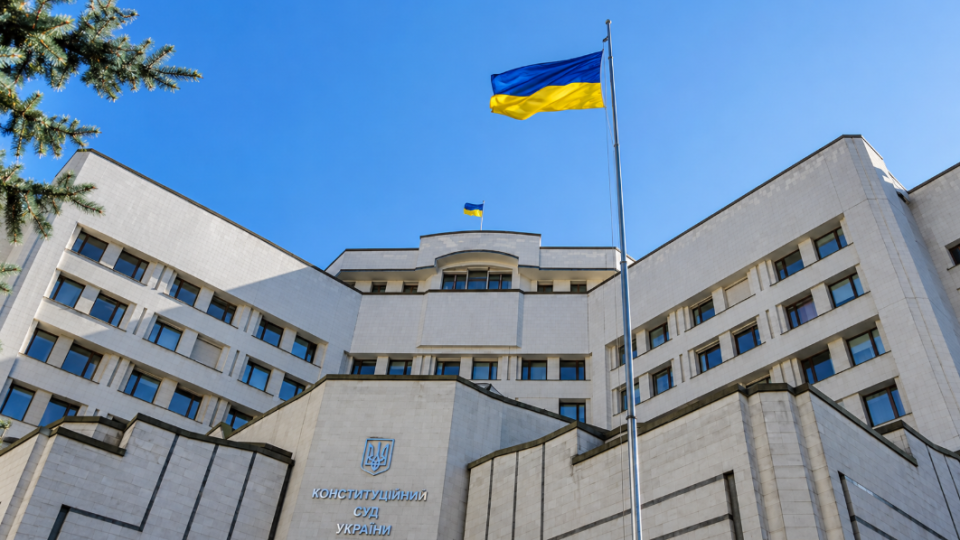










The Second Senate of the Constitutional Court of Ukraine adopted Decision No. 4-r(II)/2026 in the case on the constitutional complaint of Serhiy Hnezdiolov.
The subject of constitutional control in this case was part eight of Article 176 of the Criminal Procedure Code of Ukraine, according to which "during martial law, servicemen suspected or accused of committing crimes provided for in Articles 402–405, 407, 408, 429 of the Criminal Code of Ukraine are subject exclusively to the preventive measure defined in paragraph 5 of part one of this article."
The applicant argued that the contested provision of the CPC violates the principle of equality of citizens before the law (Article 24 of the Constitution of Ukraine), since during martial law it places servicemen, including those who committed such criminal offenses as disobedience, unauthorized leaving of a military unit or place of service, desertion, in an unequal position and equates them with especially dangerous criminals who pose a threat to society, which constitutes discrimination based on the field of activity.
He believed that as a result of applying the contested provision of the CPC <…> his right to freedom and personal inviolability, guaranteed by Article 29 of the Constitution of Ukraine, was violated without proper justification.
Having examined the issues raised in Serhiy O. Hnezdiolov's constitutional complaint, the Court concluded that the contested provision of the CPC does not comply with the requirements of Articles 6, 21, parts one and two of Article 24, part one of Article 28, parts one and two of Article 29, parts one and two of Article 55, part two of Article 64, part two of Article 124 of the Constitution of Ukraine.
The Decision emphasizes that the legislator’s establishment of exclusively the harshest preventive measure – detention – for servicemen suspected or accused of committing a number of crimes violates the requirements of parts one and two of Article 29 of the Basic Law of Ukraine, since it does not ensure the constitutional requirement of a motivated court decision as a consequence of judicial discretion. According to the Court, this distorts the very essence of justice.
Judicial discretion is limited to such an extent that the court decision can only result in one possible resolution of the law enforcement situation, the Decision states. Thus, the legislator deprived the investigating judge and the court of the opportunity to reasonably and fairly administer justice in this matter, which does not comply with the requirements of Articles 6, 55, and 124 of the Constitution of Ukraine.
The Court stressed that for each serviceman suspected or accused of committing certain military criminal offenses, and in connection with whom a preventive measure is chosen, the circumstances and risks provided for by the CPC must be individually assessed.
The Court noted that the contested provision of the CPC singled out a group of servicemen suspected or accused of committing certain military criminal offenses, for whom the legislator established the mandatory application of detention as a preventive measure. However, the Court found no objective and reasonable grounds for the legislator’s differentiation in status to single out this group of servicemen for exclusive application of the harshest preventive measure.
Such unlawful regulation of the procedure for choosing a preventive measure for servicemen results in an infringement on their human dignity, which, according to the Court, is inconsistent with the requirements of parts one and two of Article 24 in its systemic connection with part one of Article 21 and part one of Article 28 of the Constitution of Ukraine. Observance of constitutional guarantees of human dignity is especially important in the situation when it concerns servicemen performing a high constitutional role under martial law, the Court emphasized.
Considering the above, the Court recognized part eight of Article 176 of the Criminal Procedure Code of Ukraine as unconstitutional, postponing the loss of validity of this provision for three months.
Subscribe to our Telegram channel t.me/sudua and to Google News SUD.UA, as well as to our VIBER and WhatsApp pages on Facebook and Instagram to stay informed about the most important events.