How Forced Eviction from Housing Happens: Who Comes, What Happens to Property, and When Police Are Involved













Forced eviction is the final stage of enforcing a court decision and is applied only in cases where a person, after the court decision has come into legal force, refuses to voluntarily vacate the housing. The legislation defines a clear procedure for such actions, sets deadlines for voluntary compliance with the decision, rules for conducting eviction, handling the debtor's property, and guarantees the protection of their rights. At the same time, it is impossible to evict a person without legal grounds or outside the procedure provided by law.
The right to housing is constitutionally guaranteed. According to the Constitution of Ukraine, no one can be forcibly deprived of housing except on the basis of law and by court decision.
If, after the court decision has come into legal force, the person does not voluntarily vacate the residential premises, the procedure for forced enforcement of the decision begins.
Forced eviction involves vacating the housing specified in the enforcement document from the debtor, their property, and pets, with a prohibition on further use of the premises. Only the persons specified in the enforcement document are subject to eviction.
How much time is given for voluntary eviction
The procedure for executing such decisions is defined by Article 66 of the Law of Ukraine "On Enforcement Proceedings."
After the enforcement proceedings are opened, the debtor is given 10 working days to voluntarily comply with the court decision. On the next working day after this period ends, the state executor checks whether the decision has been executed.
If the debtor has not voluntarily vacated the housing, the state executor sets the date and time for forced eviction and notifies the debtor in writing. If the notification is sent to the eviction address or another reliably established address, the person is considered properly notified. The absence of the debtor during enforcement actions is not grounds for postponing or suspending them.
How forced eviction takes place
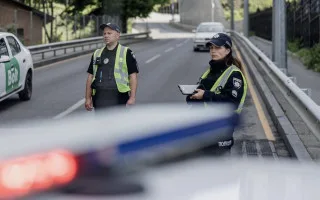
The Ministry of Justice explains that forced eviction is carried out in the presence of witnesses and with the participation of police officers.
If the debtor is absent, the state executor inventories their property. After that, the property is transferred to the responsible custody of the claimant or another person designated by the state executor.
To retrieve their property, the debtor must reimburse the costs associated with storage. If this is not done, such costs may be compensated from the proceeds of the sale of the property or part of it.
What happens to the property after eviction
The law provides that the debtor's property is stored for no more than two months.
If the owner does not collect it within this period, the property is sold in the manner prescribed by law. After covering the costs of storage and sale, the remaining funds are transferred to the debtor.
What to do if the court ordered to provide other housing
In some cases, the court decision provides that the person being evicted must be provided with other residential premises.
In such a situation, the state executor notifies the relevant authority about the need to fulfill this obligation. If the new housing is not provided within the specified period, the state executor draws up the appropriate act and applies to the court to determine the further procedure for enforcing the decision.
Until the court resolves this issue, enforcement actions regarding eviction are not carried out.
Thus, the enforcement of court decisions on eviction takes place exclusively in the manner prescribed by the legislation of Ukraine, respecting the rights of all participants in the enforcement proceedings.
Subscribe to our Telegram channel t.me/sudua and to Google News SUD.UA, as well as to our VIBER and WhatsApp, our page on Facebook and on Instagram to stay informed about the most important events.