School banned a boy from having long hair: US court reviews a high-profile case


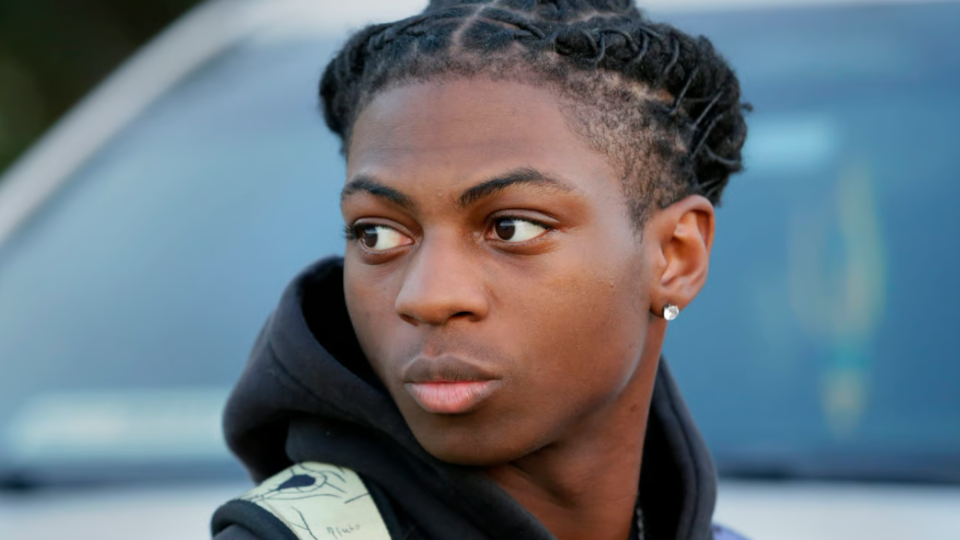










In the US, an appellate court is reviewing a high-profile case of student Darril George from Texas, who was effectively removed from regular classes due to his long hair.
According to the boy, he spent most of the school year under disciplinary measures or in a separate program for rule violators because the administration considered his hairstyle non-compliant with established requirements.
The dispute arose over the rules of the Barbers Hill school district near Houston. There, boys are prohibited from having hair below their eyebrows, earlobes, or shirt collar. There are no such restrictions for girls.
Darril George wears dreadlocks. Usually, he tied them up on top of his head, but the school deemed it a violation that when worn loose, his hair was longer than the allowed norms.
Why the school insists on the ban
School district representative Jonathan Brush stated in court that similar requirements exist in many employers, including the US military.
In his opinion, the school has the right to set appearance rules to prepare students for future adult life and work.
He also noted that men in the US must register for military service after turning 18, so requirements for boys may differ from those for girls.
The student's lawyers called the arguments unfounded
Representatives of Darril George dispute this position.
They emphasize that the school refers only to certain professions, while most employers do not impose such hairstyle requirements.
In their view, the ban on long hair for boys is groundless and discriminatory.
The trial court sided with the school
In 2025, a federal judge supported the school district.
The decision stated that hairstyle rules help maintain discipline, meet local community expectations, and prepare students for future work.
However, during the appeal hearing, one of the judges questioned the school's argument that such rules contribute to the school's success.
The judge noted that the school's high performance could be explained by other reasons, such as active parental involvement in the educational process.
The case also concerns racial discrimination
Darril George also refers to the Texas CROWN Act, which prohibits discrimination based on hair texture or traditional hairstyles associated with racial and cultural identity.
This includes dreadlocks, braids, and other similar hairstyles often worn by Black Americans.
The student's lawyers argue that wearing dreadlocks requires long hair, so limiting its length effectively deprives a person of the ability to wear such a hairstyle.
The court showed interest in possible use of artificial intelligence
During the hearings, another unexpected issue arose.
Judges noticed that the student's lawyers' documents contained quotes from court decisions that could not be found in the cited sources.
Because of this, the court inquired whether artificial intelligence was used in preparing the documents.
The lawyers denied using generative AI but admitted that some phrases were not direct quotes but paraphrases of court decisions.
Currently, the appellate court has not made a final decision. When the verdict will be issued is still unknown.
Subscribe to our Telegram channel t.me/sudua and to Google News SUD.UA, as well as to our VIBER and WhatsApp, page on Facebook and on Instagram to stay updated on the most important events.