Polish schools will introduce a complete ban on smartphones: even breaks will not be an exception


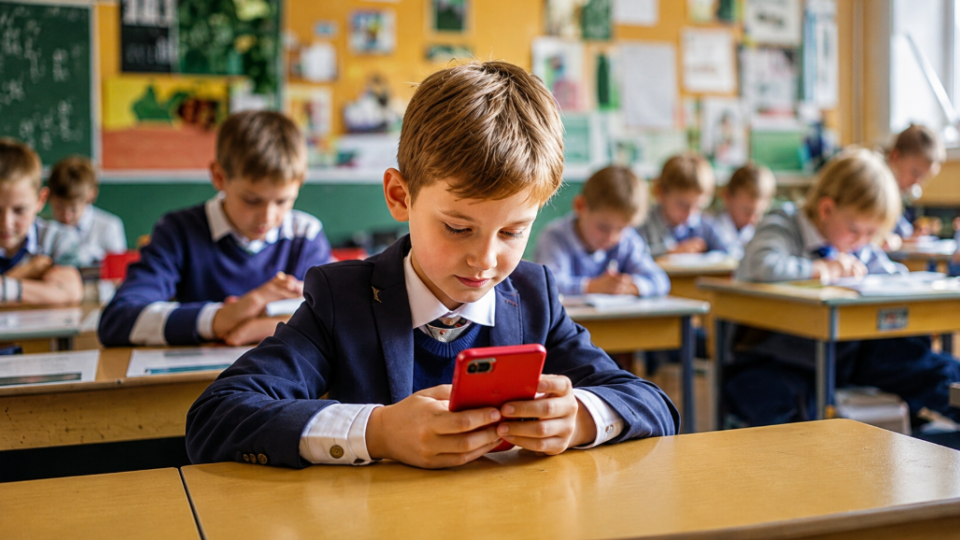










Poland is approaching the introduction of a nationwide ban on smartphone use in primary schools. If the new rules are finally adopted, students will not be able to use phones not only during lessons but also during breaks and most other activities. The initiative has already received support from all parliamentary forces and is currently under further consideration.
Why Poland decided to limit smartphone use
The bill's initiators note that the need for such changes is supported by both parents and educators. Although schools can already independently set rules for phone use, school leaders expect a unified legislative approach.
Research results are also cited, indicating the negative impact of excessive smartphone use on children's health, decreased attention span, the spread of cyberbullying, and increased dependence on the internet and social networks.
During the parliamentary discussion, it was also emphasized that the main problem is not the smartphones themselves, but children's access to social networks and other digital content. Separate calls were made to introduce age restrictions for using social platforms.
What other changes are proposed
During the bill's review, it was also proposed to extend the ban to kindergartens and preschool groups. In addition, other amendments were introduced into the document, which will now be considered by the relevant committee.
Participants in the discussion stressed that the new rules should help children communicate more with each other, better concentrate on learning, and reduce the negative impact of digital technologies.
Attention was also drawn to research findings showing that even a phone lying next to a student can worsen concentration. At the same time, the absence of smartphones during lessons positively affects students' academic performance, especially children from socially vulnerable families.
When students will be allowed to use phones
According to the bill, primary school students will be prohibited from using phones and other devices that allow communication or photo and video recording:
- during lessons;
- during breaks;
- during other events held at school;
- during activities organized outside the school premises, such as physical education lessons at sports facilities.
At the same time, the ban will not apply to:
- school excursions;
- children staying in boarding schools;
- use of school infrastructure after classes if it is open to local residents.
Phone use will only be allowed in exceptional cases:
- if necessary for conducting a lesson or knowledge assessment;
- if a student urgently needs to contact parents;
- if a smartphone or special app is needed to monitor health status (with the school principal's consent);
- if there is a direct threat to life or health.
Consequences for violators and when the rules will take effect
If a student violates the established rules, the school will be able to apply educational measures or disciplinary sanctions provided by the institution's statute. Such violations may also affect behavior grades.
Schools will have the right to arrange special places for storing smartphones and other electronic devices. The relevant decision will be made by the principal after consultation with the teaching council and parents' council and taking into account the opinion of the student government.
For upper grades, lyceums, and technical schools, a nationwide ban will not be introduced. Instead, each educational institution will independently determine phone use rules in its statute.
If the law is finally adopted, the new rules are to take effect on September 1, 2026. After that, schools will have time until October 31, 2026 to bring their internal rules into compliance with the new legislation.
Subscribe to our Telegram channel t.me/sudua and to Google News SUD.UA, as well as to our VIBER and WhatsApp, Facebook page and Instagram to stay updated on the most important events.