After strikes on "Azot," ammonia nitrate production in Russia down by 9% — NSDC DCC


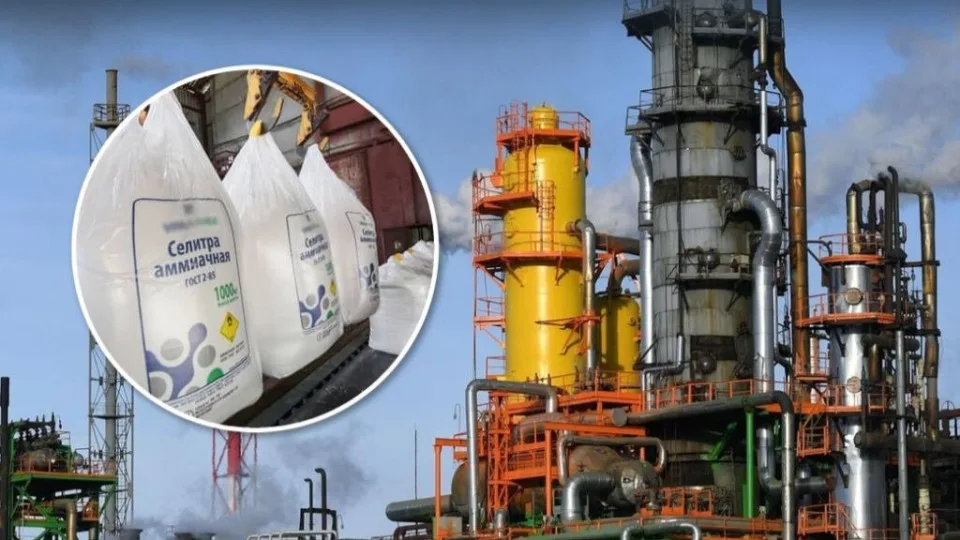










In Russia, ammonia nitrate production volumes have decreased by 9% compared to the same period last year. This was reported by the Center for Countering Disinformation at the NSDC, citing Rosstat data.
According to the DCC, ammonia nitrate production fell by 14% year-on-year in May alone. This was the worst figure since the beginning of the year.
The Center noted that against the backdrop of the gasoline crisis in Russia, there is also a significant reduction in the production of dual-use chemical industry products, which is associated with the consequences of Ukrainian long-range strikes.
The DCC reminded that ammonia nitrate is a dual-use product. It is used not only as an important fertilizer for the agro-industrial complex but can also be applied for the needs of the Russian military-industrial complex.
As noted by the Center, Russia officially explains the reduction in fertilizer production by "unscheduled repairs." The DCC claims that this wording is used by Russian propaganda to describe the consequences of Ukrainian strikes. In particular, the chemical plant "Azot" in the Tula region, one of the largest producers of chemical products for the Russian military-industrial complex, was recently hit.
The Center for Countering Disinformation stated that the decline in production in the Russian chemical industry is further evidence of the effectiveness of Ukrainian long-range strikes. They also noted that despite Russian propaganda claims of no significant consequences from Ukrainian drone attacks, official statistics, according to the DCC, indicate the opposite.
Subscribe to our Telegram channel t.me/sudua and to Google News SUD.UA, as well as to our VIBER and WhatsApp pages, and follow us on Facebook and Instagram to stay updated on the most important events.