The US Supreme Court allowed Florida to carry out two executions in one day for the first time in over 60 years


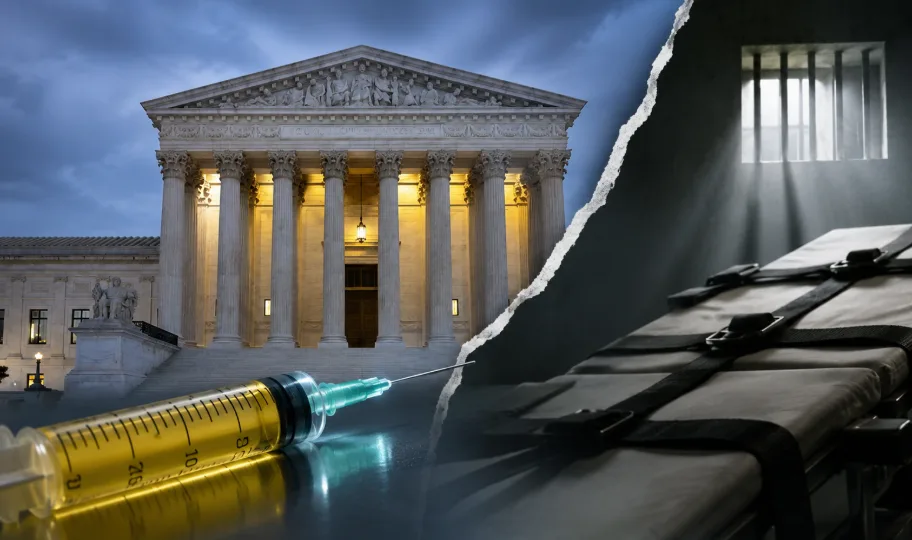










Florida became the first state in the US in over 60 years to carry out two executions in one day. The US Supreme Court refused to halt the executions of two condemned men despite their arguments about the increased risk of errors during the simultaneous preparation of two procedures.
The US Supreme Court did not stop the double execution of death sentences
The US Supreme Court allowed the state of Florida to carry out two executions in one day, rejecting emergency petitions from two condemned men to suspend the executions.
Florida Governor Ron DeSantis scheduled the executions of James Arena Dakett and Dominick Anthony Oakeycone Jr. approximately six hours apart.
This was an unprecedented event in the modern history of the death penalty in Florida, notes Courthouse News. Although the state had previously carried out two executions in one day over 60 years ago, a different method of execution was used at that time. Florida had never before executed two condemned men by lethal injection on the same day.
The US Supreme Court denied the petitions of both condemned men without explanation. None of the justices expressed a dissenting opinion. The brief rulings were issued about an hour before the first execution began, after which the death sentences were carried out.
Why the condemned requested to stop the executions
68-year-old James Dakett and 81-year-old Dominick Oakeycone argued that carrying out two executions in one day creates additional risks during the application of lethal injection.
Dakett’s defense emphasized that the Eighth Amendment to the US Constitution, which prohibits cruel and unusual punishments, applies not only to the imposition of the sentence but also to the manner of its execution.
The attorneys claimed that the double workload on prison staff and the execution team could increase the likelihood of errors during the procedures, particularly regarding the use of drugs for lethal injection.
Oakeycone also requested documents from the Florida Department of Corrections related to lethal injection protocols. He expressed concerns about the availability of necessary drugs, his health condition, and the psychological burden on staff conducting multiple executions in succession.
The position of Florida authorities
Florida authorities asked the US Supreme Court to reject both emergency appeals.
State representatives noted that the legal proceedings in these cases have been ongoing for decades, and the arguments about possible errors during two executions are only speculative.
The state also emphasized that American courts have previously not recognized carrying out two executions in one day as cruel or unusual punishment in itself.
What Dakett and Oakeycone were convicted of
James Arena Dakett was sentenced to death for the rape and murder of 11-year-old Theresa McCabe in 1987. At the time of the crime, he was working as a police officer.
According to the prosecution, Dakett was the last person to see the girl alive, and her fingerprints were found on the hood of his patrol car.
Dakett himself denied his guilt for many years, claiming that the death sentence was based solely on circumstantial evidence. After conviction, he repeatedly appealed the sentence, arguing that some witnesses gave false testimony and that there was insufficient physical evidence.
In 2003, Dakett was allowed to conduct DNA testing, but the technology at the time did not yield results. In early 2026, the Florida Supreme Court temporarily suspended the execution to conduct new DNA testing, but the results were inconclusive. The condemned requested additional analyses, but the state refused, after which the court lifted the stay of execution.
Dominick Anthony Oakeycone Jr. was sentenced to death for the murder of his former fiancée’s parents in 1986. During numerous appeals, he unsuccessfully challenged the evidence presented to the jury during sentencing.
After the governor signed the death warrant, Oakeycone also challenged the manner of execution. He became the oldest prisoner executed in Florida’s modern history.
Florida remains the US leader in the number of death sentences
Florida is one of the few US states with the most active practice of applying the death penalty.
Last year, the state carried out 19 executions — the highest number among all US states and more than double Florida’s previous record set in 2018, when eight executions were conducted.
Before the double execution this year, Florida had already carried out ten executions, with the executions of Dakett and Oakeycone becoming the eleventh and twelfth, respectively.
Why Florida’s legislation is controversial
Florida remains one of two US states where in some cases the death sentence could be recommended by juries without a unanimous decision.
In Dakett’s case, the jury recommended the death penalty by a vote of 8 to 4, and in Oakeycone’s case — 7 to 5.
At the same time, Florida’s legislation has since changed: at least eight jurors' support is now required to impose the death penalty.
Opponents of the death penalty believe that the possibility of such decisions without full unanimity increases the risk of convicting innocent people. According to the Death Penalty Information Center, Florida has recorded 30 cases of exoneration of people previously on death row — the highest number among all US states.
Subscribe to our Telegram channel t.me/sudua and to Google News SUD.UA, as well as to our VIBER and WhatsApp, Facebook page and Instagram to stay informed about the most important events.