Control over Housing and Utilities, Community Improvement, and Budget: New Opportunities Being Prepared for House Committees


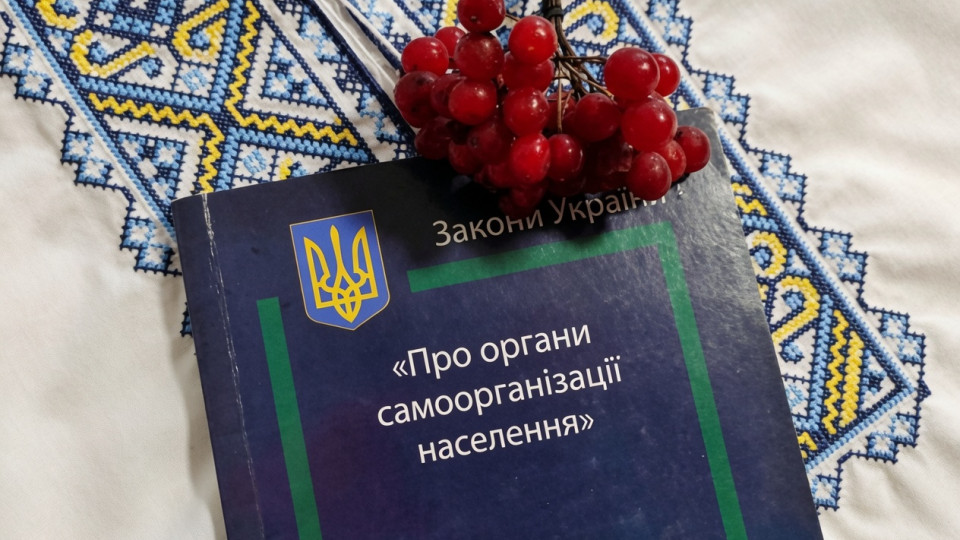










House, street, and neighborhood committees may gain new opportunities to influence the lives of their communities. The Verkhovna Rada proposes to update the rules for the activities of self-organization bodies of the population, simplify their creation, provide more tools for interaction with local authorities, and introduce additional transparency requirements for their work. Among other things, such bodies will be able to take a more active part in territory improvement, quality control of communal services, implementation of local projects, and representation of residents' interests before government bodies.
The Verkhovna Rada Committee on Digital Transformation reviewed draft law No. 15165 aimed at improving the legal conditions for the activities of self-organization bodies of the population and supported the proposal for mandatory publication and regular updating of public information about their activities in the format of open data. Relevant recommendations have been proposed to be taken into account during the document's revision.
What the draft law proposes
The draft law provides a new edition of the Law "On Bodies of Self-Organization of the Population" and amendments to several other legislative acts. The document aims to modernize the activities of house, street, neighborhood committees, committees of residential complexes, microdistricts, villages, and settlements.
The project defines a self-organization body of the population as a representative body created by residents of a part of a territorial community to address local issues. Such bodies remain part of the local self-government system and a form of direct participation of residents in managing community affairs.
How self-organization bodies will be created
The document establishes a detailed procedure for creating self-organization bodies through meetings or conferences of residents. It provides for the possibility of creating such bodies both without legal entity status and with legal entity status. To do this, residents' meetings must be held, regulations on the body approved, its area of activity defined, leadership elected, and permission requested from the local council for creation.
At the same time, the draft law introduces requirements for candidates. Persons with unexpunged convictions for serious and especially serious crimes, corruption offenses, crimes against citizens' electoral rights, or the foundations of Ukraine's national security cannot be elected to self-organization bodies.
What powers house and street committees will receive
The draft law allows self-organization bodies to:
- represent residents' interests before local councils and their executive bodies;
- submit proposals to local development programs and budgets;
- participate in territory improvement;
- control the quality of communal services;
- assist socially vulnerable population groups;
- promote civil protection and territorial defense measures;
- initiate public hearings and other forms of resident participation in local self-government;
- participate in discussions of urban planning documentation.
Transfer of powers and funds from local councils
A separate block of changes concerns the possibility of transferring part of the executive powers of local councils to self-organization bodies. These powers may be transferred based on an agreement along with funding and property necessary for their execution.
At the same time, the draft law explicitly prohibits transferring powers that belong to the exclusive competence of local councils or are delegated by the state.
Open data and new transparency requirements
The Committee on Digital Transformation supported the necessity of publishing and regularly updating information about the activities of self-organization bodies in the format of open data.
Moreover, the draft law establishes requirements for the publicity of self-organization bodies' work. They must inform residents about their location, working hours, scope of powers, funds, and property received, and report at least once a year on their activities, use of budget funds, and implemented projects. This information should be published on the official websites of local councils and the information resources of the self-organization bodies.
Subscribe to our Telegram channel t.me/sudua and to Google News SUD.UA, as well as to our VIBER and WhatsApp, Facebook page and Instagram to stay informed about the most important events.