Prosecutor's Office to Lose Oversight of Pre-Trial Detention Centers and Colonies: Who Will Inspect Places of Detention


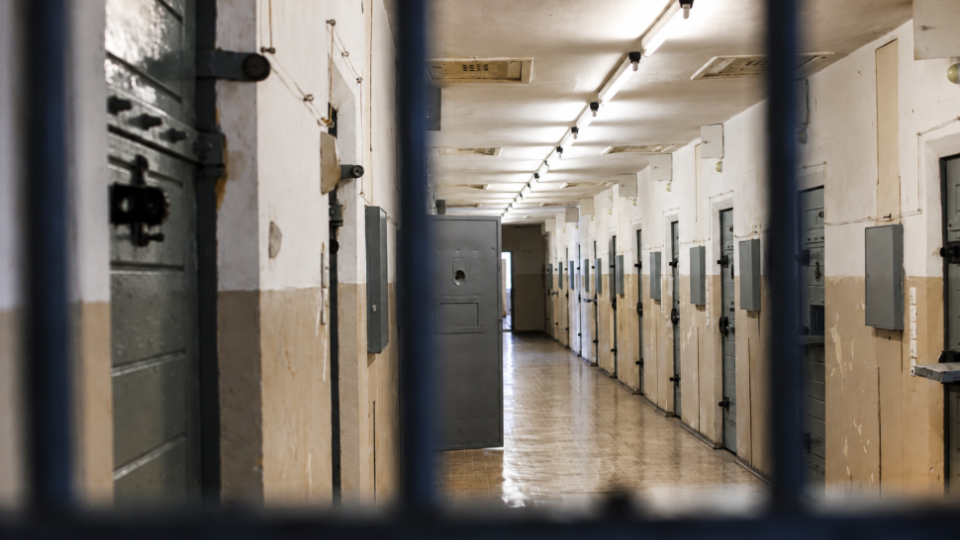










Ukraine proposes to introduce a new system for monitoring human rights compliance in places of detention. In particular, it is planned to create two levels of regular inspections — internal and external penitentiary inspections.
This concerns not only penal institutions and pre-trial detention centers but also temporary detention facilities, guardhouses, special psychiatric institutions, temporary accommodation centers for foreigners, detention places in law enforcement agencies, and other institutions where people are held with restricted freedom.
The new legislative initiative also aims to complete the reform envisaged by the Constitution of Ukraine and replace the current prosecutor's supervision system over places of detention with a system of regular penitentiary inspections.
What the draft law on penitentiary inspections changes
The Cabinet of Ministers registered in parliament the draft Law "On the Creation of a Dual System of Regular Penitentiary Inspections" No. 15300. The document aims to establish a system of continuous control over the observance of the rights and freedoms of persons held in places of detention and refugee temporary accommodation centers, as well as ensuring the lawful rights and interests of the staff of such institutions.
The draft law was developed in accordance with paragraph 9 of Section XV "Transitional Provisions" of the Constitution of Ukraine, which provides for the termination of the prosecutor's supervision function over compliance with laws during the execution of court decisions after the law on the creation of a dual system of regular penitentiary inspections comes into force.
What the dual control system entails
The document defines the dual system of regular penitentiary inspections as a set of entities authorized to monitor the observance of the rights and freedoms of persons in places of detention and refugee temporary accommodation centers.
The system will consist of:
- internal (administrative) penitentiary inspections;
- external penitentiary inspections.
The subject of such control will be the verification of the compliance of the activities of places of detention with the requirements of the Constitution of Ukraine, international and national legislation, as well as the observance of the rights of persons held there and the employees of the respective institutions.
Which institutions will be covered by inspections
The draft law applies to various categories of places of detention, including:
- pre-trial detention centers and penal institutions;
- temporary detention facilities and police holding rooms;
- reception and distribution centers for children;
- special designated detention places of the Security Service of Ukraine;
- guardhouses and disciplinary battalions;
- military units where servicemen are held;
- special psychiatric institutions;
- temporary accommodation centers for foreigners and stateless persons;
- temporary refugee accommodation centers;
- other places where persons may be held by court or administrative authority decision.
Who will conduct internal inspections
Internal (administrative) penitentiary inspections will be carried out by authorized units or officials of:
- Security Service of Ukraine;
- Armed Forces of Ukraine and Military Law Enforcement Service;
- National Guard of Ukraine;
- bodies responsible for the execution of criminal penalties and probation;
- National Police;
- State Border Guard Service;
- State Migration Service;
- central executive authority in the field of healthcare.
Inspections may be scheduled or unannounced, with or without prior notice to the administration. Grounds for inspection may include citizen appeals, media reports, internet publications, hotline complaints, or inspectors' own initiative based on information about possible violations.
The draft law establishes that each institution must be inspected at least once every three years, while unscheduled inspections are not excluded.
The role of the Ombudsman and the public
The subject of external penitentiary inspections is defined as the Commissioner of the Verkhovna Rada of Ukraine for Human Rights (Ombudsman).
External control may also involve:
- members of supervisory commissions;
- members of trusteeship councils;
- representatives of public councils at relevant state bodies;
- experts, scientists, and representatives of public organizations engaged by the Ombudsman.
External inspections will be carried out through the mechanisms of the national preventive mechanism in accordance with the Optional Protocol to the UN Convention against Torture.
What powers inspectors will have
Subjects of internal inspections will have the right to:
- freely visit places of detention;
- receive necessary documents and information, including those with restricted access;
- check the implementation of previously given recommendations;
- request explanations from officials;
- conduct interviews;
- verify the legality of orders and other administrative acts of institutions;
- initiate the elimination of human rights violations.
Inspection results will be documented in reports with conclusions and recommendations. Such documents will be sent to the institution's management and will be mandatory for execution. Additionally, inspection results will be published on official websites of relevant bodies, except for information with restricted access or data whose disclosure may pose a security threat during martial law.
The draft law provides amendments to several laws
The document proposes amendments to the Penal Enforcement Code, laws "On the Prosecutor's Office," "On the Commissioner of the Verkhovna Rada of Ukraine for Human Rights," "On Psychiatric Care," "On the Security Service of Ukraine," "On Pre-Trial Detention," and several other legislative acts.
In particular, it envisages a gradual withdrawal of certain supervisory functions of the prosecutor's office in the field of control over places of detention and the transfer of these powers to the new system of penitentiary inspections.
Why a new system is needed
The government emphasizes that the creation of a dual system of regular penitentiary inspections complies with the requirements of the Constitution of Ukraine, recommendations of the Accounting Chamber, and provisions of the European Penitentiary Rules. It is expected that after the law is adopted, Ukraine will have a system of continuous internal and independent external control over the conditions of detention, which should help prevent torture, cruel treatment, and other human rights violations.
Subscribe to our Telegram channel t.me/sudua and to Google News SUD.UA, as well as to our VIBER and WhatsApp, Facebook page and Instagram account to stay informed about the most important events.