The Supreme Court ruled that accusations of collaborationism cannot be based solely on Telegram publications












In wartime, in collaborationist cases, the line between assumption and proper proof directly affects compliance with the principle of the presumption of innocence.
In practice, investigations often rely on Telegram channels, social networks, screenshots, or publications from occupied territories; however, the issue of verifying the source of such information and its reliability remains debatable, which is why the Supreme Court is actively shaping approaches to the use of such evidence in criminal proceedings.
In the ruling dated May 12, 2026, in case No. 201/619/24, the Criminal Cassation Court of the Supreme Court considered the standard of proof in cases under part 5 of Article 111-1 of the Criminal Code and the admissibility of using information from open internet sources.
Case circumstances
The pre-trial investigation body accused a Ukrainian citizen of voluntarily holding the position of head of the "preschool education department of the education administration of the Mariupol city administration," created in the temporarily occupied territory of Mariupol, i.e., committing a criminal offense under part 5 of Article 111-1 of the Criminal Code.
According to the prosecution, this position was related to performing organizational and administrative functions in an illegal authority. To support the accusation, the prosecution referred, among other things, to publications in Telegram channels, witness testimony, and photo identification results.
The October District Court of Dnipropetrovsk acquitted the accused, concluding that the prosecution failed to prove either the existence of the respective "preschool education department" as an illegal authority with defined functions or the fact that the accused held this position. The appellate court upheld the verdict.
The prosecutor filed a cassation appeal, arguing that the courts incorrectly assessed the evidence, did not consider the witness testimony, and unjustifiably undervalued the materials from the review of Telegram channels.
The Supreme Court's position
The Supreme Court noted that according to Article 433 of the Criminal Procedure Code, the cassation court reviews the correctness of the application of substantive and procedural law by the courts and does not have the right to examine evidence, establish, or recognize proven circumstances that were not established by the courts of previous instances.
At the same time, the presumption of innocence means that a person must be acquitted if the prosecution does not prove the person's guilt beyond a reasonable doubt.
The court emphasized that the standard of proof "beyond a reasonable doubt" means that the set of circumstances established during the trial must exclude any other explanation of the event except that the criminal offense was committed by the accused.
The Supreme Court indicated that the trial court fully and comprehensively examined all evidence presented by the prosecution, questioned the witness, reviewed written materials, and properly assessed them in terms of admissibility, relevance, reliability, and sufficiency.
The prosecution also proved the fact of Mariupol's occupation and the accused's presence in the occupied territory but failed to prove the existence of the "preschool education department" itself, its possession of authority and organizational-administrative functions, as well as that the accused held this position.
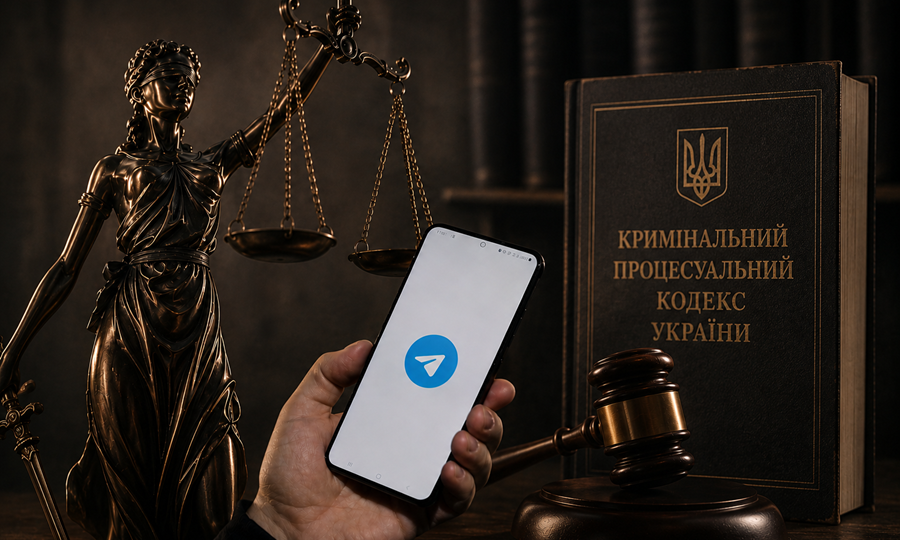
The court noted that publications in Telegram channels about events in the occupied territory cannot automatically be considered reliable evidence if it is impossible to verify who created these resources, who publishes the information, and where it comes from.
Evidence from open sources can confirm certain circumstances, but it must be accepted with great caution since the original source cannot be verified. Such evidence must be corroborated by other evidence that collectively creates a strong impression of the crime's commission and the person's guilt.
The Supreme Court pointed out that the prosecution did not provide any evidence that the relevant Telegram channels are official resources of the occupation administration or that the information in them comes from a verified source. Moreover, the publications did not contain references to the primary source of information.
The court also noted that the witness's testimony was mainly based on information from the internet and words of unidentified persons. The witness was not an eyewitness to the position holding, could not name the specific position, and did not report from whom exactly he received the information.
The prosecution did not prove the presence of organizational and administrative functions in the respective position as stated in the indictment. The so-called "law on education in the DPR" provided by the prosecution did not contain such functions.
Separately, the Supreme Court emphasized that the prosecution's mere disagreement with the assessment of evidence is not grounds for its re-examination by the appellate court according to part 3 of Article 404 of the Criminal Procedure Code.
Based on the above, the Supreme Court left the appellate court's ruling unchanged and confirmed the acquittal of the accused in the case of collaborationist activity.
Thus, the Court confirmed that information from Telegram channels and other open internet sources can be used as evidence in criminal proceedings, but only subject to proper verification and confirmation by other evidence.
Reference to publications in social networks or messengers alone, without establishing the source of information and without confirming other elements of the crime, cannot ensure the standard of proving guilt beyond a reasonable doubt in cases under Article 111-1 of the Criminal Code.
Also read about how courts search for accused persons on social networks and the problems arising from such evidence in war crimes cases — in the article of the "Judicial and Legal Newspaper".
Subscribe to our Telegram channel t.me/sudua and to Google News SUD.UA, as well as to our VIBER and WhatsApp pages on Facebook and Instagram to stay informed about the most important events.