In Lviv, a man refused to buy a house due to force majeure but moved in and clogged the sewage with foam: The Supreme Court examined the case












In civil proceedings, proving damages is one of the most complex processes, where the boundary between the obvious and legally proven is often insurmountable.
The preliminary purchase agreement, early moving into the house, and sewage blocked with mounting foam — the circumstances of this case resembled a detective story more than an ordinary civil dispute.
The story of an unsuccessful purchase and sale of a residential house in Lviv turned into a multi-year legal battle, where the owner tried to get compensation for damaged property and the opponent's free residence. The Supreme Court considered case No. 462/7787/24 through the prism of basic principles of civil law and concluded that the mere fact of a person living in a house is not sufficient evidence of their responsibility for property damage.
In April 2021, the parties concluded a preliminary purchase agreement for the house and land plot. The buyer, the defendant in the case, paid $35,000 as a security deposit and, with the owner's consent, moved into the unfinished house. However, the main contract was never concluded: the defendant cited force majeure due to martial law and lack of funds but refused to vacate the house.
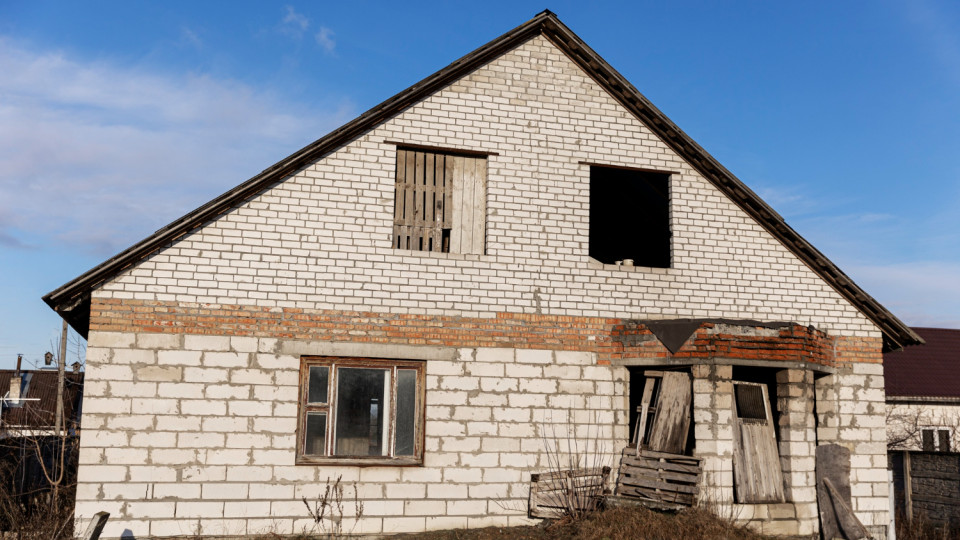
After forced eviction through the court, the owner, i.e., the plaintiff, found unauthorized remodeling, damaged windows and doors, and most notably, sewage and heating systems clogged with mounting foam. The total amount of claims was 986,866.83 UAH, including repairs, payment for residence (660,000 UAH), and unpaid electricity.
The plaintiff provided the court with a construction and technical expert report, which recorded that the layout did not correspond to the technical passport, walls were dismantled, and windows damaged. However, the court of first instance, agreed upon by the appeal and the Supreme Court, noted that the expertise confirms the fact of damage but does not indicate who and when caused it.
To recover damages, it is not enough to prove only the fact of property damage
When considering the dispute over house damage, the Supreme Court reminded of the mandatory conditions of civil liability provided by Article 1166 of the Civil Code of Ukraine. To recover damages, the plaintiff must prove the combination of four elements: unlawful behavior of the defendant, the existence of damage, a causal link between the person's actions and the damage caused, and their fault.
In this case, the courts established that the plaintiff only confirmed the fact of damage to the house. At the same time, there was no evidence that the defendant caused this damage. In particular, it was impossible to prove a causal link between his actions and the damage caused, as well as the presence of fault.
Under these circumstances, the Supreme Court agreed with the conclusions of the previous instances to deny the claims for compensation. The court emphasized that a person's residence in the house or actual use of it does not create a presumption of their responsibility for any detected property damage.
This position once again confirms that in damage compensation disputes, proper and admissible evidence is decisive, not assumptions about a person's possible involvement in property damage.
Why was 660,000 UAH for rent not recovered?
The plaintiff demanded payment for residence as compensation for material damage within tort relations. The courts established that there was no lease agreement, and therefore no contractual grounds for collecting payment.
The Supreme Court noted that the use of another's property by law is mandatorily payable according to Articles 762 and 820 of the Civil Code of Ukraine.
If there is no contract, and a person uses the property, the owner has the right to recover unjust enrichment (condictio) under Article 1212 of the Civil Code of Ukraine.
However, the plaintiff did not claim based on Article 1212 of the Civil Code. Guided by the principle of dispositivity, the court had no right to go beyond the claims made and independently change the basis of the claim from tort to condictio.
Preliminary agreement and force majeure
The Supreme Court rejected the arguments that the defendant violated the preliminary agreement.
The court noted that the nature of the preliminary agreement does not affect the obligation to prove damage under Article 1166 of the Civil Code, as these are different types of legal relations. In fact, the unfinished status of the buyer who moved in before concluding the main agreement caused legal confusion from which the owner could not escape due to procedural errors.
Key conclusions
Document the condition of the property before transfer. The transfer of real estate under a preliminary agreement or for repairs should be accompanied by an acceptance certificate, photo, and video recording. In this case, the lack of documentary confirmation of the initial condition of the house was one of the reasons it was impossible to prove the defendant's responsibility.
Choose the method of legal protection correctly. If a person uses real estate without proper legal grounds, it is advisable to consider the possibility of claiming unjust enrichment under Article 1212 of the Civil Code of Ukraine. This method of protection may be more effective than a claim for damages.
Expertise establishes damage but not the culprit. A construction and technical report can confirm the presence of defects and their cost but does not answer who caused them. Other evidence is needed for this: witness testimony, video recordings, law enforcement reports, or other confirmations of the causal link.
Moreover, the court will not change the claims on behalf of the party. The principle of dispositivity means that the plaintiff determines the grounds and method of protecting their rights. An erroneous choice of legal construction may lead to denial of the claim even if there are real property losses.
This case became another reminder for property owners that agreements without proper documentation and recording the condition of the property can be extremely costly. In the dispute considered, the price of such procedural mistakes reached almost one million hryvnias.
Subscribe to our Telegram channel t.me/sudua and to Google News SUD.UA, as well as to our VIBER and WhatsApp, Facebook page and Instagram to stay updated on the most important events.