The High Anti-Corruption Court Approved a Million-Dollar Agreement: The Court Determined the Punishment in the Case of the Former Head of the Supreme Court


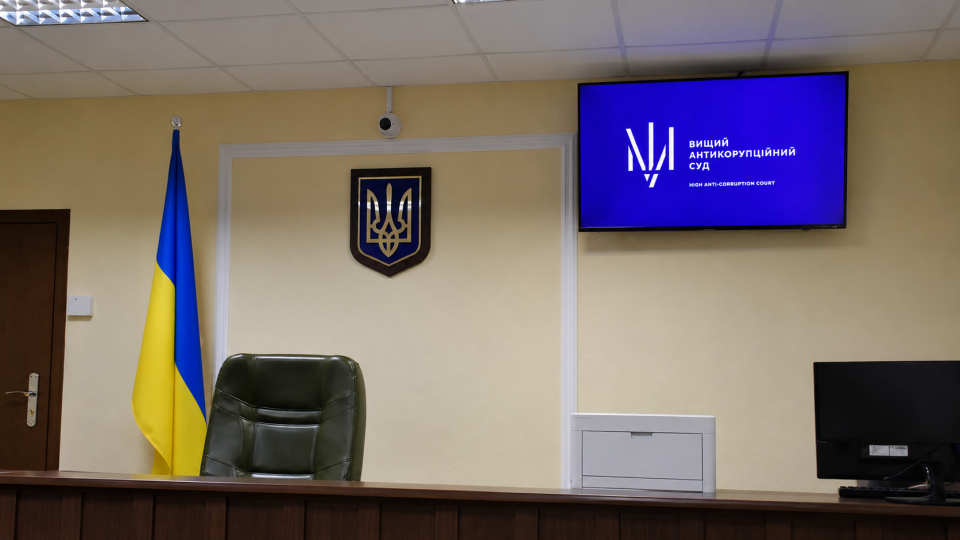










The Unified State Register of Court Decisions has published the full text of the verdict of the High Anti-Corruption Court in case No. 991/1692/24 concerning the former Head of the Supreme Court. From the published text, it follows that the court approved a plea agreement concluded between the defendant and the prosecution. Under the agreement, the former head of the court admitted guilt and undertook the obligations provided by law, including cooperation with the investigation in exposing other persons involved in the criminal offense.
The decision states that the applied plea agreement mechanism became the main tool for the procedural completion of the proceedings, which allowed achieving a swift result in a highly complex case.
The court established that the accused, while holding the position of Head of the Supreme Court, entered into a prior conspiracy with other persons to obtain unlawful benefits. The actions of the convicted person were qualified under Part 4 of Article 368 of the Criminal Code of Ukraine. The court emphasized that the Head of the Supreme Court is an official holding a particularly responsible position.
The verdict of the High Anti-Corruption Court outlines the reasons why the court concluded that the plea agreement corresponds to the interests of society.
Among the key criteria, the court noted procedural economy and the promptness of the review. The verdict emphasizes that consideration of the case under the general procedure would have required examination of a significant amount of evidence, and the proceedings had already involved over 50 court sessions without nearing completion.
The court separately took into account the cooperation of the accused with the investigation. In particular, he provided information regarding the involvement of other persons in probable corruption offenses, which, according to the court, is confirmed by the collected evidence.
An important element of the agreement was also the financial component. The verdict provides for the transfer of 1,104,600 US dollars to support the Defense Forces of Ukraine, which the court regarded as an additional socially significant result.
The court also emphasized that even with the approval of the agreement, the accused receives a real punishment in the form of imprisonment, which ensures a preventive and punitive effect and corresponds to the goals of criminal proceedings.
Punishment and Confiscation
The application of Article 69-2 of the Criminal Code of Ukraine became a tool for imposing a punishment on the accused that is less than the minimum prescribed by law due to the plea agreement.
Article 69-2 of the Criminal Code of Ukraine came into force on November 1, 2024, to improve the regulation of agreements in corruption crime cases. It establishes special rules for imposing a milder punishment than prescribed by law in case of a plea agreement. This provision allows the court to go below the lower limit of the sanction of the Special Part of the Criminal Code.
The crime was committed in May 2023, i.e., before Article 69-2 came into force. However, the court applied it based on the principle of retroactive effect of the law in time (Article 58 of the Constitution of Ukraine and Part 1 of Article 5 of the Criminal Code of Ukraine): since the provisions of Article 69-2 improve the position of the person, namely by allowing a lighter punishment, they have retroactive effect.
For the lawful use of Article 69-2, the court verified the presence of mandatory conditions. A plea agreement was concluded between the SAP prosecutor and the accused. The case concerns a corruption criminal offense (Part 4 of Article 368 of the Criminal Code of Ukraine). The accused fulfilled the requirement of paragraph 2 of Part 4 of Article 469 of the Criminal Procedure Code of Ukraine — exposing other persons involved in corruption crimes, and this information was confirmed by evidence.
Thanks to Article 69-2, the parties agreed on the main punishment in the form of 5 years of imprisonment. The court established that this term is not lower than the lowest limit set by the general part of the Criminal Code for this type of punishment, which complies with the law.
The court recognized the application of Article 69-2 as justified because it ensured the public interest in the swift disclosure of the crime, exposure of more persons, and obtaining assistance for the Armed Forces of Ukraine. According to the court, the punishment imposed in this way is sufficient for the correction of the convicted person and general prevention.
Imposed Punishment
The verdict of the High Anti-Corruption Court records the final punishment imposed by the court within the approved plea agreement.
The court sentenced the accused to 5 years of imprisonment, as well as an additional punishment — deprivation of the right to hold positions in judicial and law enforcement bodies for 3 years.
The verdict also provides for property consequences. The court ordered the full confiscation of specified property, including an apartment, a residential house, and funds held in bank accounts (including amounts of 20,000 UAH, 12,000 UAH, 34,000 USD, and others).
Special confiscation was also applied to funds that were the subject of the crime. This concerns 1,248,700 US dollars seized during searches in the office and apartment.
Subscribe to our Telegram channel t.me/sudua and to Google News SUD.UA, as well as to our VIBER and WhatsApp, page on Facebook and on Instagram to stay informed about the most important events.