In Poltava Region, Police Lost a Drunk Driving Case in Court Due to Incorrect Temperature Reading on the Drager Device Receipt


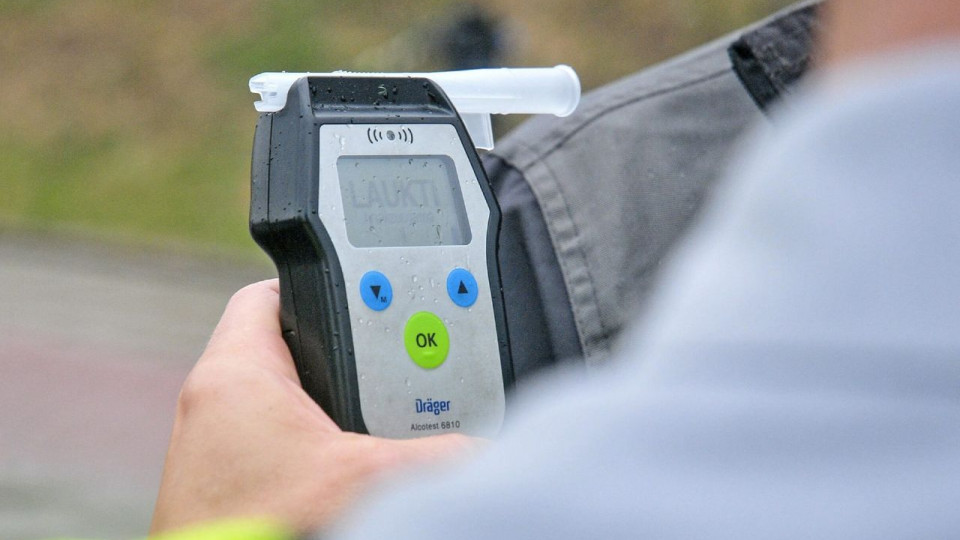










In cases of driving under the influence under Article 130 of the Code of Administrative Offenses, breathalyzer readings are traditionally considered one of the key pieces of evidence of the driver's guilt. However, as current judicial practice shows, automatic trust in devices like the "Drager Alcotest" is gradually giving way to a detailed legal analysis of the conditions of their use.
One of the grounds increasingly noted by courts when reviewing rulings under Article 130 is non-compliance with technical requirements for using breathalyzers or signs of their incorrect operation. Courts pay special attention to cases where the temperature recorded by the device does not correspond to actual weather conditions. Such discrepancies may indicate violations of the breathalyzer's operating conditions and call into question the reliability of its readings, opening additional opportunities for the driver's defense.
For a long time, most courts did not take into account the technical characteristics of Drager Alcotest devices, including the allowable error depending on ambient temperature. The device results were often considered indisputable evidence, even if the temperature at the time of the test was low or high.
A new precedent may change this practice. On April 24, 2026, the Poltava Court of Appeal in case No. 538/15/26 canceled the first-instance court's ruling and closed the proceedings under Part 1 of Article 130 of the Code of Administrative Offenses.
Case No. 538/15/26 Poltava Court of Appeal
According to the judge's ruling, the driver operated a vehicle while intoxicated. An examination for intoxication with the driver's consent was conducted using the Drager 6810 device, with a test result of 0.42 per mille.
The first-instance court found him guilty of the offense, but the defense drew attention to a critical detail on the device printout. The defense argued that the device receipt recorded a temperature of +11°C, which did not correspond to the actual weather conditions.
The appellate court established that the device receipt indeed recorded a temperature of +11°C. At the same time, according to the official report from the Poltava Regional Hydrometeorological Center, the air temperature in the region at that time ranged from -1.5°C to -0.7°C.
The nearly 12-degree difference between the actual temperature and the device reading was grounds for concluding a technical malfunction or violation of operating conditions.
Under these circumstances, the reliability of the examination results raised reasonable doubts, and therefore the court applied the constitutional principle of the presumption of innocence, according to which all doubts about proving the person's guilt are interpreted in their favor.
The ruling was canceled, and the proceedings were closed due to the absence of an offense.
Case No. 522/21975/25 Odessa Court of Appeal
A serviceman allegedly operated an electric scooter while intoxicated, with a breathalyzer result of 0.31 per mille. The defense claimed the device showed 28°C while the actual temperature was 18°C, indicating an incorrect result.
The court critically assessed the defense's arguments, noting that the temperature indicated on the receipt was in the "device temperature" column and therefore should not exactly match the air temperature.
The device had a valid calibration certificate and the latest graduation, confirming its proper technical condition.
Even considering the maximum allowable relative error of +/- 10%, the result of 0.31 per mille still significantly exceeded the legal limit of 0.2 per mille.
The appeal was dismissed, and the driver was held accountable.
Case No. 503/73/25 Odessa Court of Appeal
The Odessa Court of Appeal canceled the district court's ruling and closed the proceedings in a case against a driver accused of driving under the influence.
The judge partially satisfied the appeal. The first-instance court's ruling, which imposed a fine of 17,000 UAH and deprivation of the right to drive for one year, was canceled.
The court used the temperature factor as one of the key arguments in favor of the driver.
The ambient temperature during the test according to the Drager printout was +2°C. The court referred to the technical specifications of the Drager Alcotest device, including DSTU OIML R 126 and the Operating Manual.
The court noted that under such conditions, with low temperature and a slight excess of the per mille threshold, the police were obliged to send the driver for a medical examination rather than relying solely on the device on site.
What this means in practice
A temperature difference of 10 degrees or more is considered by courts as a signal of possible sensor malfunction or violation of the device's operating conditions.
A simple statement of the difference is not enough. The defense must clearly show that considering the allowable error (±0.04–0.06 ‰ + relative error up to 10%), the test result could have been within the norm (below 0.2 ‰).
The strongest position is when the temperature error is combined with other violations: interrupted video recording, absence of two witnesses, or failure to offer a medical examination.
Subscribe to our Telegram channel t.me/sudua and to Google News SUD.UA, as well as to our VIBER and WhatsApp pages on Facebook and Instagram to stay informed about the most important events.