Resolution 821 canceled, but the Pension Fund has no payment mechanism: how to now recover pension debts


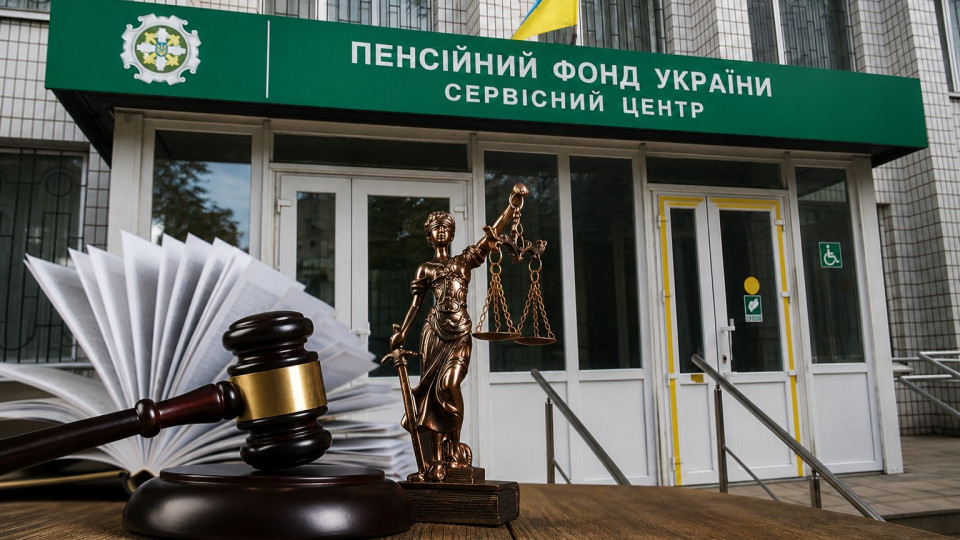










The situation with the enforcement of court decisions in pension cases in Ukraine has long remained problematic due to the government's introduction of a so-called "special procedure" for debt repayment. This approach meant that the Pension Fund of Ukraine made payments based on court decisions not in full and not immediately, but proportionally to annual budget allocations. In fact, this means that debt amounts are paid in installments, and the deadlines for full enforcement of decisions are indefinite. The main obstacle was Cabinet of Ministers of Ukraine Resolution No. 821 dated 14.07.2025, which introduced the special procedure.
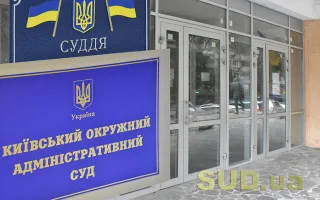
However, in 2026, the judicial system sided with the citizens. By decisions of the Kyiv District Administrative Court and the Sixth Administrative Court of Appeal, Resolution No. 821 was declared unlawful and invalid.
The court emphasized that according to Article 129-1 of the Constitution of Ukraine, court decisions are mandatory for execution. The state has no right to change the content of a court act or make its implementation dependent on the availability of budget funds by a subordinate act. The government exceeded its powers by creating a new enforcement procedure not provided for by law.
However, the Pension Fund of Ukraine states that there is no clearly defined procedure for making such payments. Because of this, full enforcement of court decisions is complicated. That is, citizens once again find themselves in a situation where a formal court decision does not guarantee prompt receipt of funds.
Scope of the problem: 96.7 billion UAH of debt
As of June 1, 2026, the balance of unpaid funds under court decisions related to pension provision amounts to 96.7 billion UAH. The number of court decisions in pension cases has increased 26 times compared to previous periods. Groups at increased risk, who have been waiting for years for actual enforcement of court decisions on pension payments, typically include:
- military pensioners — primarily in cases related to pension recalculations based on salary certificates;
- liquidators of the Chernobyl accident consequences and persons with disabilities — regarding additional payments and increases established by court decisions;
- retired judges and certain categories of civil servants — in disputes concerning special pension guarantees and their recalculation.
Position of the Pension Fund
After June 8, 2026, the Pension Fund of Ukraine reportedly acknowledged the absence of a valid mechanism for paying recalculated pensions and repaying accumulated debt. The reason was the canceled previous government resolution regulating the special payment procedure, while a new regulatory act has not yet been adopted.
As a result, a legal gap emerged: formally, the restrictions defining the proportional payment procedure no longer apply, but a clear algorithm for enforcing court decisions on pension debt is absent. The Pension Fund notes that making payments without an approved procedure may create risks of being interpreted as misuse of budget funds.
Judicial practice
Judicial practice shows a positive trend of courts strengthening judicial control over the enforcement of decisions in pension cases. Pensioners now have a real tool for forced enforcement — collection of accrued debt. Moreover, the Pension Fund no longer uses Resolution 821 for pension recalculations.
The Second Administrative Court of Appeal sided with a pensioner and recognized the application of restrictions and reduction coefficients on pensions as unlawful in case No. 480/159/26 dated June 26, 2026.
The panel of appellate judges considered the dispute regarding the procedure for calculating and paying pensions from January 1, 2026, and February 1, 2026, specifically concerning the application of restrictive coefficients and maximum pension amounts provided by relevant regulations.
The court found no evidence in the case materials that the Pension Fund applied the so-called "special payment procedure" provided by Cabinet Resolution No. 821. Pension recalculation protocols referred only to other regulatory acts without mentioning the specified procedure.
Additionally, the court took into account that by the decision of the Kyiv District Administrative Court dated March 4, 2026, which became final after the appellate court left it unchanged on June 8, 2026, Resolution No. 821 was declared unlawful and invalid. Therefore, at the time of the case review, this regulatory act had lost its force and could not be applied in the disputed relations.
At the same time, the panel concluded that the plaintiff's demand to oblige the Pension Fund to recalculate and pay the pension without applying the provisions of Resolution No. 821 was premature, as there was no evidence of its actual application in the specific case.
In case No. 380/5093/24, the Eighth Administrative Court of Appeal changed the enforcement method — from an "obligation to make payment" to direct collection of the accrued amount.
Now, instead of obliging the Pension Fund to make a payment, the court allowed collection of a specific debt amount — 7,500 UAH.
The court of first instance obliged the Pension Fund's Main Department in Lviv region to recalculate and pay the pension without restrictions. The Fund recalculated and accrued the additional amount but did not make the actual payment.
The appellate court canceled the first instance court's ruling that refused to change the enforcement method and changed the enforcement method. The basis was non-enforcement of the decision for more than two months.
After the entry into force of Law No. 4094-IX, non-enforcement of a decision regarding pension payments for two months is an independent ground for changing the enforcement method to collection of funds (paragraph 2 of part 3 of article 378 of the Code of Administrative Procedure of Ukraine).
Changing the enforcement method is not a review of the decision on the merits — it is a mechanism to ensure real enforcement.
The accrued but unpaid amount is clearly defined, so collection of such amount is an effective protection method.
By the resolution dated June 25, 2026, in case No. 520/5291/25, the Appellate Court refused the Pension Fund's acceptance of the report: non-payment of the accrued pension is non-enforcement of the decision.
The court satisfied the plaintiff's appeal and canceled the ruling of the Kharkiv District Administrative Court, which accepted the Pension Fund's Main Department report on enforcement. The court recognized that accruing pension supplements without actual payment is not full enforcement of a court decision.
The plaintiff achieved recalculation of the pension without restrictions. The Pension Fund recalculated and accrued the supplement but did not make the actual payment, citing lack of funds and Procedure No. 821.
The court noted that accepting the Pension Fund's report on enforcement without actual payment of the accrued amount is premature, and lack of funds is not a valid reason for non-enforcement.
The decision strengthens judicial control over enforcement of pension decisions: accrual without payment is not considered enforcement.
Recommendations
The cancellation of the previous "special procedure" for enforcing pension decisions can be seen as a step toward restoring the principle of mandatory court decisions and the rule of law. At the same time, the absence of new regulation creates a transitional period with legal uncertainty. As of the end of June 2026, the problem remains transitional. Therefore, each case requires an individual assessment of legal grounds, the content of the court decision, and the current state of regulatory regulation.
At the same time, automatic recalculation or compensation for previous periods is not provided, and each case requires individual legal protection.
Under these conditions, the key factor remains the active procedural position of the claimant — it determines the speed and reality of receiving funds.
Currently, it is advisable to act through enforcement mechanisms:
Forced enforcement through the State Executive Service (SES)
After receiving the writ of execution, it is necessary to apply to the State Executive Service to open enforcement proceedings. This formally transfers the enforcement into a forced mode and reduces the possibility of delay by the debtor.
Change of enforcement method
If payments are not made for a long time, lawyers recommend applying to the court with a request to change the enforcement method (in particular, according to procedural norms of the Code of Administrative Procedure of Ukraine). The goal is to transform the obligation to "recalculate the pension" into direct "collection of a monetary amount," which allows enforcement through the State Treasury.
Judicial control over enforcement
A separate tool is an application to establish judicial control. In such a case, the court may oblige the Pension Fund to report on enforcement, and in case of non-enforcement — apply procedural sanctions.
Separate debt collection
In cases where recalculation was only formal but payments were not actually made, additional court action to collect the debt is possible.
"Judicial and Legal Newspaper" will monitor the emergence of new documents and clarifications. A new payment procedure is already being discussed publicly, but final regulatory regulation still requires clear definition to avoid reproducing the old problem of proportional and indefinitely prolonged debt repayment.
Subscribe to our Telegram channel t.me/sudua and to Google News SUD.UA, as well as to our VIBER and WhatsApp pages on Facebook and Instagram to stay informed about the most important events.