The New Civil Code of Ukraine May Restrict Media Freedom


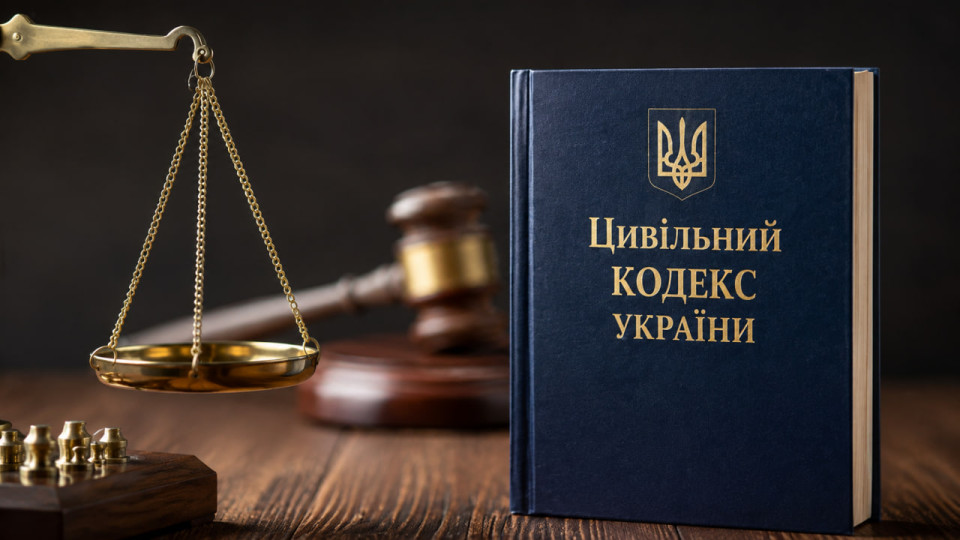










The draft Civil Code of Ukraine has become one of the most ambitious legislative initiatives in recent years, aimed at comprehensive modernization of private law. However, given the strategic importance of freedom of speech, the Verkhovna Rada Committee on Freedom of Speech requested the Council of Europe to assess the compliance of certain articles with European standards.
The legal opinion (LEX_2026_14) was prepared within the Council of Europe Project "Protection of Freedom of Speech and Media Freedom in Ukraine – Phase II." The document underwent mandatory expert evaluation by the Council of Europe's Freedom of Expression Co-operation Unit of the Department for Democratic Institutions in Strasbourg. The analysis focuses on articles regulating the right to refutation, response, honor, reputation, and new "digital rights" of individuals and legal entities.
Positive assessments of several innovations in the draft new Civil Code
Despite remarks on certain provisions of the draft new Civil Code of Ukraine, experts noted a number of positive changes proposed within the recodification of civil legislation.
In particular, a positive assessment was given to the clear distinction between the right to refutation and the right to response. Enshrining these rights in separate articles eliminates conceptual shortcomings of current legislation and makes mechanisms for protecting honor, dignity, and business reputation more understandable.
The introduction of out-of-court dispute resolution through public apology was also positively evaluated. The reconciliation mechanism provided by the draft law is expected to expand ways to protect personal non-property rights without the need to go to court.
The draft proposes to enshrine new personal non-property rights, including the right to a digital image, the right to be forgotten, and the right to informational peace. This reflects the Ukrainian legislator's intention to consider modern challenges of the digital environment and the development of European privacy protection standards.
Risks to freedom of speech
Alongside positive innovations, experts drew attention to several provisions of the draft new Civil Code that may create risks for freedom of expression guaranteed by Article 10 of the European Convention on Human Rights.
Lack of special approach to public figures
One of the main remarks is that the draft does not differentiate protection of rights of private and public persons. Relevant provisions regarding refutation, right to response, and protection of honor, dignity, and business reputation apply equally to all.
Experts remind that the practice of the European Court of Human Rights follows a different approach: politicians, high-ranking officials, and other public figures must be prepared for significantly broader public criticism than ordinary citizens. The absence of such distinction, according to the Council of Europe, may create grounds for using civil legislation as a tool to pressure journalists and media.
Vague formulations and disproportionate sanctions
Certain provisions of the draft law are formulated too broadly and contain evaluative terms such as "significant importance," "law enforcement body," or "etc." Such vagueness may lead to varied interpretations by courts and undermine the principle of legal certainty.
Additionally, concerns arise regarding certain methods of protecting violated rights. In particular, the draft allows destruction of documents as a way to enforce a refutation decision, which may potentially lead to loss of evidence.
Even more controversial is the provision allowing the court to seize and destroy the entire print run of a publication due to a violation in a single article. Such a mechanism constitutes a disproportionate interference with media freedom.
The right to response may become a tool to pressure the media
Remarks also concern the proposed model of the right to response. The draft provides for the possibility to demand publication of a response regardless of whether the disseminated information was accurate.
Experts emphasize that without clear application criteria, this right may turn into a mechanism for systematic coercion of editorial offices to publish materials they do not consider necessary. This creates risks for editorial independence and media freedom.
Conflicts with GDPR and threat to OSINT activities
The block of digital rights (Articles 321, 336, 345, 353) has been the subject of the most criticism due to inconsistency with EU law.
The draft law establishes consent as the sole basis for data processing in the digital space, which is a much narrower approach than the system of legal grounds for personal data processing under GDPR. For example, Article 6 of Regulation (EU) 2016/679 provides six lawful bases for processing, including contract performance, compliance with a legal obligation, protection of public interest, etc.
Establishing "consent" as the only basis may create significant problems for the functioning of open data systems, journalistic investigations, anti-corruption oversight, and OSINT tools.
The requirement for mandatory consent of a legal entity for processing its digital image (Articles 345, 353) may paralyze journalistic investigations, anti-corruption oversight, and OSINT analysis of open sources. Legal entities could block any information about themselves by citing lack of "consent."
Specific concerns relate to the proposed regulation of the digital image of legal entities.
The draft new Civil Code stipulates that processing the digital image of a legal entity will be carried out only with its consent. Experts believe this provision may have far-reaching consequences for freedom of information.
In particular, the requirement to obtain mandatory consent from a legal entity can significantly complicate journalistic investigations, anti-corruption public oversight, and open data analysis (OSINT).
Under this approach, companies and other legal entities could potentially demand cessation of use of any information about themselves, citing lack of consent to process their digital image. This, in turn, may create additional legal barriers for journalists, anti-corruption organizations, and open source researchers.
The proposed provisions require refinement to ensure a balance between protecting digital rights and freedom of expression and the public's right to information.
Lack of protection against SLAPP lawsuits
Another significant remark is the absence in the draft new Civil Code of mechanisms to counter SLAPP lawsuits (Strategic Lawsuits Against Public Participation) — strategic lawsuits used to pressure journalists, public activists, human rights defenders, and other participants in public debates.
The draft law does not consider modern European standards for protecting freedom of speech. In particular, it lacks procedural safeguards that would allow courts to quickly identify and dismiss unfounded lawsuits filed to intimidate or financially exhaust defendants.
This gap does not fully comply with European approaches enshrined in Directive (EU) 2024/1069 and the Council of Europe's Committee of Ministers Recommendation CM/Rec(2024)2, which require effective protection against abuse of judicial procedures.
Without anti-SLAPP mechanisms, lawsuits for protection of honor, dignity, and business reputation may be used not to restore violated rights but as a tool to pressure media and civil society. This creates a risk of financial and psychological exhaustion of journalists and editorial offices and may have a chilling effect on investigative journalism and socially important publications.
The legal opinion notes that draft law No. 15150 is an important step in reforming Ukraine's civil legislation, but it requires substantial revision before the second reading to comply with European human rights and freedom of expression standards.
Representatives of the expert community, media, and civil society have already expressed support for creating a special working group to develop the Council of Europe's recommendations before the parliament's final consideration of the document.
Key expert recommendations include:
- strengthen protection of freedom of speech and public interest by providing a higher standard of permissible criticism of politicians, officials, and other public figures in the Code norms according to ECHR practice;
- eliminate evaluative and vague formulations to ensure the principle of legal certainty and predictability of law enforcement;
- reject provisions on destruction of documents and media print runs, recognizing such measures as disproportionate interference with freedom of expression;
- harmonize digital rights provisions with European legislation by providing lawful bases for data processing beyond just consent, in line with GDPR approaches;
- introduce exceptions for journalistic activities, anti-corruption oversight, and use of open data so that new digital rights of legal entities do not hinder journalistic investigations and public oversight;
- include anti-SLAPP mechanisms that prevent the use of lawsuits as tools to pressure journalists, media, and public activists. In particular, experts recommend not allowing injunctions that suspend media activities before court decisions become legally binding.
Considering these recommendations is a necessary condition for the recodification of the Civil Code not only to modernize Ukrainian private law but also to comply with European Union and Council of Europe standards on protecting freedom of speech, the right to information, and effective human rights protection.
Subscribe to our Telegram channel t.me/sudua and to Google News SUD.UA, as well as to our VIBER and WhatsApp, and follow us on Facebook and Instagram to stay updated on the most important events.