Can a Military Unit Occupy a Private House: What Rights Does the Owner Have


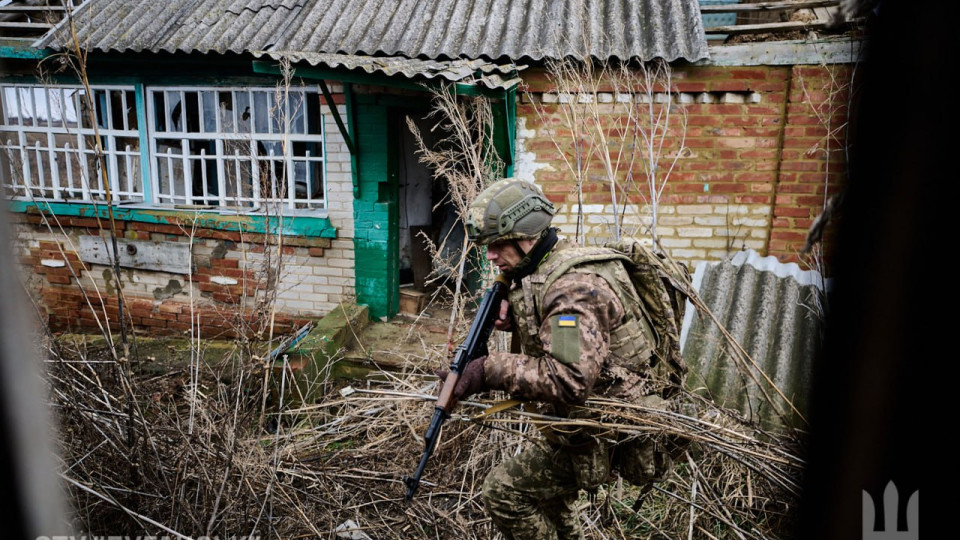










Since the full-scale invasion, the issue of unauthorized occupation of housing by the military has become increasingly relevant, especially in frontline communities. However, there are two sides to this issue: due to the proximity of the front line, the military faces an urgent need for housing, while on the other hand, there are people who have left their homes and are unaware that someone is living there. For some, this is a common wartime scenario; for others, it is a reason to consider where the boundary lies between the needs of national defense and the right to private property.
Is it legal for the military to occupy a private house without the owner's knowledge and permission, and does martial law mean that property rights no longer apply? "Judicial-Legal Newspaper" examined what Ukrainian legislation provides.
First of all, it is important to understand that even during martial law, the right to private property does not cease. The Constitution of Ukraine remains in effect, although certain rights and freedoms may be temporarily restricted.
One of the main guarantees is Article 30 of the Constitution of Ukraine, which guarantees the inviolability of the home to everyone. Entry into a person's home or other possession, conducting an inspection or search is allowed only by a motivated court decision. The exception is urgent cases related to saving lives, property, or the immediate pursuit of persons suspected of committing a crime.
At the same time, part two of Article 64 of the Constitution of Ukraine lists rights that cannot be restricted even during martial law. Property rights are not included in this list. This means that during wartime, the state may impose certain restrictions on the use of property, but only on the basis of law and within the powers provided by it.
This provision often leads to the mistaken belief that the military can freely occupy any housing. In reality, the law establishes a much more complex mechanism.
What the Martial Law Act Actually Allows
The main provision cited in such situations is paragraph 17 of part one of Article 8 of the Law of Ukraine "On the Legal Regime of Martial Law". It provides that during martial law, military command together with military administrations may impose a military housing duty on individuals and legal entities for the quartering of servicemen, law enforcement officers, civil protection forces, evacuated population, as well as military units, subdivisions, and institutions. The wording of this provision is of fundamental importance.
It should be noted that the law does not say that any serviceman has the right to independently choose housing for residence. The authority to establish military housing duty belongs not to an individual soldier but to the military command acting jointly with military administrations. In other words, the legislator envisaged an administrative procedure, not the right to unauthorized settlement.
Moreover, the Law of Ukraine "On the Legal Regime of Martial Law" does not contain any provision that would directly allow servicemen to break into a private house without any decision of competent authorities just because it is empty or the owners have been absent for a long time. This is an important legal nuance often overlooked.
Can the Military Break Doors and Settle Without the Owner's Consent?
Homeowners located in areas close to the front line most often ask this question. Current legislation does not contain a provision that would directly allow the military to enter a private house by breaking doors or other obstacles without any decision of authorized bodies just because the owner is absent.
At the same time, situations arise when the military must act immediately while performing a combat mission, to protect personnel or civilians. In such cases, to assess the legality of specific actions, all circumstances must be taken into account, not just the fact of entering the housing.
If the territory is no longer an active combat zone and the house is used specifically for the residence of servicemen or the placement of a unit, such use must be carried out within the mechanisms provided by law, not by unauthorized seizure of property.
How the Use of Private Housing Is Formalized
The procedure for providing housing to servicemen is defined, in particular, by the Order of the Ministry of Defense of Ukraine dated July 31, 2017, No. 380, which approves the Instruction on the organization of providing servicemen of the Armed Forces of Ukraine and their family members with residential premises.
The document provides for the possibility of renting housing for the military. "If it is impossible to provide servicemen with official residential premises (official residential space), the military unit, represented by the commander of the military unit, is obliged to rent housing in accordance with the legislation of Ukraine. The military unit has the right to rent housing (beds, rooms in dormitories, apartments, etc.) within the available financial resources provided by the military unit's budget for this purpose.
Housing is rented from enterprises, institutions, organizations, and citizens regardless of the form of ownership, with a corresponding housing lease agreement concluded," the document states.
In such cases, a lease agreement is concluded between the owner of the house or apartment and the commander of the military unit. It defines the terms of use of the premises, duration of residence, and responsibilities of the parties. As a result, the owner receives official confirmation of who is using their property, and the military unit obtains legal grounds for the residence of personnel.
Who Should Pay Utility Bills
The most practical question is who should pay for electricity, gas, water, or other utilities if the military lives in the house. When the contract is properly formalized, utility costs may be borne by the military unit according to the terms of the contract and financed by the Ministry of Defense of Ukraine. However, the biggest problems arise when documents are not formalized.
In such cases, all bills are sent to the homeowner. Utility providers do not investigate who actually lives in the house. The consumer is the owner or the person to whom the personal account is opened. As a result, large debts may accumulate, and when the owner returns home, they often have to pay tens of thousands of hryvnias for electricity or gas.
Therefore, homeowners should contact the local military administration or directly the command of the military unit to resolve the issue formally.
What Should the Owner Do If the Military Lives in Their House
First of all, it is worth contacting the local military administration, finding out which military unit is using the housing, initiating the conclusion of a lease agreement or another document confirming the legality of use, recording meter readings and the technical condition of the house, and keeping all documents that may confirm the period of actual use of the housing by the military.
Such documents may become important evidence in case of disputes regarding utility payments or compensation for damages.
What the Supreme Court Says About the Inviolability of Housing
The position of the Supreme Court confirms that the right to inviolability of housing remains one of the fundamental constitutional guarantees. The Court has repeatedly emphasized that the mere fact of the owner's absence or another person's belief in the legality of their actions does not give the right to enter someone else's home without grounds provided by law.
For example, in April 2024, the Supreme Court, considering case No. 722/151/20 on illegal entry onto private property, concluded that even officials of local self-government bodies cannot independently enter someone else's property without the owner's consent, relying only on their belief that their actions are lawful. The Court emphasized that criminal liability for violation of housing inviolability, provided by Article 162 of the Criminal Code of Ukraine, is one of the guarantees of implementing Article 30 of the Constitution of Ukraine and Article 8 of the Convention for the Protection of Human Rights and Fundamental Freedoms.
In another legal position, the Supreme Court noted that the concept of "entry" includes not only physical access to the premises but also the legal aspect — the presence or absence of the lawful right to be in that housing. This is evidenced by the Resolution of the Criminal Cassation Chamber of the Supreme Court dated March 12, 2024, in case No. 722/151/20. If such a right does not exist, being in someone else's house may be considered illegal. Therefore, even under martial law, it is important to distinguish two different legal situations.
First — when housing is used based on a decision of the military command and military administration within the military housing duty provided by paragraph 17 of part one of Article 8 of the Law of Ukraine "On the Legal Regime of Martial Law." Second — when individuals independently occupy a private house without any decision of authorized bodies. The law does not contain a provision granting servicemen a general right to independently enter any private housing solely because martial law has been declared. This conclusion follows from a systematic analysis of the Constitution of Ukraine, the Law "On the Legal Regime of Martial Law," and established judicial practice.
In conclusion, martial law indeed allows the state to restrict certain property rights and use private houses for defense purposes. Paragraph 17 of part one of Article 8 of the Law of Ukraine "On the Legal Regime of Martial Law" provides for this possibility and introduces a mechanism of military housing duty. However, this does not guarantee that any serviceman can freely enter someone else's house or break doors just because no one occupies it. This is not provided by law.
Military command and military administrations make decisions regarding the use of defense housing, and the only way to regulate these relations further is through official formalization of housing use. If the military already uses the house, the property owner should not wait until debts accumulate or disputes escalate. The sooner legal relations can be formalized, the greater the chances of resolving any problems after the use of the housing ends.
Subscribe to our Telegram channel t.me/sudua and to Google News SUD.UA, as well as to our VIBER and WhatsApp pages on Facebook and Instagram to stay informed about the most important events.