HCJ vs Judges: Where Control Ends and Pressure Begins


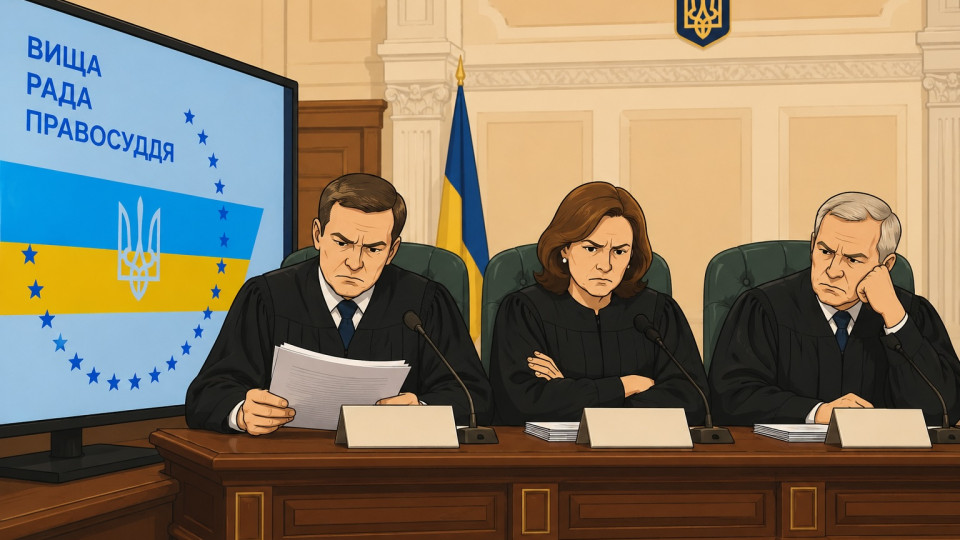










The right to a fair trial within a reasonable time is fundamental, but in the Ukrainian realities of 2026, it increasingly conflicts with human physical capabilities. When the workload of one appellate judge averages 430 hours per month against a norm of 160, meeting procedural deadlines becomes a mathematical equation with no positive solution.
The legal discussion about the collegiality of judicial decisions becomes particularly acute. Traditionally, responsibility for drafting the decision text rested solely on the reporting judge. However, recent trends in the activities of the High Council of Justice (HCJ) indicate an attempt to introduce a new practice: holding all members of the panel accountable for organizational errors of the reporting judge.
The issue of collective responsibility in recent HCJ decisions highlights a new crisis. The HCJ stands at a crossroads: either maintain the principle of individual responsibility of the reporting judge, considering the critical workload of panel members, or introduce a model of collective suretyship that will ultimately bury the appellate instance.
The formation of new HCJ practice points to a likely shift from purely individual to joint responsibility of all panel members for procedural delays.
This concept is based on the thesis that a judicial decision is the result of joint work and a collective act of the panel, not an individual act of the presiding or reporting judge, since all judges of the panel participate in the consideration, discussion, and signing of the decision.
The new practice sparks debate amid a critical personnel shortage in courts. For example, in the Kyiv Appellate Court, the actual number of judges is almost 2.5 times less than the normative, significantly affecting case processing times and timely preparation of judicial decisions.
Moreover, the initiative to hold "colleagues of the reporting judge" accountable raises complex questions about legal certainty and the correlation between the principles of collegial justice and guarantees of individual judicial independence. This approach requires evaluation from the standpoint of the Constitution of Ukraine and international standards, as it may create additional pressure on judges amid a systemic personnel crisis.
Workload in 2026
Figures from the first quarter of 2026 indicate that the judicial system is on the verge of functional capacity.
- Kyiv Appellate Court. As of March 31, 2026, the court has 145 judge positions authorized by staff, while normative workload requires 196. However, only 61 judges are actually serving.
- Administrative Justice. Over 16,000 cases were filed with the Kyiv District Administrative Court in the first quarter of 2026. According to norms, the court needs 333 judges, but only 29 are working.
Under such conditions, a "reasonable time" becomes an illusion. The Grand Chamber of the Supreme Court in case No. 990SCGC/7/24 noted that delay is not any postponement but only that which is not caused by objective circumstances (extreme workload, case complexity). However, the HCJ increasingly ignores these "objective circumstances," moving toward punitive practices.
Legal nature of the reporting judge
According to the Criminal Procedure Code of Ukraine, particularly Articles 392–423, the reporting judge plays a key role in ensuring the effectiveness and proper organization of collegial consideration. Their organizational function includes studying materials, resolving motions as necessary, and reporting the content of the appealed decision and appeal arguments to other panel members.
The reporting judge effectively directs the judicial process from the preparatory stage to the decision-making stage. Moreover, they are responsible for ensuring that the joint decision complies with procedural law requirements (notably Article 419 of the CPC) regarding motivation and justification.
Systemically, the reporting judge is a defining factor in the process, and the actions of other panel members during preparation and drafting are not considered independent factors that can significantly alter their personal responsibility for deadlines.
Alongside organizational functions, the law imposes on the reporting judge a number of specific technical-executive duties that cannot be delegated to other panel members or court staff.
The reporting judge is responsible for physically writing the text of the ruling or resolution. According to the Procedure for Maintaining the Unified State Register of Court Decisions (USRCD), the duty to timely send electronic copies of the judicial decision lies personally with the reporting judge.
After announcing the operative part, the reporting judge must prepare the full text no later than five days.
Role conflict: Collective act vs Individual misconduct
Despite the established practice of individual responsibility, in 2026 the HCJ began opening disciplinary cases against all panel members in cases of prolonged delays. This indicates an attempt to revise the status of the reporting judge: they remain the main executor, but the panel is viewed as a body that should exercise joint control over respecting the human right to a fair trial within reasonable timeframes.
Thus, the HCJ practice shows a troubling trend toward revising the foundations of individual judicial responsibility. Whereas previously only the reporting judge was responsible for delays in drafting decisions, HCJ rulings from 2025–2026 indicate an intention to introduce "collective responsibility" for the entire panel.
Although this approach is justified by protecting the rights of process participants, it poses serious threats to judicial independence and system stability, which is already in a state of personnel collapse.
The HCJ emphasizes that all judges of the panel participate in consideration, discussion, and decision-making, and the operative part, which forms the basis for the full text, is signed by all panel judges.
Specifically, in the ruling dated March 2, 2026 (case No. 302/1dp/15-26), the HCJ opened a case against the panel judges because the ruling dated August 27, 2024, was not prepared for 18 months, effectively depriving the convicted person of the right to defense in a higher court.
This HCJ approach directly contradicts current legislation and the Council's previous conclusions.
Why "control over a colleague" is impossible
The workload of Kyiv Appellate Court judges in Q1 2026 illustrates the absurdity of the requirement for joint responsibility. The actual number of judges with powers is only 60 against a normative need of 196.
The normative time to consider cases filed to the Kyiv Appellate Court exceeds 80,000 hours per quarter. The actual monthly workload per judge is about 430 hours, nearly three times the average monthly working time norm (160 hours).
Judge colleagues lack procedural tools to force the reporting judge to speed up drafting the text, as case materials remain with the latter.
Risks of collective responsibility
An attempt to implement a collective responsibility model in the judicial system amid unprecedented personnel shortages and abnormal workloads poses a real threat of judicial collapse. Analysis of recent HCJ practice trends and statistical data indicates that shifting from individual responsibility of the reporting judge to collective responsibility may become a destructive factor for the entire sector.
Professionals actively discuss the HCJ’s changing approach, where judicial decisions are increasingly viewed as "a joint act of the panel, not an individual act of the presiding judge."
Introducing "collective responsibility" under such conditions means that a judge already working at the limits of physical capacity must additionally monitor deadlines of colleagues in panels where they are not the reporting judge.
Assigning responsibility to panel members for the reporting judge’s actions creates numerous operational risks leading to collapse. Instead of considering their own cases, judges are forced to spend time administering and monitoring colleagues’ decision preparation deadlines.
Effective and diligent judges face the threat of sanctions for others’ mistakes, demotivating the most productive personnel. Procedurally, the duty to prepare the text and send it to the Register (USRCD) lies personally with the reporting judge. Colleagues effectively lack legal instruments to pressure the reporting judge.
The desire to avoid individual responsibility will prioritize speed over quality: judges will sign raw or unmotivated texts just to meet deadlines, undermining the principle of legal certainty.
Increasing disciplinary pressure amid the absence of 603 judges in appellate courts nationwide may trigger a wave of resignations.
Collective responsibility is a path to system collapse. When workload exceeds human capabilities threefold, strengthening punitive measures against panel members will not accelerate justice but only destroy those still guarding fairness. Collegiality must remain a tool for legal quality, not a means of joint punishment for consequences of systemic personnel hunger.
Subscribe to our Telegram channel t.me/sudua, Google News SUD.UA here, as well as our VIBER and WhatsApp, and follow us on Facebook and Instagram to stay updated on the most important events.