War and the ban on imports from the Russian Federation exempt businesses from penalties — Supreme Court decision













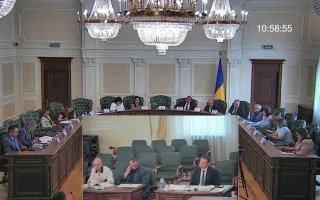
The Supreme Court, in a panel of judges of the Administrative Cassation Court, having considered case No. 600/2075/25-а, confirmed that Ukrainian enterprises cannot be held liable for violations of payment deadlines in foreign economic activity if the import of goods from Russia became impossible due to the government-imposed ban.
Circumstances of the case
After an inspection by the Western Interregional Department of the State Tax Service for work with large taxpayers, the tax authority established that the enterprise did not complete three import operations under foreign economic contracts concluded with a company, the subject of which was the supply of liquefied gas and diesel fuel of Russian origin.
The case materials established that in January–February 2022 the company made advance payments under three contracts. Part of the goods was delivered by the supplier before the start of the full-scale invasion, but the delivery of the remaining products did not take place. Advance payments were made in January–February 2022, but the goods were not delivered due to the full-scale invasion and Cabinet of Ministers Resolution No. 426 dated 09.04.2022, which prohibited the import of goods from Russia. The tax authority charged the company over UAH 5.48 million in penalties for violating payment deadlines under import contracts with a Cypriot company. The State Tax Service concluded that the enterprise violated the requirements of part three of Article 13 of the Law of Ukraine "On Currency and Currency Transactions" because it did not receive the goods or a refund of advance payments within the established deadlines.
Disagreeing with the penalty charges, the company appealed to the court. It stated that it was unable to complete the import operations due to the full-scale invasion by the Russian Federation and Cabinet of Ministers Resolution No. 426 of April 9, 2022, which banned the import of goods of Russian origin. In addition, the concluded contracts contained force majeure clauses regarding the war and provided for the possibility of suspending deliveries due to the impossibility of returning railway wagons.
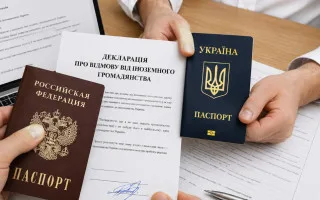
The courts of first and appellate instances agreed with these arguments. They noted that paragraph 13 of Article 16 of the Law of Ukraine "On Currency and Currency Transactions" exempts residents from penalties if import operations cannot be completed due to the effect of Cabinet of Ministers Resolution No. 426 on the ban of imports of goods from the Russian Federation.
Supreme Court decision
The Supreme Court agreed with the conclusions of the lower courts and stated that there are no grounds to satisfy the tax authority's cassation appeal. The court recalled that according to Article 13 of the Law of Ukraine "On Currency and Currency Transactions," import operations must be completed within the deadlines established by the National Bank, and penalties are charged for violations. At the same time, after the start of the full-scale invasion, the legislator supplemented the Law with paragraph 13 of Article 16, which provides a separate basis for exemption from such liability if the import operation cannot be completed due to the effect of Cabinet of Ministers Resolution No. 426 banning the import of goods of Russian origin.
The courts established that all three contracts were concluded for the supply of liquefied gas and diesel fuel of Russian origin, and the goods were to be delivered through the Russian-Ukrainian border. The company received part of the goods before the start of the full-scale war, but after the ban on the import of Russian goods was introduced, the fulfillment of the contracts became impossible. At the same time, the non-resident did not deliver part of the already paid goods and did not return all advance payments.
The Supreme Court also took into account that the contracts contained force majeure clauses that exempted the parties from liability in the event of war.
Furthermore, the contracts provided the seller the right to suspend deliveries in case of non-return of railway wagons. The case materials confirmed that after the start of hostilities, some wagons remained on the territory of Ukraine and could not be returned due to circumstances beyond the plaintiff's control. Because of this, the non-resident had counterclaims against the Ukrainian company, which also made the return of advance payments impossible.
The Supreme Court concluded that the company had no real possibility either to complete the import operations or to recover the paid funds, and the reason for this was the full-scale war and the state-imposed ban on the import of goods from Russia. Considering the above legal regulation, the courts concluded that paragraph 13 of Article 16 of Law No. 2473-VIII is an independent basis for exempting a resident business entity from liability provided for in part five of Article 13 of this Law, provided that import operations cannot be completed due to the effect of the Cabinet of Ministers of Ukraine's resolution "On the application of the ban on the import of goods from the Russian Federation" dated April 9, 2022, No. 426.
In conclusion, the Supreme Court dismissed the tax authority's cassation appeal and left the decisions of the lower courts unchanged.
Subscribe to our Telegram channel t.me/sudua and to Google News SUD.UA, as well as to our VIBER and WhatsApp, pages on Facebook and Instagram to stay informed about the most important events.