Fatal accident involving a carrier's vehicle: The Supreme Court explained why compensation is paid by the driver's employer, not the vehicle owner












On July 15, 2026, the Supreme Court, composed of judges of the First Judicial Panel of the Cassation Civil Court, considered case No. 199/9026/23 regarding compensation for property and moral damages caused by a fatal traffic accident. The key issue was to determine the person responsible for the damage if the vehicle belonged to a third party but was driven by an employee of the LLC during the performance of his job duties.
Case circumstances
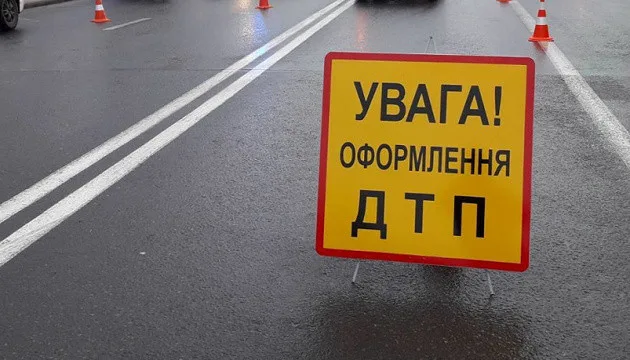
On the M-03 highway "Znamianka — Luhansk — Izvaryne," a vehicle driven by the driver struck a cyclist moving in the same direction. As a result of the accident, the cyclist suffered severe bodily injuries and later died in the hospital.
A criminal proceeding was initiated under Part 2 of Article 286 of the Criminal Code of Ukraine.
The driver was an employee of a postal communication company and held the position of a courier in the delivery service. During interrogation in the criminal case, he stated that he worked for the company as a driver-courier.
The vehicle was privately owned by another person. A contract for the carriage of goods by road transport was concluded between the vehicle owner as the carrier and the postal communication company as the customer, which provided for the use of this vehicle to fulfill the company’s cargo transportation orders.
The wife and son of the deceased filed a lawsuit seeking compensation for damages, stating that the death of their close relative caused them severe emotional suffering and disrupted their usual way of life. Each assessed moral damages at UAH 2.5 million. They also requested reimbursement of burial expenses and the construction of a tombstone.
The court of first instance partially satisfied the claim and recovered from the postal communication company in favor of each plaintiff UAH 2.5 million for moral damages and property damages. Claims against other defendants were denied. The appellate court upheld this decision.
The postal communication company appealed to the Supreme Court. It argued that it was not the owner, possessor, or user of the vehicle but only the customer of transportation services. Furthermore, the company claimed that the courts did not establish whether driving vehicles was part of the driver’s job duties and whether he was performing his duties at the time of the accident.
Supreme Court’s position
The Supreme Court indicated that according to parts two and five of Article 1187 of the Civil Code of Ukraine, damage caused by a source of increased danger is compensated by the person who legally possesses the vehicle, mechanism, or other object, the use, storage, or maintenance of which creates increased danger.
A person engaged in an activity that is a source of increased danger is liable for the damage caused unless they prove that the damage resulted from force majeure or the victim’s intent.
The court noted that according to part one of Article 1172 of the Civil Code of Ukraine, a legal or natural person compensates for damage caused by their employee while performing their labor (official) duties.
The Supreme Court emphasized that the obligation to compensate for damage caused by a source of increased danger arises for its inflictor provided that their actions were unlawful and there is a direct causal link between them and the damage.
The injured party must provide evidence confirming the fact of damage caused by the accident, the amount of damage, and proof that the defendant is the inflictor of the damage or the person legally obliged to compensate for it.
The Supreme Court recalled the conclusion of the Grand Chamber of the Supreme Court, according to which a person driving a vehicle in connection with the performance of their labor (official) duties under an employment contract with the person who legally possesses the vehicle is not the subject liable for damage caused by a source of increased danger. In such a case, liability lies with the lawful possessor of the source of increased danger — the employer.
Thus, damage caused by a traffic accident due to the fault of a driver who legally operated a vehicle possessed by the employer is compensated by the possessor of this source of increased danger, not directly by the guilty driver.
Regarding moral damages, the Court noted that according to part two of Article 1168 of the Civil Code of Ukraine, moral damages caused by the death of a natural person are compensated to their spouse, parents, children, and persons who lived with them as one family.
At the same time, moral damages are compensated regardless of the fault of the natural or legal person who caused them if the damage was caused by the death of a natural person due to a source of increased danger.
The Supreme Court indicated that when resolving cases of this category, the court must investigate the circumstances, identify the participants and the nature of legal relations between them, establish the amount of damage caused, clarify what confirms the fact of moral or physical suffering or non-property losses, under what circumstances or by what actions they were caused, the amount in which the plaintiff estimates the damage, and the basis for this estimation.
Also, when determining the amount of moral damage compensation, the court must provide appropriate reasoning in its decision.
In this case, the courts established that the driver was an employee of the company, held the position of courier in the delivery service, and the vehicle was used for transporting the company’s cargo. The case materials included a copy of his employment record book and job description, which were examined by the courts.
Assessing the nature and extent of the plaintiffs' physical, emotional, and psychological suffering, the loss of a close person — husband and father, the impossibility of restoring the previous situation due to his death, significant forced changes in their lives, and consequences for their moral state, the courts concluded that UAH 2.5 million for each plaintiff is a sufficient, proportionate, and fair amount of moral damage compensation.
The Supreme Court agreed with this conclusion, noting that such an amount has a purely conditional expression since there are no and cannot be exact criteria for the monetary expression of emotional pain.
Separately, the Supreme Court rejected the LLC’s argument that the company should not be liable for the damage at all.
The Supreme Court pointed out that under the general rule of part two of Article 1187 of the Civil Code of Ukraine, damage caused by a source of increased danger is compensated by the owner (possessor) of the source of increased danger.
At the same time, the contract for the carriage of goods by road transport does not indicate that the LLC is the possessor of the source of increased danger, as the company is only the customer of transportation services.
However, the courts correctly applied part one of Article 1172 of the Civil Code of Ukraine, according to which a legal or natural person compensates for damage caused by their employee while performing their labor (official) duties.
The Supreme Court emphasized that this indicates that the legislator distinguishes the concepts of "person who caused the damage" and "person liable for the damage" — a mixed tort system.
Since the LLC is the employer of the driver, and the latter was in an employment relationship with the company, the LLC must bear responsibility for moral damage caused by the source of increased danger during the driver’s performance of his job duties.
The court agreed with the conclusions of the lower courts that at the moment of striking the cyclist, the driver was using the vehicle to perform his official duties, i.e., as an employee of the LLC. The defendants failed to prove otherwise.
The Supreme Court dismissed the LLC’s cassation appeal and left the decisions of the courts of first and appellate instances unchanged.
Thus, the Cassation Civil Court confirmed that the status of an employer as a customer of transportation services alone does not make it the possessor of the vehicle within the meaning of Article 1187 of the Civil Code of Ukraine. At the same time, this does not exclude the employer’s liability under part one of Article 1172 of the Civil Code of Ukraine if the damage was caused by its employee while performing job duties.
Subscribe to our Telegram channel t.me/sudua and to Google News SUD.UA, as well as to our VIBER and WhatsApp pages on Facebook and Instagram to stay updated on the most important events.