Medical cannabis has been legal for 2 years, but access remains limited: why patients still cannot easily get treatment


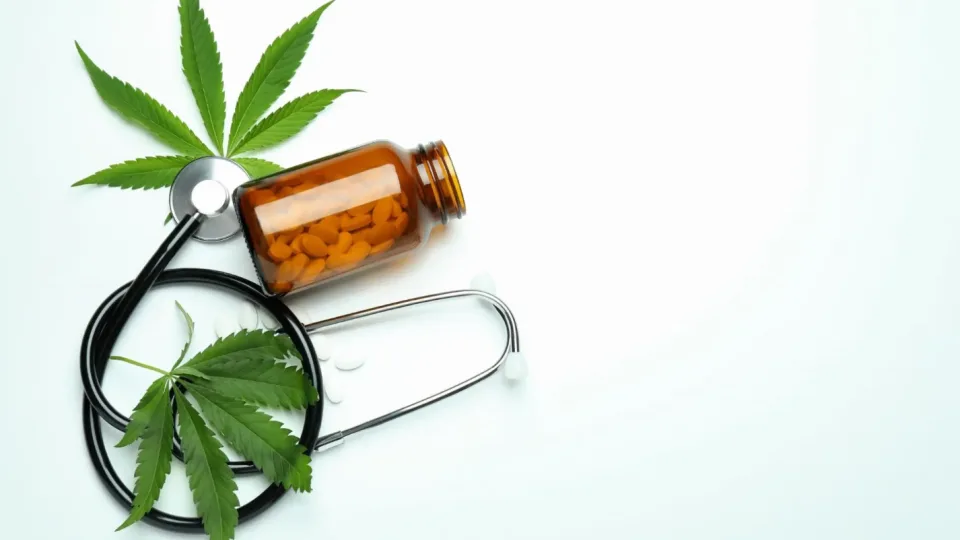










Barriers still exist in Ukraine that complicate patients' access to medical cannabis-based drugs. Legislation regulating the use of medical cannabis was adopted over two years ago, yet patient access to these medications remains limited. Meanwhile, there is demand from patients, and doctors are ready to prescribe them. However, in practice, problems arise with availability and supply of the medications.
This was discussed during a roundtable on "Medical Cannabis in Ukraine: Dialogue between Authorities and Business for Patient Access to Treatment" with participation from the Ministry of Health, State Expert Center, State Medicines Service, National Police, manufacturers, distributors, pharmacy networks, and patient organizations.
PTSD not yet included in the main list of indications
The roundtable discussed the possibility of prescribing medical cannabis to patients with post-traumatic stress disorder (PTSD). Participants emphasized that PTSD does not prohibit prescribing medical cannabis-based drugs. A patient can receive such a prescription under item eight of the list — based on the conclusion of the relevant medical commission and the presence of necessary scientific justification. If a PTSD patient also has chronic pain, this can be a separate basis for prescribing drugs under the main list.
At the same time, the Ministry of Health has not yet added PTSD as a separate item to the list. Ministry representatives explained this by the lack of sufficient scientific consensus on the effectiveness of medical cannabis specifically for treating this disorder. According to the Ministry, scientific literature shows conflicting research results, and some international guidelines do not recommend cannabis for PTSD treatment. Research in this area is ongoing.
The Ministry stated it is ready to review the list of indications if new convincing scientific data or relevant treatment protocols emerge.
Three forms of pharmacy-made cannabis-based drugs are allowed in Ukraine
Currently, pharmacies can produce three forms of medical cannabis-based drugs: drops, capsules, and oral paste.
The Ministry explained that each form has its purpose. Drops allow dose titration, which is especially important when treating children, as dosing can be calculated based on body weight. Capsules are used when the required dose is already selected and stability is needed. Paste can be used for patients who cannot swallow, particularly in palliative, oncological, and neurological care.
The possibility of using inhalation forms was also discussed. The Ministry noted that their production requires industrial equipment because the quality of inhalation depends on particle size, dose uniformity, and the amount of substance actually delivered to the body.
Therefore, the Ministry’s position is that inhalation forms should undergo industrial production and state registration.
One of the main problems for pharmacies and manufacturers mentioned was technical requirements for quality control of drugs. It was reported that amendments to Order No. 706 have already been developed and registered with the Ministry of Justice. They are yet to be published and will come into force thereafter. These changes aim to resolve some technical issues related to determining drug stability and the use of chromatographic equipment.
A draft law allowing the import of pharmacopoeial standards for quality control has also been submitted to the government. After revision, it is planned to be registered in the Verkhovna Rada.
Pharmaceutical sector representatives raised the issue of drug stability. Participants asked which documents can be considered "scientifically confirmed data" allowing an extension of the drug’s stability period.
The State Medicines Service explained that such data may include manufacturer research results, relevant scientific documentation, or publications in specialized scientific journals.
Drugs cannot yet be included in the reimbursement program
A separate issue concerned the cost of treatment and the possibility of including medical cannabis-based drugs in the reimbursement program. It was noted that this is currently impossible due to the special status of such drugs. Extemporaneous drugs are made in pharmacies for specific patients and individualized dosages. Accordingly, their cost may vary.
According to Ministry of Health representatives, such drugs do not fit into existing reimbursement mechanisms, the National List of Essential Medicines, or the tariffs of the medical guarantees program.
However, the Ministry does not rule out the possibility of finding an appropriate mechanism in the future.
The Ministry responded that current reimbursement priorities are main disease groups with the greatest impact on mortality and disability. After addressing key areas, the state may consider other drugs and approaches.
Participants highlighted issues with CBD products
The meeting also addressed the legal status of CBD-based products, which may contain small amounts of THC.
Representatives of public organizations stated that there may be a conflict between legislation and subordinate acts regarding the permissible THC content in products made from industrial hemp processing.
Specifically, this concerned CBD products and dietary supplements used, among others, for children with epilepsy. Participants noted that legislation sets a permissible THC level, but relevant provisions are not fully reflected in some subordinate acts.
National Police representatives stated that CBD as a substance is not prohibited. However, the legal status of a specific product depends on its composition, purpose, and whether it is a medicinal product.
During the discussion, it was noted that if a product contains THC and other cannabinoids but is not a registered medicinal product, it may be considered a cannabis extract. Participants emphasized the legislatively established permissible THC level. Ultimately, Ministry of Health and other authorities agreed to further work on this issue and verify the compliance of subordinate acts with the law.
Pharmacies may be allowed to transfer drugs between establishments within the same network
Another barrier to patient access is the restriction on the sale of drugs between pharmacies of the same business entity.
It was reported that a draft resolution has been prepared to regulate this issue. If an extemporaneous drug is made in one pharmacy of a legal entity meeting established requirements, it can be dispensed through another pharmacy of the same network. According to participants, this could expand patient access to drugs since not every pharmacy can independently produce such medicines.
Participants also noted the need for technical support of the electronic accounting system controlling medical cannabis circulation.
The State Medicines Service reported that they have already contacted the system developer and are seeking opportunities for international technical assistance. According to the service, the system is not currently a critical obstacle for drug circulation but requires further technical refinement and support.
Pharmaceutical sector representatives also asked about the procedure for manufacturing drugs by individual prescription.
The State Medicines Service explained that a doctor can write a prescription for a specific patient. The pharmacy, according to its technological procedures, performs the necessary calculations, manufactures the drug, and dispenses it to the patient.
National Police: THC residues do not automatically mean intoxication
A separate discussion block concerned driving after using medical cannabis-based drugs.
A National Police representative explained that police identify the driver, take them to a healthcare facility, and draw up an administrative protocol based on the medical examination conclusion.
The doctor determines whether the person is in a state of drug intoxication. Detection of cannabinoids in biological samples alone, according to participants, does not automatically establish intoxication. The final decision on administrative liability and driving license suspension is made by the court.
Participants noted that THC metabolites can remain in the body long after use when actual intoxication is no longer present. The National Police stated readiness to jointly work with the Ministry of Health, Ministry of Internal Affairs, and scientific institutions to further develop research methodology and improve relevant approaches.
In conclusion, Ministry of Health representatives stated that medical cannabis in Ukraine has moved from political discussion to practical implementation as a medicinal product. The Ministry plans to collect Ukrainian data on treatment outcomes to have its own evidence base in the future for possible expansion of indications, dosage forms, and application programs.
Recall that earlier the "Judicial and Legal Newspaper" reported that the legislative system for medical cannabis use in Ukraine began operating in summer 2024 after the Verkhovna Rada adopted the relevant law at the end of 2023. Its adoption was preceded by a nationwide survey in 2020, in which 70% of participants supported legalization of medical cannabis.
Currently, the first licensed manufacturers operate in Ukraine, electronic prescriptions have been introduced, and some patients have received treatment with medical cannabis-based drugs. Their circulation is controlled through an electronic traceability system — from doctor prescription to drug receipt at the pharmacy.
In May 2026, the Ministry of Health amended the Rules for Production (Manufacture) and Quality Control of Medicinal Products in Pharmacies. Order No. 706 defines the procedure for manufacturing drugs from cannabis plant substance, requirements for persons authorized to do so, quality control of such drugs, and conditions for dispensing them to patients.
At the same time, practical implementation of the system is still accompanied by a number of issues — from the list of indications and available dosage forms to treatment cost, pharmacy operations, licensing, and further regulation of drug circulation.
Subscribe to our Telegram channel t.me/sudua and to Google News SUD.UA, as well as to our VIBER and WhatsApp pages on Facebook and Instagram to stay informed about the most important events.