Drivers Can Receive Compensation for Illegal Actions of the Patrol Police: Three Court Decisions Worth Knowing


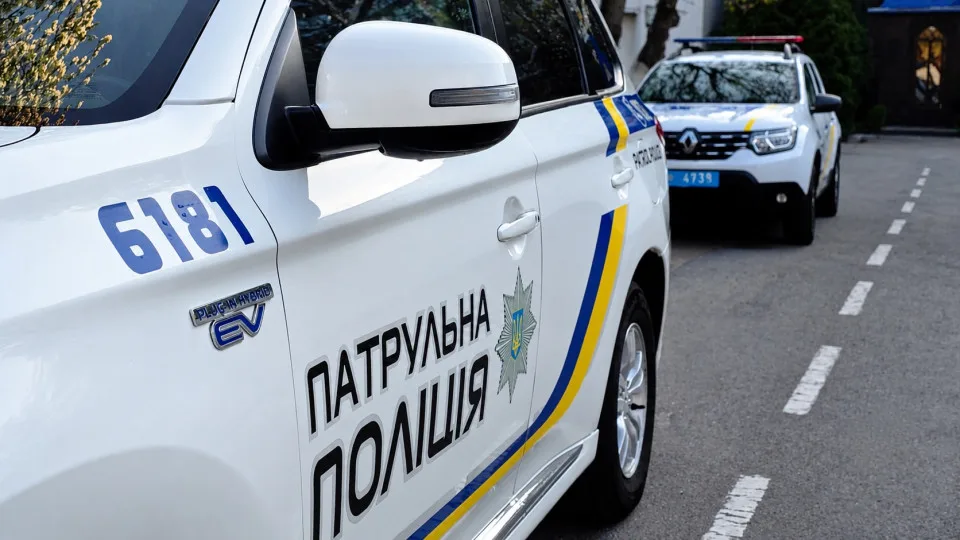










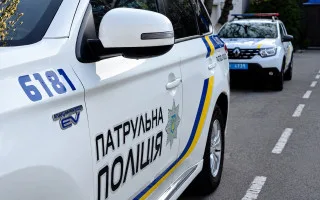
Recent decisions of the Supreme Court and appellate courts indicate that violations of the procedure for drawing up administrative materials, unjustified use of special means, or failure to observe drivers' procedural rights can be grounds not only for canceling rulings but also for compensation for moral damages. We analyze three interesting cases that change the rules of the game in police-driver relations.
Judicial practice records a clear position: illegal actions of police officers can have a specific monetary value, which the state pays from the budget in the form of compensation for moral damages. The "Judicial and Legal Newspaper" continues a series of publications on relevant cases concerning compensation for damages caused by unlawful actions of law enforcement agencies.
Case No. 202/19204/23 about "drug intoxication" without witnesses
A patrol police inspector stopped a Renault Logan driver and drew up a protocol under Article 130 of the Code of Ukraine on Administrative Offenses (CUAO), claiming that the driver showed signs of drug intoxication because, according to the inspector, the driver’s behavior did not correspond to the situation.
The police officer noted in the protocol that the driver refused the examination but did not involve two witnesses, as required by law, and did not ensure video recording of the refusal itself. Moreover, the driver was not issued a referral to the hospital but was offered to go there on his own. The driver independently went to the medical facility immediately after the curfew, where the test confirmed complete sobriety.
The Supreme Court emphasized that according to the Instruction on the registration of administrative offense materials by police officers in the field of road safety No. 1395, in case of refusal of the driver to undergo an examination, the police officer is obliged to use video recording or the presence of two witnesses. The absence of this evidence makes the protocol illegal.
In this case, after establishing the illegality of bringing the driver to administrative responsibility, the court also concluded that there were grounds for compensation for moral damages. As a result, 7,000 UAH was recovered from the budget as moral damages in favor of the plaintiff.
Case No. 405/282/23: "Haval" and handcuffs
In March 2022, patrol officers in Kropyvnytskyi used physical force and handcuffs on a driver to deliver him for examination, although the video recording did not capture the fact of driving under the influence or resistance to the patrol officers.
After that, the plaintiff’s Haval H2 car along with documents was seized. The police claimed that the car was confiscated with the approval of the Regional Military Administration (RMA), although the RMA later denied granting such permission. The car was held at a military unit for over two years and was returned to the owner only in 2024 in a damaged condition.
The appellate and Supreme Courts established that delivering the driver in handcuffs to the medical facility without proper grounds, i.e., in the absence of aggression or resistance, has signs of arbitrariness. At the same time, the issue of the legality of the forced alienation of the car was not attributed to the patrol police, as the relevant decision was made by the military unit.
The Supreme Court upheld the appellate court’s ruling, which awarded the man 25,000 UAH in moral damages for arbitrary detention by the patrol police. Compensation for property damage for the seized and temporarily alienated military vehicle was denied.
The court reasoned that the patrol police are not an agency conducting operational-investigative activities or pre-trial investigations, so the special Law No. 266/94 on the procedure for compensating damage caused to a citizen by unlawful actions of bodies conducting operational-investigative activities, pre-trial investigation bodies, prosecution, and courts, and Article 1176 of the Civil Code do not apply.
Compensation is made on general grounds (Articles 1173, 1174 of the Civil Code of Ukraine).
Since the forced alienation was carried out by the military unit based on the Law on Transfer, forced alienation or seizure of property under martial law, and not by the patrol police, the conclusion about the improper composition of defendants regarding property damage is correct.
At the same time, the fact of detention and delivery in handcuffs to the medical facility is arbitrary and unlawful, thus constituting grounds for compensation for moral damages.
Case No. 489/8198/25: plan and falsification of evidence
A patrol police inspector stopped a Nissan Micra driver and issued a ruling to bring him to administrative responsibility under Part 2 of Article 122 of the CUAO for violating the rules of using turn signals.
The plaintiff claimed that the inspector acted to fulfill an illegally imposed plan by order of the commander, and the stop took place at a location arranged in violation of DSTU standards (4100:21 and 2587:21), which effectively provoked drivers or created conditions for manipulation by the police.
After appealing the first ruling, the head of the Patrol Police Department canceled it because the video recording did not show the violation itself — only communication with the driver was recorded. However, the case was not closed but sent for reconsideration.
Later, another inspector issued a second ruling for the same incident. The court concluded that the video cited in the ruling did not confirm the violation, although the inspector referred to it as evidence of guilt. The ruling was issued unilaterally, without proper notification of the plaintiff and without his participation.
The court found that the violation was absent on the recording, and the inspector knowingly entered false information into the act to eliminate the deficiencies that caused the cancellation of the first ruling.
Despite the plaintiff again going to court, the patrol police sent the ruling for enforcement. The enforcement officer imposed a freeze on the plaintiff’s bank accounts.
The appellate court upheld the first-instance court’s decision to recover 5,000 UAH in moral damages (although the plaintiff requested 64,000 UAH).
The court noted that bringing a person to administrative responsibility must be carried out in compliance with the law, and decisions of authorities must be based on proper and admissible evidence. In this case, the court concluded that illegal actions of police officials were causally linked to the plaintiff’s moral suffering, as well as to the subsequent initiation of enforcement proceedings and freezing of his accounts.
Applying Article 1174 of the Civil Code of Ukraine, the appellate court confirmed that damage caused by illegal decisions or actions of officials of state authorities during the exercise of their powers is subject to compensation by the state regardless of the fault of a specific official.
At the same time, guided by the principles of reasonableness and fairness, the court left unchanged the amount of moral damage compensation determined by the first-instance court — 5,000 UAH.
Read about the practice of compensation for illegal criminal prosecution in the previous article 25 years under investigation and trial: The Supreme Court upheld 2.4 million UAH in moral damages for illegal prosecution.
Subscribe to our Telegram channel t.me/sudua and to Google News SUD.UA, as well as to our VIBER and WhatsApp, Facebook page and Instagram to stay informed about the most important events.