Prosecutor's Inaction In Investigating Police Abuse Cases May Cost The Budget 7,500 Euros — ECHR Ruling


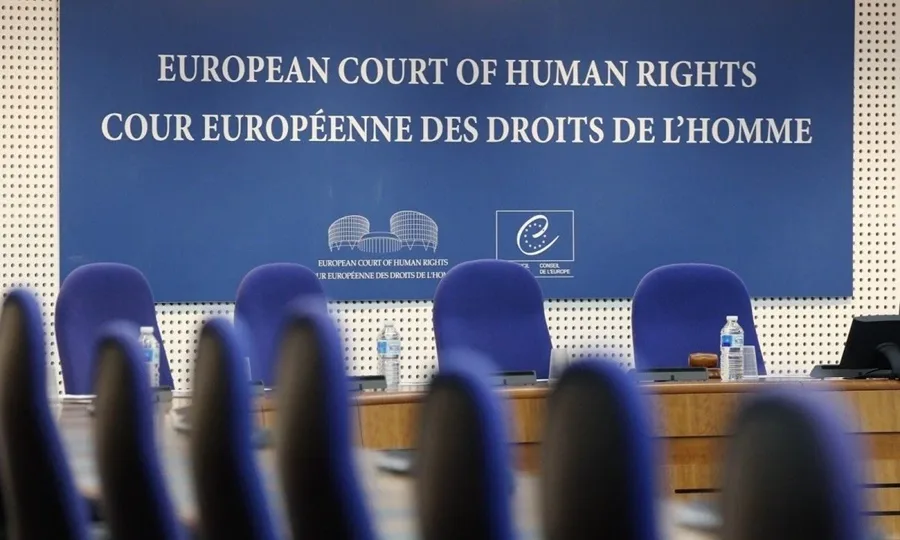










The European Court of Human Rights (ECtHR) has published a decision in the case GÜNANA v. BULGARIA, recognising a violation of Article 3 of the Convention for the Protection of Human Rights and Fundamental Freedoms concerning the ill-treatment of a detainee while under police control.
A Turkish citizen applied to the ECtHR after being detained in Bulgaria in August 2019 on suspicion of involvement in illegal drug trafficking. Following his arrest, he was taken to a police station where he was held in custody for one day. The next day, he was informed of the charges. Upon transfer to a detention facility, staff recorded numerous bruises on his body, including on his arm, ribs, pelvis, head, occiput, and ear. The head of the detention centre informed the prosecutor’s office and submitted the relevant documents, but no investigative actions were taken at that time.
Only 18 months later, during the criminal case proceedings, the applicant reported that, after his arrest, he had been beaten for approximately 50 minutes by several police officers using their hands, feet, and an electric shocker. Following this report, the prosecutor’s office initiated a review but twice refused to open a criminal case, citing insufficient evidence.
ECtHR Assessment
The ECtHR first rejected the Bulgarian government’s objection that the applicant had not exhausted all domestic remedies. The Court found that the applicant had filed a complaint with the prosecutor’s office regarding ill-treatment, but after a preliminary check, the prosecutor refused to open a criminal case due to insufficient evidence. This refusal was upheld by higher-level prosecutors. According to the Court, the applicant had utilised an available and effective remedy, thereby satisfying the requirement to exhaust domestic procedures.
The ECtHR concluded that the presence of nine bruises recorded on the applicant’s body and the prosecutor’s notification of these circumstances constituted sufficient grounds for the immediate commencement of an official investigation into possible police ill-treatment. Despite this, after receiving the notification, the prosecutor’s office took no investigative actions for over 18 months to establish the circumstances of the possible ill-treatment.
The Court emphasised that, according to ECtHR practice, authorities must initiate an official investigation immediately once they become aware of sufficiently concrete signs of possible ill-treatment, even if the victim has not yet filed an official complaint.
The ECtHR also found the applicant’s explanations for not filing a complaint immediately to be reasonable. He was in custody in a foreign country, did not speak Bulgarian, and his appointed lawyer did not speak Turkish, meaning communication was only possible through an interpreter.
The Court noted that due to the prolonged inaction of the prosecutor’s office, the effectiveness of the subsequent investigation was significantly undermined. By the time the forensic medical examination was conducted, the bodily injuries had already disappeared, and the expert could only assess the body diagram and injury records, which were insufficient to establish the mechanism of their occurrence. Moreover, the interpreter present during the arrest no longer remembered the circumstances of the case due to the significant time lapse.
The Court also noted that the investigation was ineffective.
The authorities limited themselves to questioning two police officers, the interpreter, the applicant, and his lawyer, despite the applicant reporting that several police officers had ill-treated him, whom he could identify, and even indicating the premises where it happened. Nevertheless, the investigation did not identify or question other possible participants in the events.
As a result, the ECtHR concluded that the investigation was not sufficiently prompt, thorough, or effective, and therefore Bulgaria had violated the procedural aspect of Article 3 of the Convention.
Regarding the substantive aspect of Article 3 of the Convention, the Court recalled that when a person is under police control, any bodily injuries sustained during that period give rise to a strong presumption of state responsibility. In such cases, the government must provide a convincing explanation for the origin of these injuries.
The ECtHR found that signs of beating were recorded the day after the applicant’s arrest while he was still under state control. Concurrently, the government failed to provide a satisfactory and convincing explanation for the numerous bruises and did not refute the applicant’s version of ill-treatment. Given these circumstances, the Court found that the applicant suffered inhuman treatment by the police, constituting a violation of the substantive aspect of Article 3 of the Convention. Additionally, the ECtHR awarded the applicant 7,500 euros in compensation for non-pecuniary damages.
Subscribe to our Telegram channel t.me/sudua, follow SUD.UA on Google News , and join us on VIBER, WhatsApp, Facebook and on Instagram to stay informed about the important events.