Supreme Court: Responsibility for the Crime of Aggression Can Be Held Not Only by Politicians and Military, but Also by Business


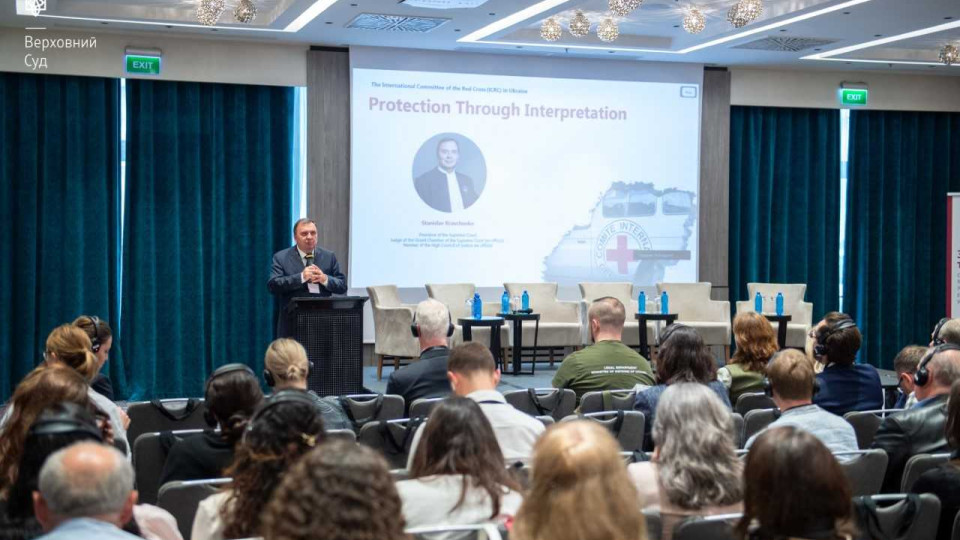










For Ukraine, international humanitarian law has definitively moved from the realm of academic discussions into the sphere of daily practical work of national courts. Moreover, the Ukrainian experience of law enforcement during the war makes a significant contribution to the global development of humanitarian norms.
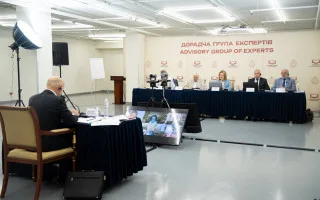
This was emphasized by the Head of the Supreme Court, Stanislav Kravchenko.
He noted that the profound transformation of the Ukrainian legal system began back in 2014 – with the annexation of Crimea and aggression in eastern Ukraine. It was then that Ukrainian courts faced the necessity of providing legal assessments of events in the context of a hybrid war, where armed conflict is conducted without a formal declaration of war and accompanied by complex issues regarding the legal status of participants in such events.
At the same time, according to Stanislav Kravchenko, since the beginning of the full-scale invasion by the Russian Federation, the issues of investigating and judicial consideration of war crimes, which have become widespread, have highlighted the need to study and practically apply the Geneva Conventions at a fundamentally new level. In this regard, Ukrainian judges – both independently and with the support of international organizations – began to thoroughly analyze the norms of international humanitarian law to correctly qualify the actions of the aggressor state and properly apply these norms in judicial practice.
In this context, the Head of the Supreme Court noted the particular relevance of the publication of the updated Commentary to the Fourth Geneva Convention, which, in his words, is extremely timely and will undoubtedly be useful for Ukrainian legal professionals.
Stanislav Kravchenko also drew attention to the Supreme Court's practice regarding the qualification of the crime of aggression. In particular, he noted the decision of the Supreme Court's Grand Chamber concerning the determination of the subject of the crime provided for in Article 437 of the Criminal Code of Ukraine. The Grand Chamber concluded that responsibility for planning, preparing, initiating, and waging an aggressive war can be borne not only by representatives of the highest political or military leadership but also by individuals from the business sector who effectively facilitate the commission of aggression, including through the production of weapons or construction of strategic facilities for the aggressor state.
The Head of the Supreme Court paid special attention to the issues of protecting children's rights in wartime, as well as the need for further adaptation of national legislation to international standards of justice and humanitarian law.
In conclusion, Stanislav Kravchenko emphasized that today Ukraine not only applies the norms of international humanitarian law but also shapes new practices of their interpretation and development. The experience of Ukrainian courts in handling cases related to armed aggression and war crimes is already becoming an important reference point for the international legal community and may influence the further development of international humanitarian standards in the future.
Subscribe to our Telegram channel t.me/sudua and to Google News SUD.UA, as well as to our VIBER and WhatsApp pages on Facebook and Instagram to stay informed about the most important events.