Who is Who in the Administrative Process — Court Explanation


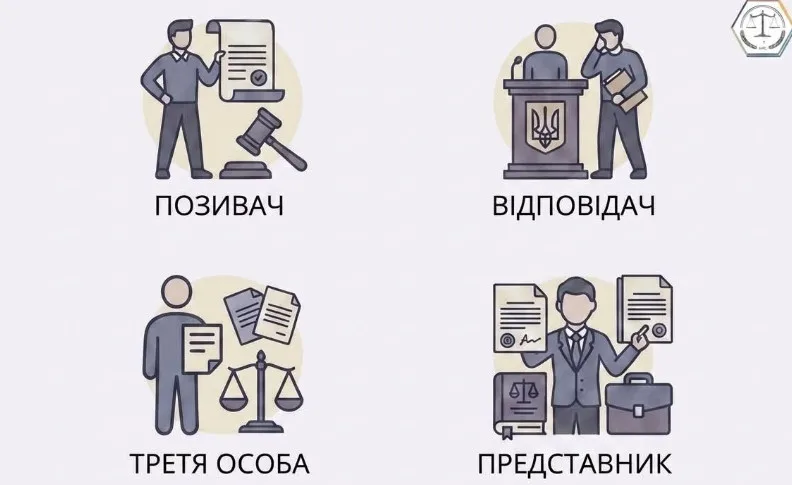










The Fifth Administrative Court of Appeal reminded that when a case goes to an administrative court, various participants take part in the process. Each of them has their own role, rights, and responsibilities.
The plaintiff is the person who applies to the administrative court for the protection of their rights, freedoms, or interests. It is the plaintiff who believes that the decision, action, or inaction of a public authority has violated their rights.
The defendant is, in most cases, a state authority or local government body, their official or employee, or another public authority whose decisions, actions, or inactions are being challenged.
Third parties are participants whose rights or obligations may also be affected by the court's decision. They may support one of the parties or participate in the case without independent claims.
The representative is a person acting on behalf of a participant in the case. This may be a lawyer or another person in cases provided by law.
And, of course, the court is an independent and impartial arbiter who examines evidence, evaluates the parties' arguments, and makes decisions according to the law.
It is important to remember: regardless of the procedural role of a participant in the case, all are endowed with rights and responsibilities defined by law.
It is the observance of the principles of equality of the parties, adversarial proceedings, and the rule of law that ensures a fair consideration of the administrative case.
Administrative justice is primarily about protecting human rights in their relations with the state. Understanding who performs which role in the process helps to better navigate the court procedure.
Subscribe to our Telegram channel t.me/sudua, follow SUD.UA on Google News , and join us on VIBER, WhatsApp, Facebook and on Instagram to stay informed about the important events.