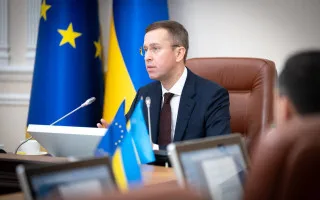
How Courts Operate Under Shelling: Ensuring Justice in Zaporizhzhia During Wartime


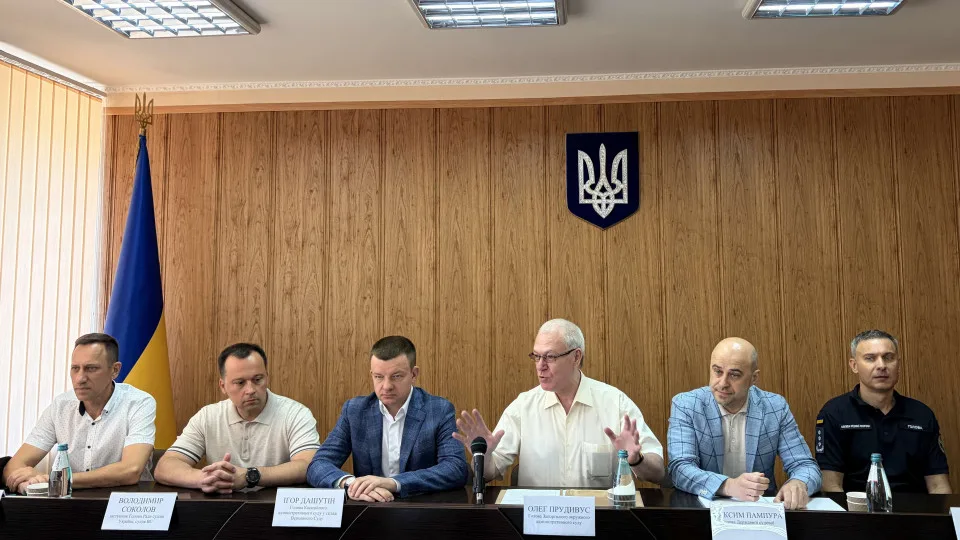










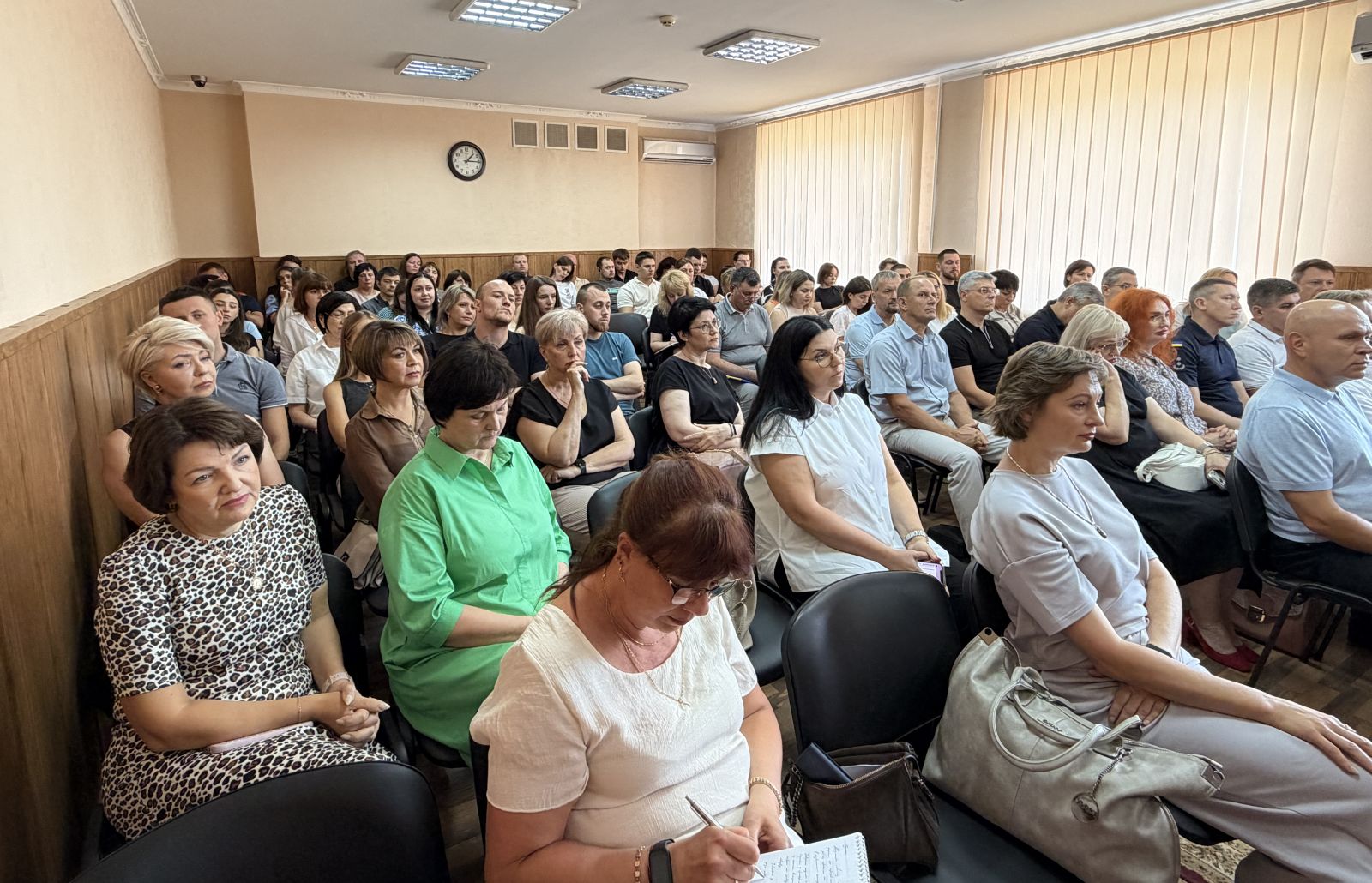
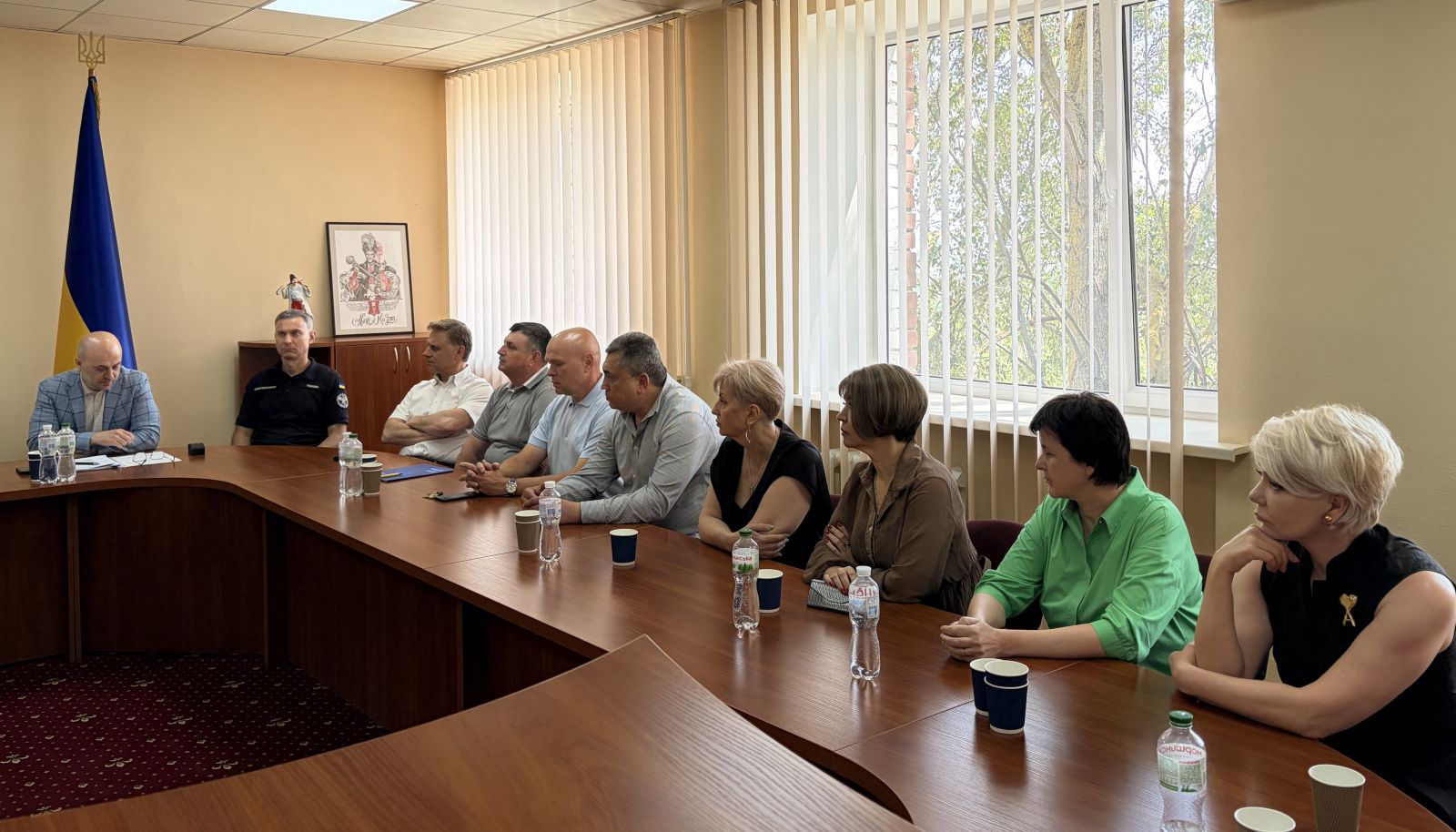
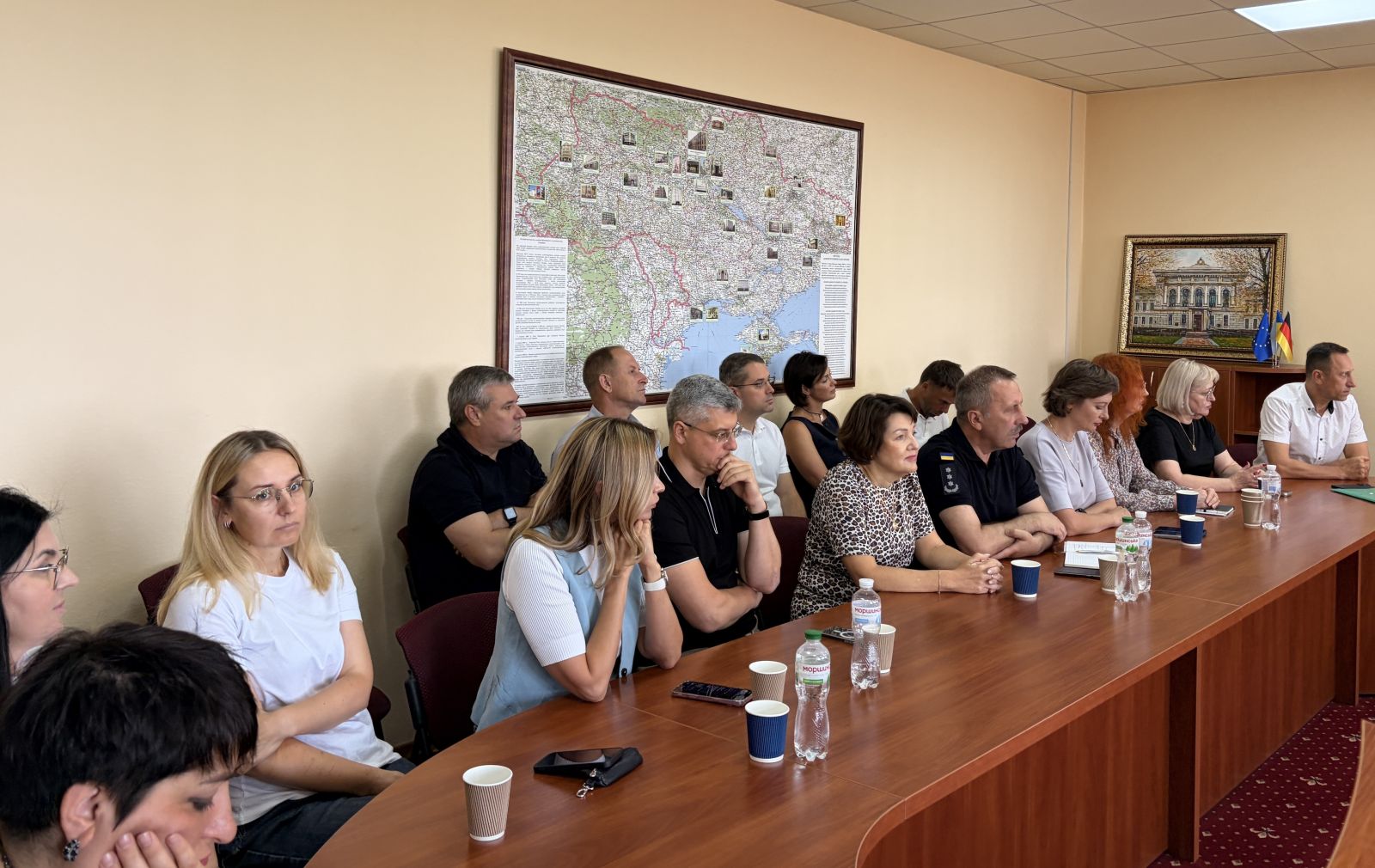
On July 16, Zaporizhzhia region hosted a working meeting attended by the heads of the Administrative Cassation Court within the Supreme Court, the State Judicial Administration of Ukraine, the Judicial Guard Service, and the highest judicial self-government body – the Council of Judges of Ukraine.
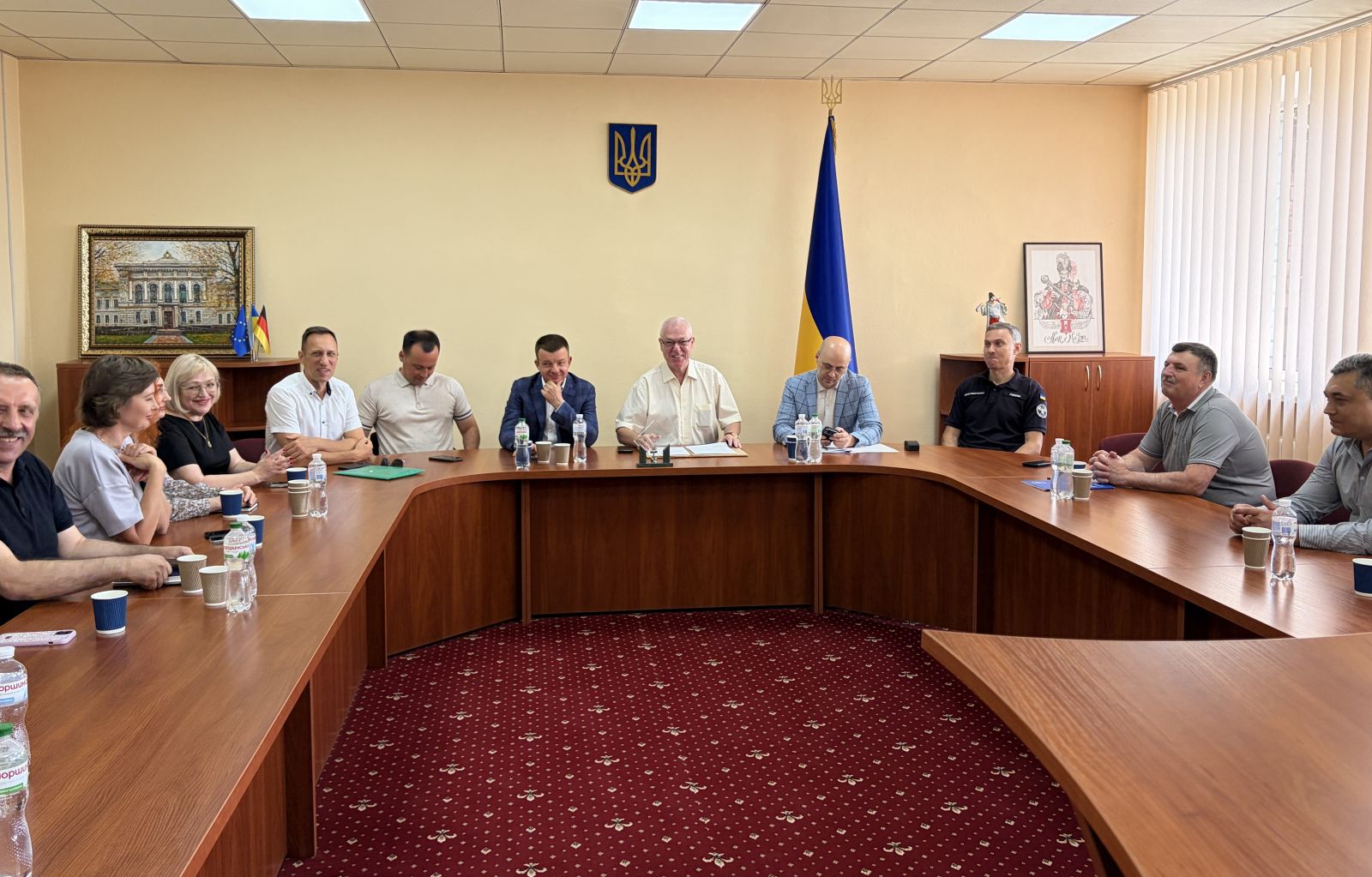
Holding this event specifically in the Zaporizhzhia region demonstrated the leadership’s attention to the activities of the region’s courts, which continue to ensure uninterrupted administration of justice even under martial law conditions. The meeting took place at the Zaporizhzhia District Administrative Court and served as a platform for open professional dialogue, discussing current issues of judicial practice and court organization.
The event was attended by Ihor Dashutin, Head of the Administrative Cassation Court within the Supreme Court; Maksym Pampura, Head of the State Judicial Administration of Ukraine; Volodymyr Sokolov, Deputy Head of the Council of Judges of Ukraine; Serhii Ukhanenko, Judge of the Administrative Cassation Court within the Supreme Court; Petro Talpa, Head of the Judicial Guard Service; Andrii Sukhovarov, Acting Head of the Third Appellate Administrative Court; Iryna Kochetkova, Head of the Zaporizhzhia Appellate Court; Mykhailo Miroshnychenko, Head of the Commercial Court of Zaporizhzhia Region; Iryna Beliikova, Head of the Territorial Administration of the State Judicial Administration in Zaporizhzhia Region; Vasyl Sapachkov, Head of the Territorial Administration of the Judicial Guard Service in Zaporizhzhia Region; Roman Kholod, Judge of the Zaporizhzhia Appellate Court and member of the Council of Judges of Ukraine; Volodymyr Poplavskyi, Director of the Dnipro Regional Branch of the National School of Judges of Ukraine; heads of district courts of Zaporizhzhia region, judges, and staff of the Zaporizhzhia District Administrative Court.
Opening the meeting, Oleg Prudivus, Head of the Zaporizhzhia District Administrative Court, welcomed the guests to Zaporizhzhia and thanked them for the opportunity to hold a professional dialogue directly in the region, which operates daily under martial law conditions. He emphasized that such meetings are an important platform for discussing current issues of justice administration, exchanging experience, and developing joint approaches to solving practical problems.
Addressing the participants, Ihor Dashutin, Head of the Administrative Cassation Court within the Supreme Court, stressed that Zaporizhzhia region is currently one of the regions most affected by the war, yet the courts continue to administer justice, ensuring the realization of every person’s constitutionally guaranteed right to judicial protection.
He noted that administering justice under such conditions requires judges and court staff to demonstrate high professionalism, resilience, responsibility, and dedication to their work. According to him, the main goal of the working meeting is open professional communication, discussion of current judicial practice, analysis of the Supreme Court’s latest legal positions, as well as providing methodological and practical assistance to judges regarding the application of legislation in administrative cases.
Concluding his speech, Ihor Dashutin wished all participants fruitful work, endurance, safety, and peace.
Maksym Pampura, Head of the State Judicial Administration of Ukraine, greeting those present, drew attention to the symbolism of holding the event after the celebration of Ukrainian Statehood Day. He informed participants about current issues in the State Judicial Administration’s activities, particularly regarding ensuring proper funding of the judicial system and payment of judges' remuneration.
At the same time, Maksym Pampura announced positive changes. Specifically, on July 15, 2026, a resolution of the Cabinet of Ministers of Ukraine came into force regarding the application of additional coefficients to increase the salaries of civil servants in the apparatuses of local general courts with increased workload. In conclusion, he thanked judges, court staff, and Judicial Guard Service employees for their conscientious performance of duties, professionalism, and dedication even under extremely difficult conditions.
Volodymyr Sokolov, Deputy Head of the Council of Judges of Ukraine, emphasized issues of ensuring judicial independence as one of the main constitutional guarantees of justice administration. He noted that the Council of Judges of Ukraine continues active cooperation with national and international partners aimed at strengthening the independence of the judicial system, protecting judges' social guarantees, and ensuring proper conditions for courts' functioning.
Petro Talpa, Head of the Judicial Guard Service, highlighted the importance of the Judicial Guard’s activities in ensuring the safety of judges, court staff, participants in court proceedings, and visitors to court institutions. He stressed that effective fulfillment of these tasks is possible only through constant interaction with courts, open professional dialogue, and prompt response to modern security challenges.
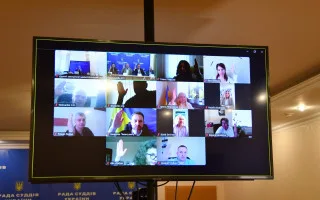
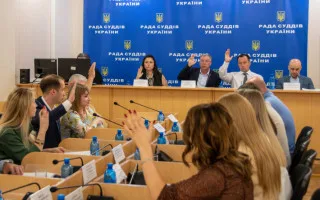
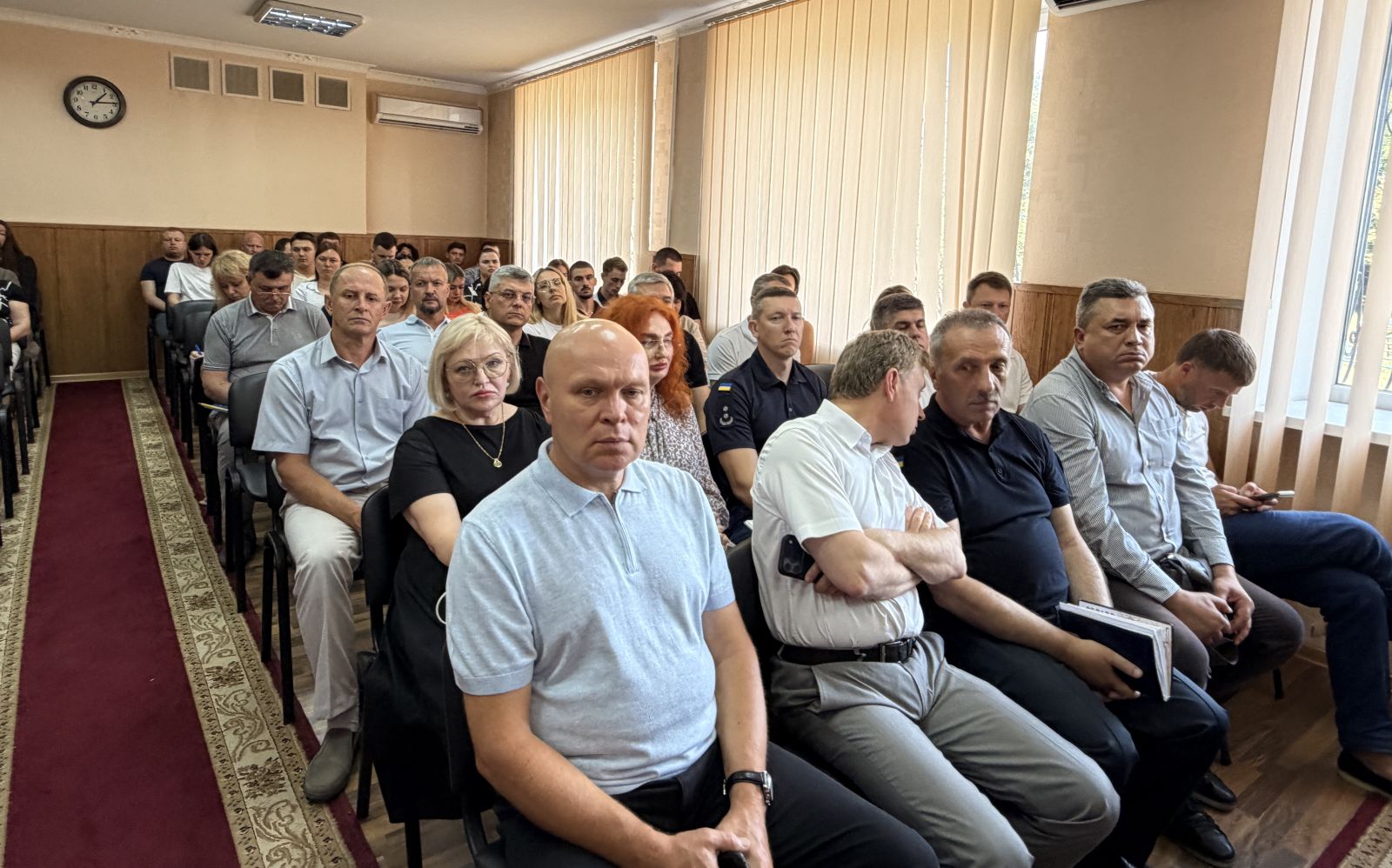
A particularly engaging part of the meeting was the discussion segment, during which participants had the opportunity in an open dialogue format to ask the leadership of Ukraine’s judicial system questions about the most pressing issues of justice administration. The discussion covered current judicial practice, staffing and financial support of courts, functioning of the judicial system under martial law, ensuring judges' independence, organizing courts' work in frontline territories, and prospects for further development of the judiciary. The leadership of the Administrative Cassation Court within the Supreme Court, the State Judicial Administration of Ukraine, the Council of Judges of Ukraine, and the Judicial Guard Service provided thorough answers to the questions, shared their vision for solving existing problems, and outlined priority directions for future work.
A separate part of the event was a working meeting with the heads of courts of Zaporizhzhia region. During lively professional discussions, participants exchanged practical experience of administering justice in a frontline region, analyzed current judicial practice, discussed organizational issues of courts' activities, ensuring continuity of justice administration, and sought effective mechanisms to respond to new challenges caused by martial law. The constructive discussion demonstrated the judicial community’s shared desire to develop unified approaches to solving current problems and further strengthen the judiciary’s authority.
Summing up the meeting, Oleg Prudivus, Head of the Zaporizhzhia District Administrative Court, sincerely thanked participants for the meaningful and constructive dialogue, openness to professional communication, and attention to the problematic issues currently faced by courts in Zaporizhzhia region.
Oleg Prudivus emphasized that despite all challenges, the judiciary remains committed to its primary mission – ensuring every person’s right to a fair trial, protecting their rights and freedoms, and upholding the rule of law. He expressed confidence that only through joint efforts, professionalism, mutual support, and unity of the judicial community can effective justice administration be ensured even in the most difficult conditions.
Subscribe to our Telegram channel t.me/sudua and to Google News SUD.UA, as well as to our VIBER and WhatsApp, Facebook page and Instagram account to stay informed about the most important events.