How Courts Resolve Disputes Regarding Inheritance of Bank Funds: The Supreme Court Summarized the Practice













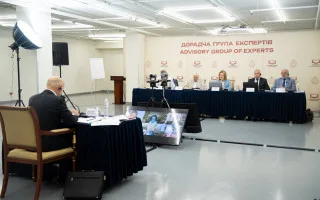
The Supreme Court summarized approaches to resolving disputes related to the inheritance of bank deposits, funds in accounts, cash, and other monetary assets. During a scientific-practical webinar, judge of the Supreme Court's Grand Chamber Olha Stupak analyzed current judicial practice regarding the protection of heirs' rights, the procedure for accepting inheritance, the transfer of the right to claim to the bank, as well as the responsibility of financial institutions in cases of illegal withdrawal or issuance of funds after the depositor's death.
In particular, Olha Stupak spoke on the topic "Judicial practice in cases of inheritance of monetary assets in accounts, in cash, and bank safes."
Starting with the general principles of inheritance, the speaker emphasized the principle that the exercise of inheritance rights, i.e., actions confirming acceptance or refusal of inheritance, is carried out in the same way regardless of the grounds of inheritance. This procedure is unified both for heirs by law of any order and for heirs by will, persons entitled to a compulsory share in the inheritance, heirs by representation, as well as heirs by the order of hereditary transmission.
The judge reminded that according to the provisions of the Civil Code of Ukraine, inheritance is considered accepted in case of: submission of an heir's application to a notary; permanent residence of the heir together with the decedent at the time of opening of the inheritance according to part 3 of article 1268 of the Civil Code of Ukraine; as well as in cases where the heir is a minor, since such persons are considered to have accepted the inheritance by law.
Olha Stupak drew attention to the conclusion made in the ruling dated July 24, 2019, in case No. 203/7870/14-ts. The court indicated that the right to a bank deposit, regardless of the method of its disposal, passes according to the general inheritance procedure; heirs entitled to a compulsory share in the inheritance may also have the right to a part of the deposit.
She also cited the ruling of the Civil Cassation Court within the Supreme Court dated October 8, 2025, in case No. 2-1584/11. In it, the court noted that the legislation in force at the time of the emergence of the relevant legal relations applies to the deposit agreement concluded during the period of validity of the Civil Code of the Ukrainian SSR and inheritance legal relations that arose after the death of the depositor before the entry into force of the Civil Code of Ukraine of 2003.
The judge considered the issue of the transfer to the heir of the right to claim to the bank regarding the deposit, account, interest, and the limits of additional claims.
She presented the legal position that the depositor's death does not terminate the bank's obligations under the deposit agreement; the right to claim the return of the deposit and payment of interest passes to the heir. A public banking service agreement clause terminating the rights and obligations of the client/depositor upon the depositor's death contradicts the imperative norms of Book Six of the Civil Code of Ukraine, particularly Article 1228 of the Code. These conclusions were made in the ruling of the Civil Cassation Court within the Supreme Court dated June 11, 2025, in case No. 761/4734/24.
In the ruling dated April 28, 2021, in case No. 703/4740/18, the Civil Cassation Court within the Supreme Court addressed the issue of what to do when the agreement lacks an interest rate for the deposit period after the contract expires. The court noted that when deposit agreements do not specify an interest rate for the use of the deposit after the contract term ends, after a claim for the return of the deposit is made, the rate usually paid by the bank on demand deposits applies.
Olha Stupak noted that when the terms of the deposit agreement provide for the cessation of interest accrual on the deposit from the date of the depositor's death, such a condition is taken into account when determining the scope of the heir's rights. At the same time, the bank's untimely return of sums due to the heir constitutes a delay in monetary obligation. Such delay is grounds for recovering three percent per annum in favor of the heir according to part 2 of article 625 of the Civil Code of Ukraine (ruling of the Civil Cassation Court within the Supreme Court dated October 3, 2018, in case No. 757/5393/17-ts).
The judge analyzed legal positions regarding the heir's exercise of the right to the deposit based on a certificate of inheritance rights.
Thus, in the ruling dated October 5, 2022, in case No. 718/2903/19, the Civil Cassation Court within the Supreme Court stated that a certificate of inheritance rights by law, issued for deposits with accrued interest and compensation payments, is a proper basis for the heir to exercise the right to receive the bank deposit. The Civil Cassation Court within the Supreme Court also indicated in the ruling dated December 4, 2023, in case No. 930/2945/21-ts, that the certificate of inheritance rights is a proper document confirming the heir's right to receive the decedent's bank deposits.
And in the ruling dated April 21, 2021, in case No. 345/4308/17, the Civil Cassation Court within the Supreme Court concluded that if the fact of the decedent depositing funds into deposit accounts is established, the bank bears the burden of proving proper fulfillment of obligations under deposit agreements.
The speaker also highlighted legal positions regarding unlawful withdrawal, issuance, or transfer of funds after the decedent's death.
In particular, in the ruling dated September 8, 2021, in case No. 757/25586/18-ts, the Civil Cassation Court within the Supreme Court stated that unjustified withdrawal by the bank of funds from the decedent's deposit account after their death is grounds for recovering the deposit with due interest in favor of the heir according to article 1073 of the Civil Code of Ukraine.
The judge also drew attention to the ruling of the Civil Cassation Court within the Supreme Court dated January 29, 2025, in case No. 761/25536/22-ts. The court noted that illegal issuance by the bank of funds from the decedent's account to a third party after the depositor's death does not terminate the heir's right to receive the respective funds through inheritance. The bank is obliged to ensure the preservation of the client's funds, conduct proper identification and verification of the person requesting the funds, and in case of unjustified issuance, restore the violated right of the heir.
Additionally, Olha Stupak analyzed the Supreme Court's practice regarding: heirs' access to information about the contents of the decedent's individual bank safe, the distinction between funds in an individual bank safe and bank deposits and cash as inherited property; inheritance of deposits in financial institutions other than banks (in particular, credit unions); testamentary disposition regarding inheritance of the right to a bank deposit, and more.
Subscribe to our Telegram channel t.me/sudua and to Google News SUD.UA, as well as to our VIBER and WhatsApp pages on Facebook and Instagram to stay informed about the most important events.