The Supreme Court Differentiated the Grounds for Returning a Claim and Leaving It Without Movement When Submitted Through ECS


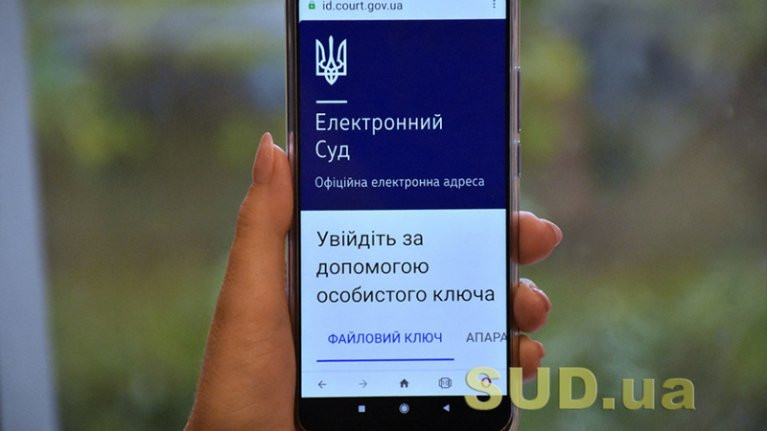










The Supreme Court in composition of the Administrative Cassation Court, considered case No. 320/42687/23 concerning the legality of returning a claim submitted through the "Electronic Court" subsystem due to the signature on the attached PDF file of the claim being reproduced by copying rather than handwritten. The court had to determine whether such circumstances constituted grounds for returning the claim or whether the first instance court should have applied a different procedural mechanism.
Case Facts
The plaintiff applied to the administrative court demanding recognition of the unlawful inaction of the National Guard military unit regarding the non-accrual and non-payment of average earnings for the delay period of the final settlement upon dismissal. The plaintiff also requested the defendant to accrue and pay the average earnings for the period from March 15, 2019, to September 20, 2023, in the amount of UAH 840,556.40 in accordance with the Procedure for Calculating Average Earnings approved by the Cabinet of Ministers Resolution No. 100.
The claim was submitted by a representative through the "Electronic Court" subsystem. A PDF file titled "Administrative claim with attachments" containing the text of the claim was attached to the electronic submission. The representative insisted that the documents were submitted through EJITS and signed with a qualified electronic signature.
Decisions of the First and Appellate Courts
The Kyiv District Administrative Court returned the claim based on paragraph 3 of part four of article 169 of the Code of Administrative Procedure, and the Sixth Administrative Court of Appeal agreed with this decision.
The courts reasoned that the representative's signature on the claim contained in the PDF file was not handwritten but a printed copy of the signature. Referring to the requirements of DSTU 4163:2020, the courts noted that reproducing a signature by facsimile, scanning, or copying is not allowed. Therefore, they concluded that the claim was improperly executed and effectively not signed in the manner prescribed by procedural law.
Position of the Supreme Court
The Supreme Court agreed with the previous courts' conclusion that the signature on the document must be handwritten, and the use of facsimile reproduction or a copy of the signature does not comply with the requirements of the Code of Administrative Procedure. The Court reminded that procedural legislation does not allow claims to be submitted with a facsimile signature, and such a signature cannot confirm the person's will to sign the document.
At the same time, the Supreme Court noted that the representative submitted the claim through the "Electronic Court" subsystem. The case materials confirmed that a separate electronic document titled "Claim Statement" was created in EJITS, to which a PDF file with the text of the administrative claim was attached as an appendix.
The Court stated that according to the Regulation on the Procedure for Functioning of Certain EJITS Subsystems, a procedural document submitted to the court must be created using the "Electronic Court" subsystem and signed with a qualified electronic signature. Applying an electronic signature to attachments only certifies the authenticity of those attachments but does not exempt the applicant from the obligation to properly form and sign the procedural document itself.
The Supreme Court noted that the document created in the "Electronic Court" subsystem was effectively a cover letter, while the full text of the claim was submitted as a separate PDF attachment, which did not meet the requirements for forming a procedural document in EJITS. This method of submission indicated non-compliance with the requirements for drafting the claim.
The Supreme Court emphasized that submission through the "Electronic Court" subsystem required the use of a qualified electronic signature when submitting the claim, so the situation did not fall under the case of submitting an entirely unsigned claim. Under such conditions, the deficiencies related to non-compliance with the content and form requirements of the claim in EJITS should have been remedied by leaving the claim without movement.
In the Supreme Court's opinion, in such a situation, the first instance court should have applied the mechanism of leaving the claim without movement and provided an opportunity to correct the deficiencies rather than returning the claim.
Conclusions of the Supreme Court
The Supreme Court concluded that the lower courts prematurely returned the claim. Although the use of a copy of the signature on the PDF document does not comply with procedural law requirements, the established deficiencies were not grounds for returning the claim under paragraph 3 of part four of Article 169 of the Code of Administrative Procedure of Ukraine.
The Administrative Cassation Court satisfied the cassation appeal, canceled the ruling of the Kyiv District Administrative Court and the decision of the Sixth Administrative Court of Appeal, and remanded the case to the first instance court for further consideration.
The ruling comes into legal force from the date of its adoption, is final, and not subject to appeal.
Subscribe to our Telegram channel t.me/sudua, Google News SUD.UA Google News SUD.UA, as well as our VIBER and WhatsApp pages, Facebook Facebook and Instagram Instagram to stay informed about the most important events.