Alcohol in the blood of a deceased serviceman does not deprive the family of the right to payments: Supreme Court


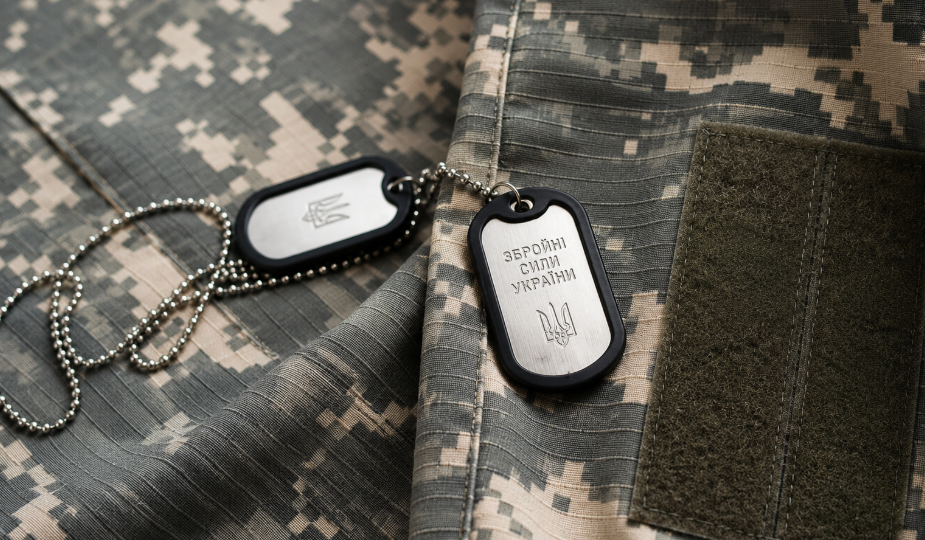










The Supreme Court clarified the procedure for applying the provision that allows refusal of a one-time financial aid to family members of a serviceman due to alcohol intoxication. The Court emphasized that the mere fact of detecting alcohol in the deceased serviceman's body is insufficient grounds for refusal of payment. The Ministry of Defense must prove a direct causal link between intoxication and the serviceman's death.
The Supreme Administrative Court of Ukraine dismissed the cassation appeal of the Ministry of Defense of Ukraine and agreed with the conclusions of the lower courts, which recognized the refusal to grant one-time financial aid to the wife and two minor children of the deceased serviceman as unlawful.
Circumstances of case No. 280/1655/25
The serviceman was mobilized into the Armed Forces of Ukraine in March 2022 and served in a military unit. In July 2023, he died while on duty.
According to the forensic medical examination, the cause of death was acute coronary death against the background of chronic ischemic heart disease and hypertension. At the same time, toxicological analysis detected ethyl alcohol in the deceased's blood at a concentration of 1.4 per mille, corresponding to a mild degree of alcohol intoxication.
Subsequently, the military medical commission established that the disease leading to the serviceman's death was related to military service.
After the deceased's wife applied for one-time financial aid, the Ministry of Defense commission denied the payment. The basis was a reference to Article 16-4 of the Law "On Social and Legal Protection of Servicemen and Their Families," since, according to the ministry, the serviceman's death was a consequence of actions while intoxicated.
What the courts decided
The Zaporizhzhia District Administrative Court, whose conclusions were supported by the Third Administrative Court of Appeal, concluded that the Ministry of Defense did not prove the existence of a causal link between the serviceman's intoxication and his death.
The courts noted that the mere fact of a person being intoxicated at the time of death is not sufficient grounds for refusal of payment. Accordingly, the Ministry of Defense commission's decision was canceled, and the ministry was obliged to reconsider the application for aid taking into account the court's conclusions. At the same time, the courts did not obligate the ministry to grant the payment, as other legal conditions and grounds for its appointment were not subject to consideration in the case.
Position of the Supreme Court
The Supreme Court agreed with these conclusions and emphasized that one-time financial aid is a state-guaranteed social payment to family members of deceased or fallen servicemen. Therefore, restrictions on the right to receive it may be applied only if there is proper and sufficient evidence of the legal grounds for refusal.
The Supreme Administrative Court stressed that the provisions of Article 16-4 of Law No. 2011-XII do not link refusal of payment to the mere fact of alcohol, drug, or toxic intoxication. The decisive factor is proving that death occurred as a result of such a state or the person's behavior while intoxicated.
According to the Supreme Court, to apply this restriction, it is necessary to establish an objective causal link between intoxication, the serviceman's behavior, and the occurrence of death. The mere fact of detecting alcohol in the body without establishing such a link cannot automatically deprive family members of the right to social guarantees.
When intoxication can be grounds for refusal
In its ruling, the Supreme Court effectively distinguished two situations in which Article 16-4 of Law No. 2011-XII may be applied.
The first concerns cases where death resulted from specific actions of the serviceman committed while intoxicated. In such a situation, it is necessary to prove not only the fact of intoxication but also the specific actions of the person and the causal link between them and the death.
The second covers cases where alcohol, drug, or toxic intoxication or its direct medical consequences caused death. This includes acute poisoning, alcoholic coma, or other pathological conditions that directly led to a fatal outcome. In such cases, this link must also be confirmed by proper evidence.
The Supreme Court noted that in this case, the cause of death was determined as acute coronary death against the background of cardiovascular diseases, and the military medical commission confirmed the connection of the disease with military service.
At the same time, neither the expert's conclusion nor other case materials contained information that alcohol was the direct medical cause of death or that the serviceman committed any actions while intoxicated that led to fatal consequences.
Therefore, the Supreme Court concluded that the Ministry of Defense did not prove the grounds for applying the legal exception to the right to receive one-time financial aid.
Conclusion of the Supreme Court
The Court specifically emphasized that in disputes over the legality of refusal to grant one-time financial aid, the Ministry of Defense, as a public authority, must prove the legality of its decision. If the ministry refers to Article 16-4 of Law No. 2011-XII, it must confirm all circumstances that constitute the corresponding grounds for refusal.
In conclusion, the Supreme Court left unchanged the decisions of the lower courts, which canceled the Ministry of Defense commission's refusal to grant aid and obliged the ministry to reconsider the deceased serviceman's wife's application taking into account the court's legal assessment.
Subscribe to our Telegram channel t.me/sudua and to Google News SUD.UA, as well as to our VIBER and WhatsApp, Facebook page Facebook and Instagram Instagram to stay informed about the most important events.