A person was deprived of the opportunity to appeal a verdict due to failure to appear in court: what the ECHR decided


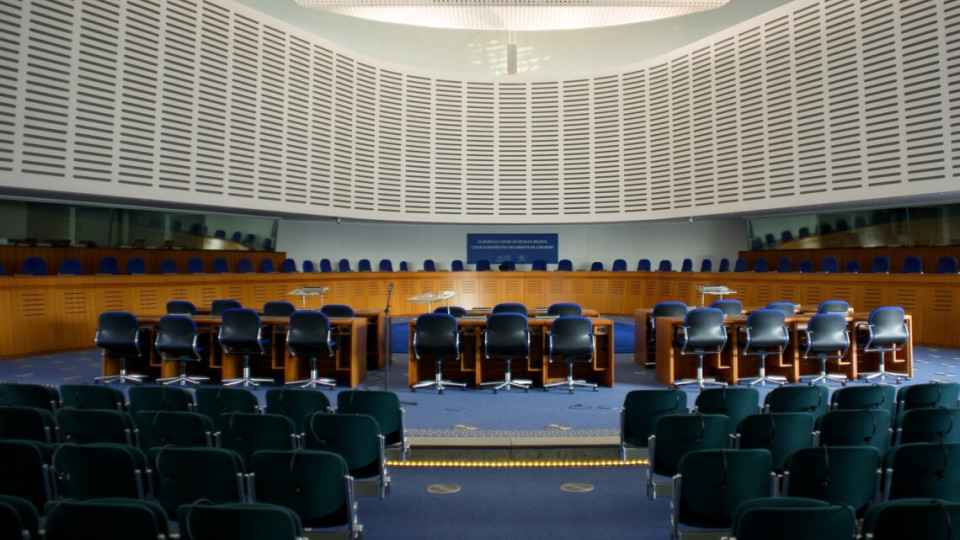










The European Court of Human Rights in the case Nejjar v. Switzerland concluded that the application by national courts of a legal fiction, according to which objections to a criminal penalty order are automatically considered withdrawn due to the person's failure to appear at the court hearing, may violate the right of access to court guaranteed by Article 6 of the Convention. The Court emphasized that even procedural mechanisms aimed at ensuring the efficiency of justice should not deprive a person of the opportunity to have the criminal charge examined on the merits.
The ECHR noted that restrictions on the right to a court must be proportionate and must not affect the very essence of this right. If the applicant's behavior clearly indicates an intention to maintain their appeal and seek a court hearing, the application of an irrefutable presumption of waiver of such a right is incompatible with the guarantees of a fair trial. Below are the circumstances of the case and the ECHR's position.
Circumstances of case No. 9087/18
The case concerned the applicant's appeal against a simplified penalty order issued by the prosecution, which imposed a fine on her. She complained that due to her absence at the hearing in the Police Court (Polizeigericht), her appeal was considered withdrawn pursuant to Article 356 § 4 of the Criminal Procedure Code. According to this provision, "if the applicant did not appear at the hearing without valid reasons and without a representative, his or her application was considered withdrawn."
By the simplified penalty order dated May 12, 2016, the Lausanne district prosecution found the applicant guilty of violating the Federal Act on Foreign Nationals and Integration, trafficking in stolen goods, as well as providing shelter to two illegal migrants in her home and accepting items stolen by one of them. She was sentenced to a daily fine of 30 Swiss francs for 100 days.
The next day, the applicant filed an appeal against this decision, referring to Article 354 of the Criminal Procedure Code. A few days later, the prosecutor forwarded the case materials to the Police Court, where the applicant was summoned to personally attend the hearing at 9:00 a.m. on May 5, 2017.
Since the applicant did not appear at the hearing on May 5, 2017, the Police Court found that her appeal was withdrawn. It also noted that the simplified penalty order of May 12, 2016, became final and enforceable pursuant to Article 356 of the Criminal Procedure Code.
The applicant challenged this decision, alleging, among other things, a violation of Article 6 of the Convention. To support her claim, she submitted a "report of assault" prepared by a doctor from the emergency department of the hospital she visited on May 10, 2017. The report documented injuries and stated that, according to the applicant, she was attacked and beaten at home around 8:00 a.m. on May 5, 2017, approximately one hour before the hearing.
On June 30, 2017, the Criminal Appeals Chamber of the Cantonal Court rejected the applicant's appeal, finding that she had not provided evidence of her inability to appear before the Police Court for reasons beyond her control. The applicant filed an appeal to the Federal Court, which was dismissed.
Due to the recognition of her appeal as withdrawn and the lack of opportunity for a substantive court hearing of the criminal charge, the applicant applied to the ECHR, complaining of a violation of her right of access to court guaranteed by Article 6 § 1 of the Convention.
ECHR assessment
The Court recalled that assigning prosecution and punishment for minor offenses primarily to administrative bodies does not contradict the Convention. This applies, in particular, to criminal sanctions imposed by the prosecution. However, there must be a possibility of review by a court that meets the requirements of Article 6 § 1 of the Convention.
According to Swiss law, the accused against whom a simplified penalty order was issued could appeal this matter to the prosecution. If the prosecutor decided to uphold the order, the case was referred to the court of first instance for consideration. If the accused was then convicted in the court of first instance, he or she had the opportunity to file an appeal. Thus, the requirements of the right to a court guaranteed by Article 6 § 1 of the Convention were met.
Article 356 of the Criminal Procedure Code established the principle that an appeal against a simplified penalty order "is considered withdrawn" if the applicant did not appear at the hearing in the court of first instance without valid reasons or without a representative. This principle was applied in the present case. In this regard, the Court recalled that neither the letter nor the spirit of Article 6 of the Convention prevents a person from voluntarily waiving, explicitly or implicitly, the right to the guarantees of a fair trial.
However, such a waiver must be established unequivocally and accompanied by minimum safeguards commensurate with its importance. The waiver does not necessarily have to be explicit, but it must be voluntary and constitute a conscious and informed relinquishment of the right.
In this case, the applicant challenged the Police Court's decision, providing explanations for her absence. By using the legal remedy provided by national law, complying with formal requirements and deadlines, she clearly and explicitly stated her desire to maintain her appeal against the order and seek a substantive court hearing.
The Court recalled that the right to a court may be subject to restrictions, but they must not limit the exercise of this right in such a way or to such an extent as to impair the very essence of this right. They must pursue a legitimate aim, and there must be a reasonable relationship of proportionality between the means employed and the aim sought to be achieved.
The Government stated that the purpose of the legal fiction of withdrawal of an appeal under Article 356 § 4 of the Criminal Procedure Code was to avoid a large accumulation of cases in which the accused had no real interest. This was a legitimate aim as it related to the proper administration of justice.
However, this case concerned a restriction on access to the court of first instance, which has jurisdiction to hear the criminal charge on the merits. Therefore, it affected the very essence of the accused's right to a court in criminal matters.
Moreover, the use of the legal fiction that the appeal was withdrawn could lead to the imposition out of court and with final effect of a rather severe criminal penalty, as it could involve imprisonment for up to six months or a daily fine for up to 180 days. Thus, the applicant was sentenced to a fine equivalent to about 30 euros per day for 100 days, which could lead to 100 days' imprisonment in case of non-payment.
Finally, in this case, maintaining the legal fiction was equivalent to an irrefutable presumption that the applicant had withdrawn her appeal, despite the fact that after her appeal against the Police Court decision of May 5, 2017, it became clear that she intended to continue the proceedings and seek a court hearing of the criminal charges against her. Thus, the purpose relied on by the Government to justify the legal fiction of withdrawal under Article 356 § 4 of the Criminal Procedure Code lost its relevance.
The Court concluded that the procedure for issuing simplified penalty orders provided for in Articles 352 et seq. of the Criminal Procedure Code is not in itself incompatible with the right to a court for the purposes of Article 6 § 1 of the Convention. However, in this case, the use of the legal fiction that the appeal was withdrawn under Article 356 § 4 of the same Code disproportionately restricted the applicant's ability to exercise that right.
Under these circumstances, the ECHR found that the application of the legal fiction provided for in Article 356 § 4 of the Criminal Procedure Code disproportionately restricted the applicant's right of access to court and affected the very essence of that right.
Conclusion
Violation of Article 6 § 1 of the Convention (right to a fair trial). The decision in this case was made by the Chamber on December 11, 2025, and will become final pursuant to Article 44 § 2 of the Convention.
Subscribe to our Telegram channel t.me/sudua and to Google News SUD.UA, as well as to our VIBER and WhatsApp pages on Facebook and Instagram to stay informed about the most important events.