Is it possible to use video from a police officer's personal phone as evidence: the position of the Supreme Court


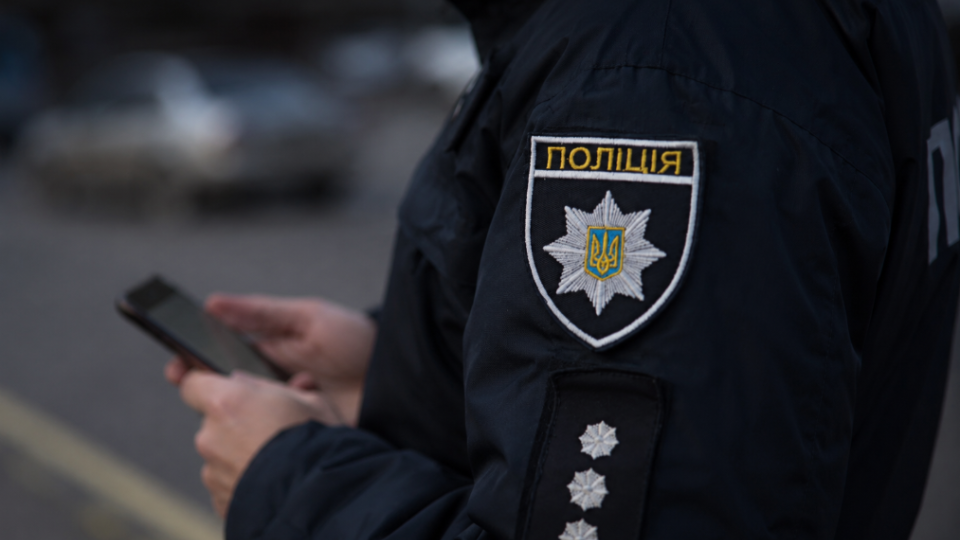










The Criminal Cassation Court as part of the Supreme Court expressed a legal position regarding the admissibility of a video recording made by a police officer on his personal mobile phone. The court concluded that the mere fact of using a phone instead of a body-worn video recorder does not make such evidence inadmissible if it was obtained in accordance with the law and there are no grounds to doubt its authenticity.
Circumstances of case No. 134/1667/23
The criminal proceeding concerned the accusation of a person offering an unlawful benefit to an official, as provided for in part one of article 369 of the Criminal Code of Ukraine.
According to the case materials, a community police officer arrived at the scene in the Tulchyn district of Vinnytsia region. During communication with the man, he detected signs of alcohol intoxication and informed him of the intention to draw up administrative materials for the identified violations.
After that, as established by the appellate court, the man first offered the police officer 10 thousand hryvnias, and later 15 thousand hryvnias to avoid the preparation of administrative materials and being held accountable.
The police officer recorded the conversation on his personal mobile phone because his body camera was under repair at that time.
The court of first instance acquitted the accused due to lack of proven guilt. At the same time, the Vinnytsia appellate court overturned the acquittal, found the man guilty under part 1 of article 369 of the Criminal Code, and imposed a fine of 34 thousand hryvnias.
The defense appealed this decision to the Supreme Court.
Arguments of the defense
In the cassation appeals, the defense insisted that the video recording could not be used as evidence because it was made on the police officer's personal phone, not on a body-worn video recorder.
The defense also pointed out that the recording was created before the information was entered into the Unified Register of Pre-trial Investigations (URPI), and in administrative cases related to events of the same day, courts critically assessed the relevant materials. Special attention was drawn to the fact that the police officer was subjected to disciplinary action.
Additionally, the defense questioned the admissibility of the expert's conclusion and the testimony of the police officer as a witness.
Position of the Supreme Court
The Supreme Court disagreed with the arguments of the cassation appeals and left the appellate court's verdict unchanged.
The court noted that the video recording was included in the criminal case materials on legal grounds. The pre-trial investigation body obtained it after the investigative judge issued a ruling on temporary access to the information contained on the police officer's mobile phone.
It was also established that the video was recorded openly in a public place, and the defense did not provide convincing arguments regarding violations of the accused's rights or freedoms due to such recording.
The Supreme Court emphasized that the internal instructions of the National Police regulate the use of body-worn video recorders but do not prohibit police officers from using their personal mobile phones to record events.
Therefore, the mere fact of recording on a phone does not indicate the inadmissibility of such evidence.
The court separately noted that the disputed video recording was not made using a body-worn video recorder at all, so the relevant internal instructions regarding the operation of body cameras do not apply to the use of a mobile phone.
Why the court recognized the video recording as admissible
The Supreme Court took into account that the video recording was seized based on a court warrant, and the conducted expert examination found no signs of editing, interruption, or alteration of the files.
According to the expert's conclusion, the video files were continuous and consistent, and their content corresponded with other evidence in the case, including the police officer's testimony.
At the same time, the defense did not provide arguments indicating the recording's unreliability or falsification.
Additional remarks by the Supreme Court
The court rejected the argument that the police officer's testimony could not be evidence due to his official status. The Supreme Court reminded that police officers are not among those whom the law prohibits from being questioned as witnesses in criminal proceedings.
The court also noted that decisions in administrative offense cases do not have preclusive effect on the assessment of evidence admissibility in this criminal proceeding.
Regarding the disciplinary sanction applied to the police officer, the Supreme Court agreed with the appellate court's conclusion that this fact alone does not refute the accusation of offering an unlawful benefit.
The court also pointed out that the question of who was driving the car is not decisive for proving the elements of the crime under part one of article 369 of the Criminal Code of Ukraine, which concerns the offer of an unlawful benefit to an official.
Court decision
The Criminal Cassation Court as part of the Supreme Court dismissed the cassation appeals of the convicted person and his defender and left the Vinnytsia appellate court's verdict unchanged.
Thus, the Supreme Court confirmed that a video recording made by a police officer on his personal mobile phone and obtained by the investigation based on an investigative judge's ruling on temporary access may be admissible evidence in a criminal proceeding if its authenticity is confirmed by the case materials and the procedure for obtaining it complies with legal requirements.
Subscribe to our Telegram channel t.me/sudua and to Google News SUD.UA, as well as to our VIBER and WhatsApp, Facebook page and Instagram page to stay updated on the most important events.