When a Trademark Can Be Lost and Whether an Advance on Salary Must Be Returned: Overview of the Supreme Court Practice


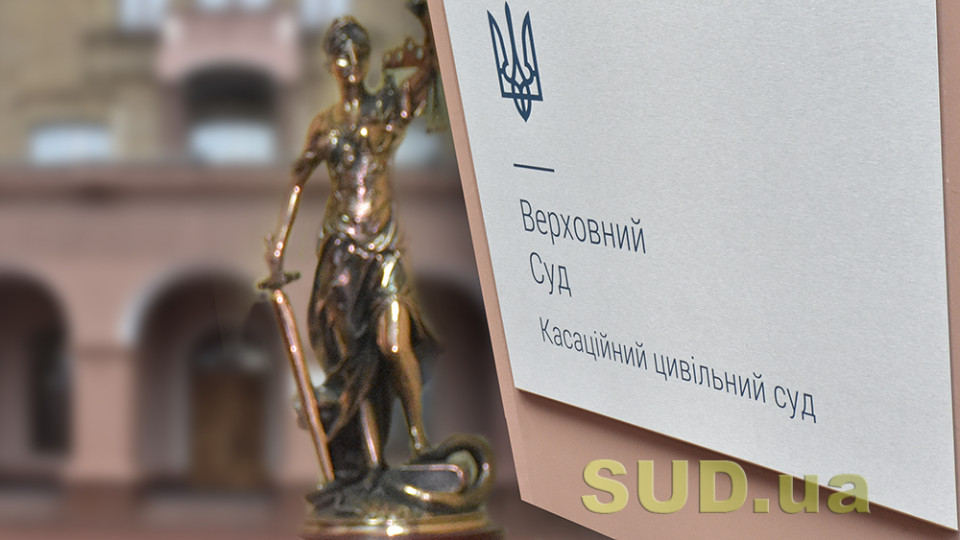










The Supreme Court published an overview of the current practice of the Civil Cassation Court for May 2026. It collects key legal positions and conclusions that are important for the uniform application of legislation by courts.
The document contains a number of important legal conclusions regarding labor, family, inheritance, and property disputes. Among them are the following:
– in disputes concerning the protection of honor, dignity, and business reputation, attention was drawn to the fact that an executive authority body endowed with state powers and funded from the budget cannot protect its business reputation from media criticism in the manner provided for business entities engaged in competitive market activities. Funding by the executive authority of another legal entity and the imposition of management functions over it are not grounds to conclude that information disseminated about such a legal entity violates the non-property rights (damages the business reputation) of the executive authority itself;
– in disputes arising from property rights protection, it was stated that recovery of property is possible only regarding an object that remains in its natural form and is illegally possessed by the defendant. In case of alteration, reprocessing, or destruction of the property, a vindicatory claim is not subject to satisfaction, and property rights protection is carried out by recovering its value;
– in disputes related to intellectual property rights protection, it was noted that non-use by the owner of a registered trademark for five years without valid reasons is grounds for early termination of the certificate under Article 18 of the Law of Ukraine "On Protection of Rights to Marks for Goods and Services." A person who filed applications for registration of identical or similar marks as trademarks and who may be refused registration due to the existence of a previously registered certificate has a legitimate interest to file a lawsuit for early termination of such certificate;
– in disputes arising from labor relations, it was stated that an advance paid to an employee against future salary as a means of subsistence is not subject to return under Article 1215 of the Civil Code of Ukraine in the absence of accounting errors or bad faith of the recipient;
– in disputes arising from family relations, it was noted that a child who has reached fourteen years of age, according to part 3 of Article 160 of the Family Code of Ukraine and part 2 of Article 29 of the Civil Code of Ukraine, has the right to independently determine their place of residence, so the court may refuse to satisfy a claim for removal of such a child under Article 163 of the Family Code of Ukraine if the child expressed a desire to live with another person and this does not contradict their best interests;
– in disputes arising from inheritance relations, it was stated that an heir whose right to inheritance arose due to the refusal of another heir to accept the inheritance has the right to refuse acceptance of the inheritance within a special three-month period established by part 2 of Article 1270 of the Civil Code of Ukraine, counted from the moment of such refusal, and not within the general six-month period from the opening of the inheritance;
– in disputes related to recognition of assets as unjustified and their recovery to the state revenue, it was noted that:
- seizure of assets that are the subject of the claim is a proportionate measure to secure the claim if alienation of such property may complicate or make impossible the execution of the court decision. The belonging of the asset to close persons of a public official does not exclude seizure if the claim is filed regarding this asset as acquired on their behalf;
- when resolving disputes on recognition of assets as unjustified and their recovery to the state revenue, the court applies the "balance of probabilities" standard of proof, and defendants' claims of acquiring property through savings or cash gifts from relatives must be supported by proper and admissible evidence, not only witness testimony. When recognizing assets as unjustified, the court must consider the moment of acquisition of the asset, not the moment of actual commencement of official duties by the person authorized to perform state functions;
– in disputes related to compensation for damages, it was stated that:
- non-return by the pre-trial investigation body of money seized during a search after the cancellation of the property seizure is grounds for compensation by the state on general grounds under part 6 of Article 1176 of the Civil Code of Ukraine without the need for a court decision establishing the illegality of the respective body's actions;
- the victim being in a state of moderate alcohol intoxication and riding a bicycle without reflectors at night is gross negligence, which under part 2 of Article 1193 of the Civil Code of Ukraine is grounds for reducing the amount of compensation for damage caused by a source of increased danger but does not completely exempt the holder of the source of increased danger from liability;
– regarding the application of procedural law norms, attention was drawn to the fact that:
- the court's finding of absence of grounds for a bank to disclose information containing banking secrecy and/or the applicant's authority to demand its disclosure is grounds for a decision to refuse satisfaction of the application (part 2 of Article 350 of the Civil Procedure Code of Ukraine), not for refusal to open proceedings in the case;
- if before the preparatory court session the court receives an amended claim signed by the guardian of an incapacitated person as their legal representative, leaving the original claim without consideration on the grounds that it was signed by an incapacitated person is unlawful — the court is obliged to continue consideration of the case on the merits;
- a ruling refusing to accept an application to change the subject or grounds of the claim by its legal nature is equivalent to a ruling on returning the application and is subject to appeal separately from the court decision according to paragraph 6 of part 1 of Article 353 of the Civil Procedure Code of Ukraine.
Subscribe to our Telegram channel t.me/sudua and to Google News SUD.UA, as well as to our VIBER and WhatsApp, Facebook page and Instagram to stay informed about the most important events.