The Supreme Court's Criminal Collegium clarified the boundaries of desertion and failure to appear for service


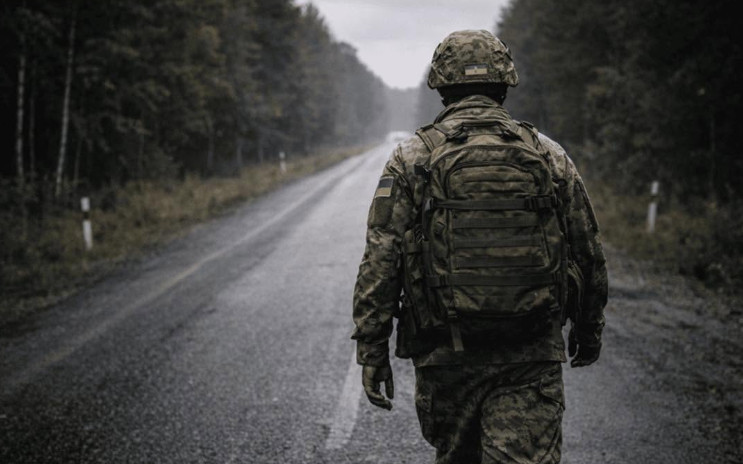










The objective side of the crime provided for in Article 408 of the Criminal Code, in the form of failure to appear for service, is limited only to acts specified by the legislator in an exhaustive list, and therefore qualification under the relevant part of Article 408 of the Criminal Code of acts of a person not included by the legislator in this exhaustive list, in particular failure of a serviceman to appear for service after being released from custody, is an extended interpretation of the criminal law and application of the law on criminal liability by analogy, which is expressly prohibited by the provisions of Part 4 of Article 3 of the Criminal Code. This conclusion was made by the panel of judges of the Third Judicial Chamber of the Supreme Court's Criminal Collegium on May 20, 2026, in case No. 459/2030/24.
Case circumstances
The pre-trial investigation body accused conscripted servicemen that during military service they did not appear on time for duty at the permanent deployment point of the military unit and remained outside its boundaries until their detention during an attempt to illegally cross the state border of Ukraine outside the checkpoint towards Moldova.
Positions of the courts of first and appellate instances
The courts of previous instances found the servicemen guilty and convicted them under Part 4 of Article 402 of the Criminal Code, but acquitted them under Part 4 of Article 408 of the Criminal Code.
In the cassation appeal, the prosecutor indicates that the local court, without proper justification, concluded that there was no other criminal offense under Part 5 of Article 407 of the Criminal Code in the actions of the servicemen, as well as no grounds for applying the provisions of Part 3 of Article 337 of the Criminal Procedure Code and for exceeding the limits of the previously presented charges in terms of changing the legal qualification.
Position of the Supreme Court's Criminal Collegium
The decisions of the lower courts were changed, and the accused were released from serving the sentence with probation under Article 75 of the Criminal Code.
The panel of judges of the Criminal Collegium indicated that the concept of desertion is formulated in Part 1 of Article 408 of the Criminal Code as unauthorized abandonment of a military unit or place of service with the purpose of evading military service, as well as failure to appear for service with the same purpose in case of appointment, transfer, business trip, leave, or from a medical institution.
As repeatedly stated in judicial practice, from the objective side desertion consists of acts or omissions that have two corresponding forms:
1) unauthorized abandonment of a military unit or place of service;
2) failure to appear for service in case of appointment, transfer, business trip, leave, or from a medical institution.
In the first form, desertion is a completed crime from the moment the subject actually left the location of the military unit (place of service), and in the second – when he did not appear at the unit (place of service) within the established time.
The panel of judges of the Criminal Collegium notes that neither the indictment nor the prosecutor's cassation appeal mentions unauthorized abandonment of the military unit or place of service by the servicemen, therefore this form of desertion is not considered by the panel of judges.
At the same time, the objective side of this crime in the form of failure to appear for service is limited only to acts specified by the legislator in an exhaustive list, and therefore qualification under the relevant part of Article 408 of the Criminal Code of acts of a person not included by the legislator in this exhaustive list, in particular failure of a serviceman to appear for service after being released from custody, is an extended interpretation of the criminal law and application of the law on criminal liability by analogy, which is expressly prohibited by the provisions of Part 4 of Article 3 of the Criminal Code.
Moreover, it is worth noting that one of the signs of the objective side of the crime under Part 5 of Article 407 of the Criminal Code (in the form of failure of a serviceman to appear on time for service without valid reasons for more than three days, committed under martial law conditions) is the absence of the serviceman without valid reasons for more than three days after failure to appear at the military unit or place of service, i.e., when he was lawfully outside the military unit or place of service and did not appear for more than three days from the moment he was obliged to appear.
However, in the charges brought against the servicemen, the date set by the command as the final deadline for arrival at the military unit or other place of service is not specified, no information is provided about notifying them of this date, and it is not established that more than three days passed after this deadline during which they did not appear without valid reasons at the place of service designated by the command. Under such circumstances, there are no grounds for qualifying the acts charged to the servicemen under Part 5 of Article 407 of the Criminal Code.
The decision of the panel of judges of the Third Judicial Chamber of the Supreme Court's Criminal Collegium dated May 20, 2026, in case No. 459/2030/24 (proceeding No. 51-2079km25) can be reviewed at the link.
Subscribe to our Telegram channel t.me/sudua and to Google News SUD.UA, as well as to our VIBER and WhatsApp, Facebook page and Instagram to stay informed about the most important events.