How to Prove War Damages and Obtain Compensation through the International Mechanism – Explanation by the Supreme Court’s Grand Chamber


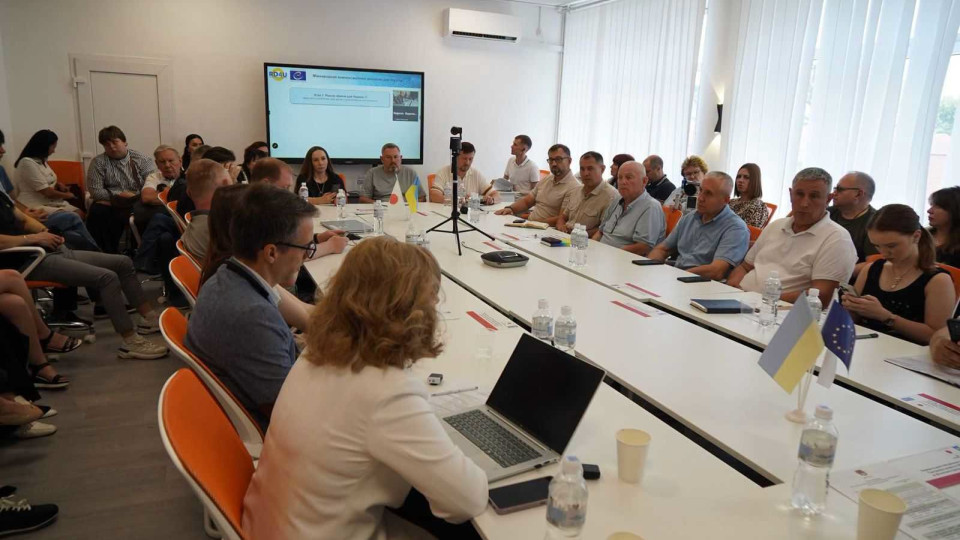










Decisions of Ukrainian courts help to obtain compensation through the International Damage Registry. This was emphasized by the judge of the Supreme Court’s Grand Chamber, Olha Stupak, at the regional forum "From Damages to Compensation: Effective Tools for Relocated and Affected Enterprises," organized by the Luhansk Regional State Administration.
The judge noted that the armed aggression of the Russian Federation against Ukraine did not begin on February 24, 2022, but already in 2014 with the occupation of parts of Donetsk and Luhansk regions and the annexation of Crimea. The judge pointed out that the first claims for compensation appeared then, but they were directed against the state of Ukraine, not Russia, since citizens believed that the state had failed to ensure proper security and preservation of their property.
February 24, 2022, became a trigger that changed the direction of such claims. The lion's share of claims today is directed against the aggressor state. Initially, courts faced the problem that consideration of such cases required the consent of Russia, which was impossible to obtain for obvious reasons. In April 2022, the Supreme Court’s Commercial Collegium first formulated the conclusion that the aggressor state, which violated fundamental norms of international law, cannot invoke jurisdictional immunity to deprive victims of access to court. This decision, the speaker emphasized, opened the way for national courts to consider numerous cases for compensation for damage caused by armed aggression, where the defendant is the aggressor country.
Olha Stupak drew attention to a number of procedural difficulties inherent in this category of disputes. She noted that there is an atypical defendant – the aggressor country, which practically does not participate in the process. This complicates ensuring adversarial proceedings and proper notification of the defendant about the case consideration. National courts apply the provisions of Article 12-1 of the Law of Ukraine "On Ensuring the Rights and Freedoms of Citizens and the Legal Regime in the Temporarily Occupied Territory of Ukraine" and notify about the case consideration through the judicial portal. In commercial cases, plaintiffs additionally send copies of materials and claims to the embassies of the aggressor state in third countries via international postal operators.
The judge also noted that claims for compensation for damage to immovable property are subject to exclusive jurisdiction rules – the case is considered by the commercial court at the location of the property (and if there are several objects – at the location of the most expensive one), while claims regarding movable property may be filed at the place where the damage occurred.
Separately, the judge addressed the issue of court fees. She noted that plaintiffs in cases directly against the aggressor state are exempt from paying court fees. At the same time, the judge referred to the ruling of the Supreme Court’s Commercial Cassation Court dated November 11, 2025, in case No. 911/591/25. It concluded that the legislative norm on exemption from court fees applies only to plaintiffs in cases directly against the aggressor state. This norm does not apply to cases where defendants are business entities, even if they are connected to, replace, or supplement the aggressor state.
At the same time, Olha Stupak emphasized that the most painful issue remains the enforcement of already issued decisions in this category of cases. All enforcement orders issued in such cases are combined into a consolidated enforcement proceeding administered by the relevant department of the Ministry of Justice of Ukraine. However, the aggressor state's property on the territory of Ukraine is insufficient to satisfy all open proceedings.
The International Damage Registry for Ukraine is intended to help compensate for damage caused by Russia. The judge noted that the circumstances established by national courts when considering cases of this category overlap with those that need to be proven when applying to the International Damage Registry. Thus, when considering cases for compensation for property damage, the court must establish the following circumstances:
– what confirms the proper ownership right of the damaged property;
– whether there is a sole owner/co-owners of the damaged property;
– what confirms the fact of property damage;
– what confirms the causal link of the damage caused;
– what confirms the amount of damage caused.
In essence, the circumstances necessary for the International Damage Registry are also established by national courts. The question arises whether the Registry can simply pay compensation based on a court decision. The answer is negative. The Registry has its own mechanism for assessing circumstances. However, a national court decision can be used as evidence in the international mechanism. Therefore, the judge noted, the quality of reasoning and detail of the circumstances established by the court help plaintiffs who have already gone through the national judicial process to confirm their right to compensation within the international compensation mechanism.
Olha Stupak also addressed the issue of lost profits. She noted that claims for compensation of lost profits appear in almost every second commercial case of this category and cited as an example a case for recovering the cost of lost railway semi-wagons and unpaid rent for them (decision of the Commercial Court of Kyiv dated July 5, 2023, case No. 910/6598/23). She also referred to the ruling of the Supreme Court’s Commercial Cassation Court dated September 30, 2021, in case No. 922/3928/20, where the court defined criteria for calculating the amount of damages in the form of lost profits and standards of proof.
The speaker also touched on relocation expenses and the problem of lost documents. She emphasized that damages of relocated enterprises, including direct relocation costs, are also assessed and included in the amount of damage compensated by courts.
The judge recognized the most difficult problem in this category of cases as situations where ownership documents are lost, and information about the relevant property is not available even in state registers, especially regarding objects whose information was not entered into electronic registers before January 1, 2013. In such cases, the speaker noted, judicial practice debates whether these cases should be considered in claim proceedings or whether simplified procedures, including separate proceedings for establishing legally significant facts provided by the Civil Procedure Code of Ukraine, are sufficient.
Subscribe to our Telegram channel t.me/sudua and to Google News SUD.UA, as well as to our VIBER and WhatsApp pages on Facebook and Instagram to stay informed about the most important events.


Popular news