Does the family have the right to the serviceman's monetary allowance after AWOL: appellate court decision


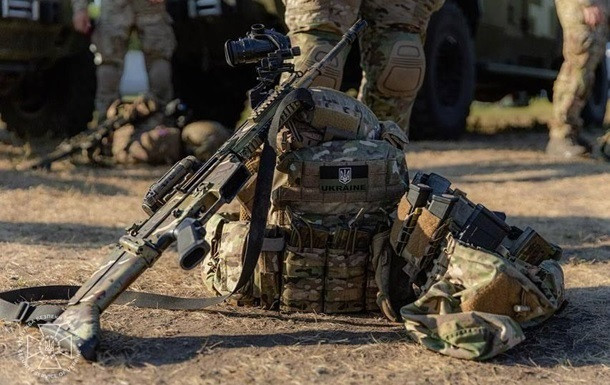










The Eighth Administrative Court of Appeal considered an appeal against the decision of the Rivne District Administrative Court in a case filed against a military unit to cancel an order following an official investigation and to restore the payment of the serviceman's monetary allowance. The appellate court upheld the decision of the first instance court, agreeing with the legality of the military unit's actions.
Essence of the case
The court was approached by the daughter of the serviceman, who requested to recognize as unlawful and cancel the order of the military unit commander dated October 10, 2024, issued following an official investigation, and to oblige the military unit to resume accrual and payment of the serviceman's monetary allowance from September 18, 2024.
The court established that the serviceman was enlisted in the personnel list of the military unit and appointed as a squad anti-tank missile system operator. On September 18, 2024, during a personnel check, his absence was discovered. According to the company commander's report, the serviceman left his position without permission, without reporting to command, carrying his service weapon, and his whereabouts remained unknown thereafter.
Consequently, the military unit commander appointed an official investigation to clarify the reasons, circumstances, and conditions of the unauthorized absence. The investigation confirmed the fact of unauthorized departure, after which, by order dated October 10, 2024, the serviceman was subjected to disciplinary action in the form of a severe reprimand. The same order instructed the financial-economic service to suspend the payment of monetary allowance from the day of unauthorized absence — September 18, 2024 — and to withhold bonuses and additional rewards. Furthermore, responsible officials were tasked with notifying the pre-trial investigation body about circumstances that might contain signs of a criminal offense.
The plaintiff insisted that the serviceman did not leave his post voluntarily but went missing during a combat mission. She also argued that there were grounds to maintain his monetary allowance as a serviceman who went missing or might have been captured. Therefore, in her opinion, the order to stop the payment was illegal.
Position and conclusions of the court
The appellate court agreed with the conclusions of the first instance court that the military unit acted within its authority and in a manner prescribed by the Constitution of Ukraine, the Law "On Military Duty and Military Service," the Law "On Social and Legal Protection of Servicemen and Their Families," the Disciplinary Statute of the Armed Forces of Ukraine, the Internal Service Statute of the Armed Forces of Ukraine, the Procedure for Conducting Official Investigations in the Armed Forces of Ukraine, and the Procedure for Payment of Monetary Allowances to Servicemen.
The panel of judges noted that the official investigation was appointed in accordance with legal requirements after the serviceman's absence was discovered and was conducted to establish the reasons, circumstances, and degree of his fault. The investigation report concluded that the serviceman left his position without reporting to command and with a weapon, thus justifying disciplinary action and relevant financial decisions.
The court specifically noted that the plaintiff's claims about the serviceman performing a combat mission were not supported by any evidence. The case materials contained no orders or combat directives indicating that he was on a combat mission on September 18, 2024.
The appellate court also found the claims about possible captivity unfounded. According to letters from the Security Service of Ukraine, the Coordination Headquarters on Prisoner of War Affairs, and the State Enterprise "Ukrainian National Center for Peacebuilding," there was no information about the serviceman being in captivity or his whereabouts. Therefore, the court found no grounds to apply special guarantees regarding the payment of monetary allowance to servicemen who are in captivity or missing.
The court thoroughly analyzed the provisions of the Law "On Social and Legal Protection of Servicemen and Their Families," which guarantee the preservation of monetary allowance for servicemen captured, interned in neutral countries, or missing. At the same time, the panel emphasized that these guarantees do not apply to servicemen who voluntarily surrendered, left the military unit or place of service without permission, or deserted. Similar provisions are contained in the Procedure for Payment of Monetary Allowances to Families of Servicemen, approved by Cabinet of Ministers Resolution No. 884.
The appellate court noted that the law provides the right of family members of servicemen who went missing to receive monetary allowance only if there are no legal grounds for termination of such payments. One such ground is unauthorized absence from the military unit or place of service. Therefore, establishing the factual circumstances of the serviceman's disappearance was key to resolving the dispute.
The panel concluded that the official investigation properly established the fact of unauthorized absence by the serviceman. The plaintiff did not provide proper and admissible evidence to refute the investigation's conclusions or to confirm that the serviceman was performing a combat mission at the time of his disappearance. The case materials also lacked evidence confirming his captivity or official recognition as missing according to the law.
Under these circumstances in case No. 460/21782/25, the appellate court agreed that after unauthorized absence, there are no legal grounds to pay the serviceman monetary allowance, bonuses, or additional rewards starting from September 18, 2024. The court noted that the military unit commander's order to suspend such payments complies with the Law "On Military Duty and Military Service," the Law "On Social and Legal Protection of Servicemen and Their Families," and the Procedure for Payment of Monetary Allowances approved by Ministry of Defense Order No. 260.
The panel also pointed out that the contested order is an individual act of one-time application that was executed. The court referred to established practice of the Supreme Court and the Grand Chamber of the Supreme Court, according to which after execution, such an act cannot be canceled, as it would contradict the principle of legal certainty and guarantees of stability of legal relations.
The appellate court further noted that the grounds of the appeal essentially amount to disagreement with the evidence evaluation by the first instance court but do not refute the established facts or indicate incorrect application of substantive or procedural law. The panel also considered the European Court of Human Rights' practice regarding the court's duty to motivate its decisions, stating that the court is not obliged to respond to every argument separately if the overall reasoning allows understanding the grounds for the decision.
In conclusion, the Eighth Administrative Court of Appeal dismissed the appeal and left the decision of the Rivne District Administrative Court unchanged, recognizing that the military unit acted on the basis, within the authority, and in the manner prescribed by the Constitution and laws of Ukraine, and found no grounds to cancel the order on the results of the official investigation or to restore the payment of monetary allowance.
Subscribe to our Telegram channel t.me/sudua and to Google News SUD.UA, as well as to our VIBER and WhatsApp, Facebook page and Instagram page to stay informed about the most important events.