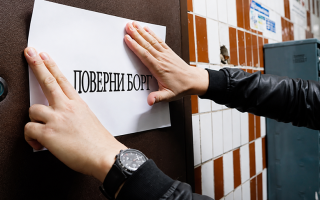
Housing in Occupation, but Debts Are Growing: Is It Legal to Charge Utilities and Can They Be Unpaid












For thousands of Ukrainians who were forced to leave their homes in temporarily occupied territories due to the war, the issue of utility payments remains one of the most painful. People often receive notifications about debts for apartments and houses to which they have had no access for years, and they do not always understand whether such charges are legal. The legislation provides a number of guarantees for residents of occupied territories and internally displaced persons, but at the same time does not exempt from paying debts that arose before the occupation began.
Are utility charges applied in temporarily occupied territories?
During martial law in Ukraine, special rules apply regarding the payment of housing and communal services in temporarily occupied territories and in combat zones.
Until the termination or cancellation of martial law, it is prohibited to charge fees for housing and communal services for the period from the beginning to the end of the temporary occupation of the respective territory.
It is also not allowed to charge or collect fines, penalties, inflation losses, and other financial sanctions for debts that arose due to non-payment or partial payment of utilities in temporarily occupied territories and areas where hostilities are taking place.
Furthermore, suppliers are prohibited from discontinuing the provision of housing and communal services due to non-payment or partial payment by consumers in such territories.
Can debts be collected from internally displaced persons (IDPs)?
The legislation separately prohibits collecting debts that arose after February 24, 2022, for the period from the start of hostilities until their end, from consumers who left their place of residence and provided the utility service provider with documentary proof of their departure.
Thus, internally displaced persons who left the dangerous territory and confirmed this fact with appropriate documents are protected from the collection of such debts for the period defined by law.
Is it necessary to pay utility debts that arose before the occupation?
Yes, debts for housing and communal services that arose before the temporary occupation of the territory must be paid.
Since the services were actually provided before the occupation began, the obligation to pay remains with the consumer. The rules prohibiting charges and collections apply only to the periods of martial law defined by law.
Can utility debts be written off?
Current legislation does not provide for automatic write-off of debts for already consumed housing and communal services.
Therefore, the mere presence of temporary occupation of a territory is not grounds for canceling debts that arose before the occupation began.
What to do if a debt was charged during the occupation?
If a consumer receives a notification about a debt charged during the temporary occupation of the territory, they should contact the utility service provider to verify the legality of such charges and resolve the situation.
If necessary, it is advisable to provide documents confirming departure from the place of residence or the status of an internally displaced person so that the provider can take into account the circumstances provided by law.
Subscribe to our Telegram channel t.me/sudua and to Google News SUD.UA, as well as to our VIBER and WhatsApp, our page on Facebook and on Instagram to stay informed about the most important events.