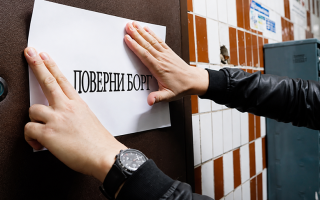
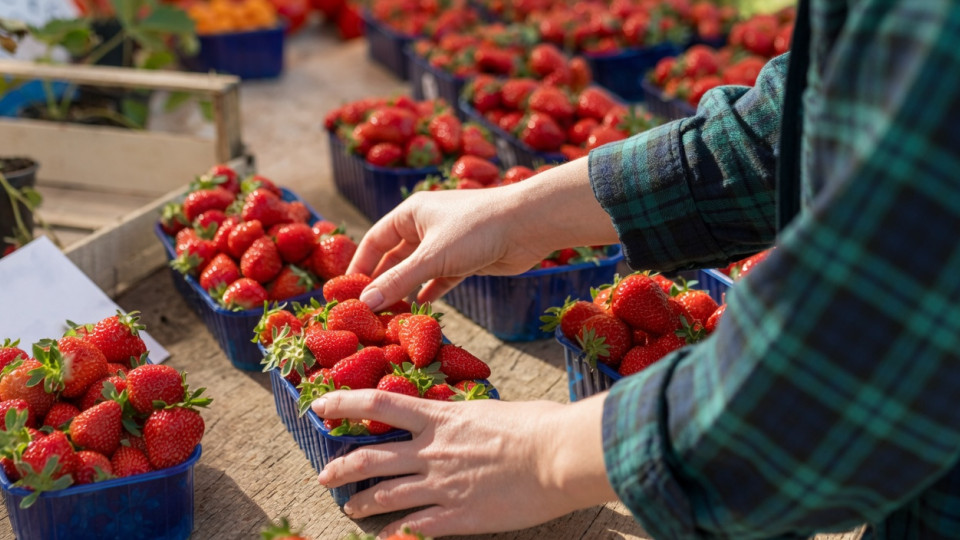
Selling strawberries in the yard near apartment buildings can result in a fine












With the arrival of summer, the number of cases of spontaneous trade in vegetables, fruits, berries, and melons traditionally increases in Ukraine. Such products are often sold near roads, metro stations, markets, and other places not designated for trade. At the same time, the law provides for administrative liability for selling goods in unauthorized places, and court practice shows regular application of Article 160 of the Code of Ukraine on Administrative Offenses.
During the strawberry and cherry season, spontaneous trade is often conducted right near apartment buildings — next to entrances, on sidewalks, and residential areas. However, such places are usually not officially designated for trade, which can be grounds for drawing up an administrative protocol, imposing a fine, and in some cases — confiscation of goods.
Where spontaneous trade is most often recorded
Spontaneous trade most often takes place near roads, markets, metro stations, public transport stops, sidewalks, squares, and other places with a large flow of people.
At the same time, such places mostly do not belong to officially designated trading locations, so selling goods there may be considered a violation of legal requirements.
What fine threatens for trading in unauthorized places
Liability for trading in unauthorized places is provided for by Article 160 of the Code of Ukraine on Administrative Offenses.
In particular, part one of Article 160 establishes liability for hand-to-hand trading in cities on streets, squares, yards, entrances, parks, and other unauthorized places. The article's sanction provides for a fine from one to seven non-taxable minimum incomes of citizens, i.e., from 17 to 119 hryvnias, with possible confiscation of trading items or without it.
If it concerns the sale of industrial goods in unauthorized places, part two of Article 160 provides for a fine from six to fifteen non-taxable minimum incomes of citizens — from 102 to 255 hryvnias — with confiscation of trading items.
Why such trade causes complaints
Food trade in unauthorized places attracts the attention of controlling authorities not only because of violations of improvement or trade rules.
When selling food products, storage conditions, compliance with sanitary standards, and food safety requirements are important. This issue becomes especially relevant in the summer period when products can spoil faster due to high temperatures.
That is why local self-government bodies and law enforcement regularly conduct measures to detect cases of spontaneous trade.
Judicial practice regarding trade in unauthorized places
Courts regularly consider cases of administrative offenses related to trade in unauthorized places. At the same time, consequences for offenders may vary depending on the circumstances of the specific case.
For example, on June 3, 2026, the Shevchenkivskyi District Court of Kyiv in case No. 761/17419/26 found a citizen guilty of committing an administrative offense under part one of Article 160 of the Code of Ukraine on Administrative Offenses.
The court established that the man sold meat products on Zahorivska Street in Kyiv in a place not designated for trade. The fact of the offense was confirmed by an administrative offense protocol, a police officer's report, a protocol of detection, inspection and seizure, photographic materials, and other evidence.
As a result of the case review, the court imposed a fine on the offender in the amount of one non-taxable minimum income of citizens — 17 hryvnias. In addition, according to Article 40-1 of the Code and the Law of Ukraine "On Court Fees," a court fee of 665.60 hryvnias was collected from him.
At the same time, in another case, the Desnianskyi District Court of Kyiv on June 5, 2026, considered materials regarding a person who sold vegetables by hand on Chervona Kalyna Avenue in Kyiv. The court recognized the presence of an administrative offense under part one of Article 160.
However, considering the nature of the offense, degree of guilt, the offender's identity, age, and financial situation, the court applied the provisions of Article 22 of the Code on insignificance of the offense. The person was released from administrative liability, and the case was closed with an oral warning.
Thus, practice shows that for trading in unauthorized places, a person may be fined or released from administrative liability due to insignificance. At the same time, the very fact of selling goods in places not designated for trade can be grounds for drawing up an administrative protocol and court consideration.
Is it allowed to set up trading points without permission
The law also does not allow unauthorized organization of trading places using cars, trailers, carts, stalls, tables, and other temporary structures in places not designated for this.
These requirements apply to both citizens and business entities. To conduct trade, it is necessary to use places designated by local self-government bodies or market administration.
Where you can legally sell products
It is legal to sell vegetables, fruits, berries, melons, and other products at markets, fairs, and other specially designated places.
Such venues are created taking into account legal requirements for organizing trade and provide proper conditions for storage and sale of goods.
Therefore, selling watermelons, corn, berries, fruits, or other products near roads, metro stations, or other unauthorized places can be grounds for administrative liability under Article 160 of the Code. Court practice shows that such cases are regularly considered by courts, and offenders are subject to legally prescribed administrative measures.
Subscribe to our Telegram channel t.me/sudua and to Google News SUD.UA, as well as to our VIBER and WhatsApp pages on Facebook and Instagram to stay informed about the most important events.