The Supreme Court Explained When a Dispute Regarding a Notary's Registration Action Falls under Administrative Jurisdiction


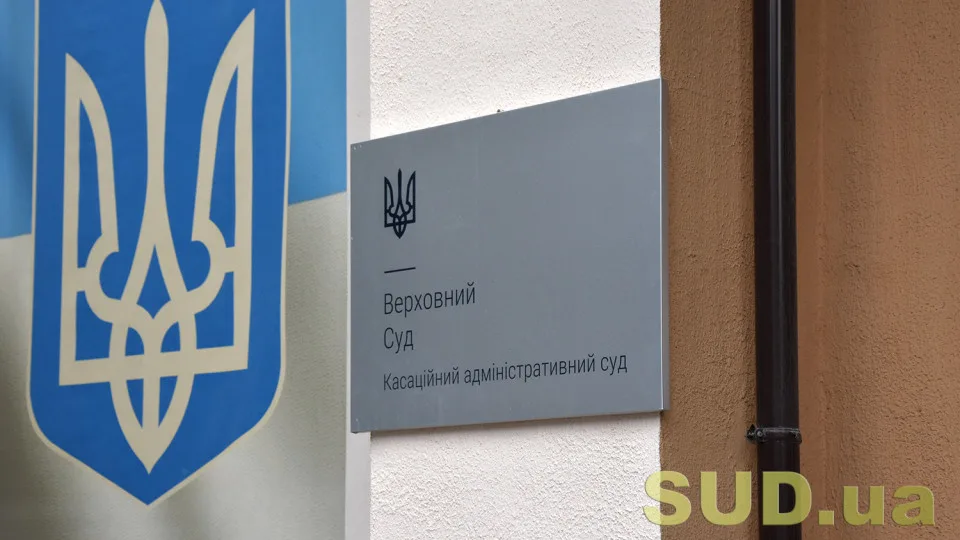










The Supreme Court, sitting as the Cassation Administrative Court, considered a case challenging a registration action performed by a private notary that amended the Unified State Register in relation to the Odesa Regional Chamber of Commerce and Industry.
The Court had to determine whether such a dispute falls within administrative jurisdiction where the plaintiff challenges neither corporate decisions nor his dismissal, but rather the state registrar’s compliance with the statutory registration procedure.
Case Summary
The plaintiff filed an administrative claim against a private notary of the Odesa City Notarial District and the Odesa Regional Chamber of Commerce and Industry. He sought a declaration that the registration action dated November 27, 2024, was unlawful and requested its cancellation. That action removed him from the list of persons authorized to act on behalf of the legal entity without a power of attorney, sign contracts, and submit documents for state registration.
The claim arose after the plaintiff was dismissed from his position as vice president of the Odesa Regional Chamber of Commerce and Industry. He subsequently challenged his dismissal in civil proceedings. In that case, the court granted interim relief prohibiting state registration authorities from taking any registration action to remove the plaintiff from the Chamber’s management.
Despite that injunction, the private notary registered the relevant changes on the same day and removed the plaintiff from the Unified State Register as a person authorized to act on behalf of the legal entity without a power of attorney.
The plaintiff maintained that, in the administrative proceedings, he was not challenging either the corporate decisions or the dismissal order. In his view, the dispute concerned exclusively the lawfulness of the state registrar’s conduct during the registration process.
He argued that the private notary had violated the requirements of the Law of Ukraine “On State Registration of Legal Entities, Individual Entrepreneurs and Public Formations” because she:
-
performed the registration action contrary to a valid court order prohibiting such actions;
-
amended the register even though the applicant had not expressed an intention to remove the plaintiff from the Unified State Register; and
-
completed the state registration despite the fact that the minutes of the general meeting, on which the amendments were based, contained no decision to remove the plaintiff from the list of persons authorized to act on behalf of the legal entity.
The plaintiff emphasized that determining whether the state registrar had complied with the law did not require an assessment of the lawfulness of his dismissal or the validity of the Chamber’s corporate decisions, as those matters were the subject of separate judicial proceedings.
The Odesa Regional Chamber of Commerce and Industry, however, requested that the proceedings be closed. It argued that the claims were derivative of both a labor dispute concerning the plaintiff’s dismissal and a corporate dispute concerning the lawfulness of the Chamber’s management decisions, each of which was already being considered by other courts. According to the defendant, the lawfulness of the registration action could not be determined independently of those disputes.
Decisions of the Courts of First Instance and Appeal
The Odesa District Administrative Court closed the proceedings, and the Fifth Administrative Court of Appeal upheld that decision.
The courts reasoned that the dispute was, in substance, corporate in nature and that the registration action was derivative of decisions adopted by the governing bodies of the legal entity. In their view, resolving the dispute would require an assessment of the lawfulness of the decisions adopted at the Chamber’s extraordinary general meeting, which fell outside administrative jurisdiction.
The courts also observed that cancelling the registration action without first resolving the related corporate issues could create discrepancies between the information contained in the Unified State Register and the legal facts underlying the relevant entries.
Accordingly, the proceedings were closed under paragraph 1 of part one of Article 238 of the Code of Administrative Procedure of Ukraine on the ground that the dispute was not subject to review by an administrative court.
Legal Position of the Supreme Court
When reviewing Case No. 420/5878/25 in cassation, the Supreme Court first examined the substance of the claims and the nature of the disputed legal relationship.
The Court noted that, under Article 19 of the Code of Administrative Procedure of Ukraine, the jurisdiction of administrative courts extends to public-law disputes, including disputes in which individuals or legal entities challenge the decisions, actions, or omissions of public authorities.
At the same time, the defining feature of an administrative case is not merely the participation of a public authority, but also the nature of the legal relationship in dispute. Where a dispute arises from the exercise of public administrative functions by an authority, it falls within administrative jurisdiction. However, where the dispute concerns the protection of private rights or interests, it must be considered under the procedural rules governing the relevant private-law relationship.
The Supreme Court emphasized that the mere participation of a state registrar or a notary acting as a registration authority does not automatically bring a dispute within administrative jurisdiction. The decisive considerations are the right that the claimant seeks to protect and the legal relationship giving rise to the dispute.
In assessing the circumstances of the case, the Court observed that the plaintiff had not asked the administrative court to review the lawfulness of the general meeting’s decisions or the dismissal order. Nor had he sought reinstatement or the protection of corporate rights.
The claim concerned exclusively the registration action performed by the private notary in her capacity as a state registrar and her alleged failure to comply with the statutory requirements governing state registration. The plaintiff contended that the notary had carried out the registration action in breach of an interim court order and without the necessary legal grounds or supporting documents.
The Supreme Court held that determining whether a state registrar has complied with the Law of Ukraine “On State Registration of Legal Entities, Individual Entrepreneurs and Public Formations” constitutes an independent subject of judicial review.
The Court further stated that assessing the lawfulness of the registrar’s actions does not require a prior determination of the validity or invalidity of the relevant corporate decisions or dismissal order where the plaintiff has raised no such claims and has not requested that the court assess those matters.
According to the Supreme Court, the lower courts had effectively treated the dispute as a corporate dispute without addressing the plaintiff’s arguments that the state registrar may have breached the special legislation governing the registration procedure.
The mere existence of related corporate or labor disputes, the Court explained, does not preclude judicial review of the lawfulness of a state registrar’s actions where the claimant challenges an administrative decision made by the registration authority.
In these circumstances, the Supreme Court concluded that the courts of first instance and appeal had closed the proceedings prematurely and had incorrectly determined the applicable jurisdiction.
The Supreme Court therefore allowed the cassation appeal, set aside the ruling of the Odesa District Administrative Court and the judgment of the Fifth Administrative Court of Appeal, and remitted the case to the court of first instance for consideration on the merits.
The Supreme Court’s ruling took effect on the date of its adoption, is final, and is not subject to appeal.
Subscribe to our Telegram channel t.me/sudua, follow SUD.UA on Google News , and join us on VIBER, WhatsApp, Facebook and on Instagram to stay informed about the important events.