Names of cities and villages in Crimea may be changed: a new renaming procedure is proposed in the Rada for the period of occupation


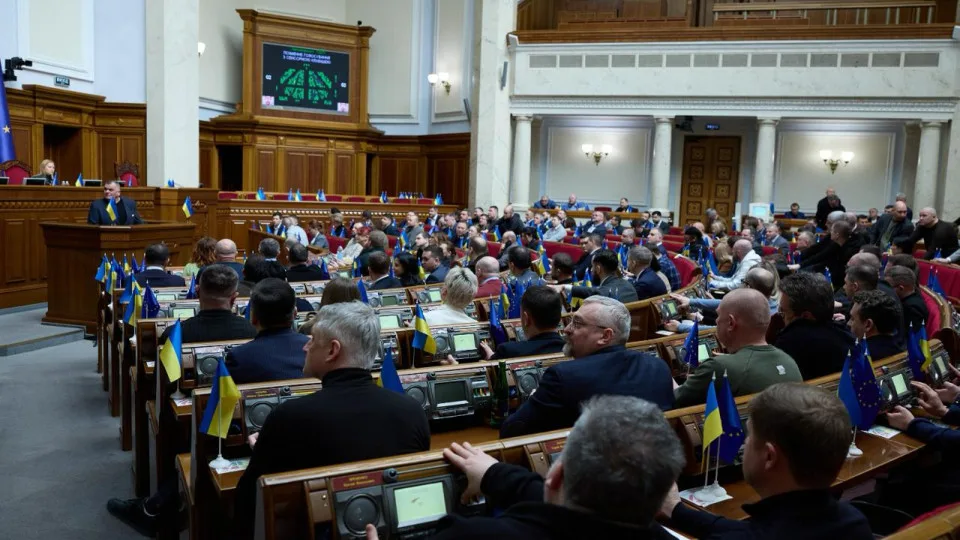










Ukraine plans to regulate the procedure for renaming geographical objects in the temporarily occupied territory of the Autonomous Republic of Crimea and the city of Sevastopol. For this purpose, draft law No. 15439 "On Amendments to Certain Laws of Ukraine Regarding the Procedure for Renaming Geographical Objects of the Autonomous Republic of Crimea and the City of Sevastopol for the Period of Their Temporary Occupation" has been submitted to the Verkhovna Rada.
The document is intended to enable the restoration of historical names to settlements and other geographical objects, as well as to eliminate toponyms associated with the communist totalitarian regime and Russian imperial policy.
Why there is a need for a new law
The authors of the draft law note that previously adopted laws on the decolonization of toponymy and condemnation of the communist totalitarian regime did not take into account the specifics of temporarily occupied Crimea and Sevastopol.
The procedures they provide assign the authority for renaming to bodies that, under occupation conditions, are actually unable to perform their functions. In addition, the legally established deadlines proved insufficient, especially under martial law conditions.
The explanatory note emphasizes that because of this, a number of settlements in Crimea still have names that contradict Ukrainian legislation, and an effective mechanism for their renaming during occupation is absent.
It is also noted that the Law "On the Restoration of the Rights of Persons Deported on a National Basis" has guaranteed since 2014 the right to restore historical names to settlements renamed after the deportation of peoples during the Soviet period. However, the mechanism for implementing this provision has not yet been introduced.
Moreover, the legislation does not define the procedure for restoring historical names to other geographical objects renamed due to deportations, nor the mechanism for restoring the historical toponymy of the indigenous peoples of Ukraine.
The authors of the document emphasize that the temporary occupation of Crimea should not hinder the restoration of historical names, as this is part of the state policy of de-occupation and reintegration of the peninsula.
What is proposed
The document proposes amendments to the laws "On the Procedure for Resolving Certain Issues of the Administrative-Territorial Structure of Ukraine," "On Geographical Names," "On Condemnation and Prohibition of Propaganda of Russian Imperial Policy in Ukraine and Decolonization of Toponymy," and "On Condemnation of Communist and National Socialist (Nazi) Totalitarian Regimes in Ukraine and Prohibition of Propaganda of Their Symbols."
For the period of temporary occupation of Crimea and Sevastopol, it is proposed that the Cabinet of Ministers be designated as the authorized body able to initiate or carry out the renaming of geographical objects if the relevant authorities cannot perform their powers.
Renaming will be carried out to restore historical names, particularly to those objects renamed after the deportation of peoples during the Soviet period, to restore the historical toponymy of the indigenous peoples of Ukraine, as well as to eliminate names containing symbols of the communist regime or Russian imperial policy.
It is envisaged that decisions will be made taking into account the recommendations of the central executive body in the field of national memory and after consultations with representative bodies of the indigenous peoples of Ukraine.
The Cabinet of Ministers must also approve the procedure for restoring historical names to such geographical objects. The draft law stipulates that the relevant renaming should be carried out within one year after the law comes into force.
For geographical objects, other than settlements, containing symbols of the communist regime or Russian imperial policy, obtaining a special conclusion from the central body in the field of national memory is required. Such a conclusion must be prepared within six months.
If the Cabinet of Ministers does not submit proposals to the Verkhovna Rada regarding the renaming of settlements in Crimea and Sevastopol within six months, the parliament will be able to make the corresponding decision. At the same time, the Verkhovna Rada must also consider the recommendations of the body in the field of national memory and the results of consultations with representative bodies of the indigenous peoples of Ukraine.
The authors of the document believe that the adoption of the law will contribute to the restoration of historical names to geographical objects in Crimea and Sevastopol, the cessation of the use of names associated with the communist regime, Russian imperial policy, or deportation of peoples, as well as the restoration of the historical toponymy of the indigenous peoples of Ukraine.
Subscribe to our Telegram channel t.me/sudua and to Google News SUD.UA, as well as to our VIBER and WhatsApp pages on Facebook and Instagram to stay informed about the most important events.