Can the family of a deceased retired judge receive the unpaid remuneration due to him: the position of the Supreme Court of Poland


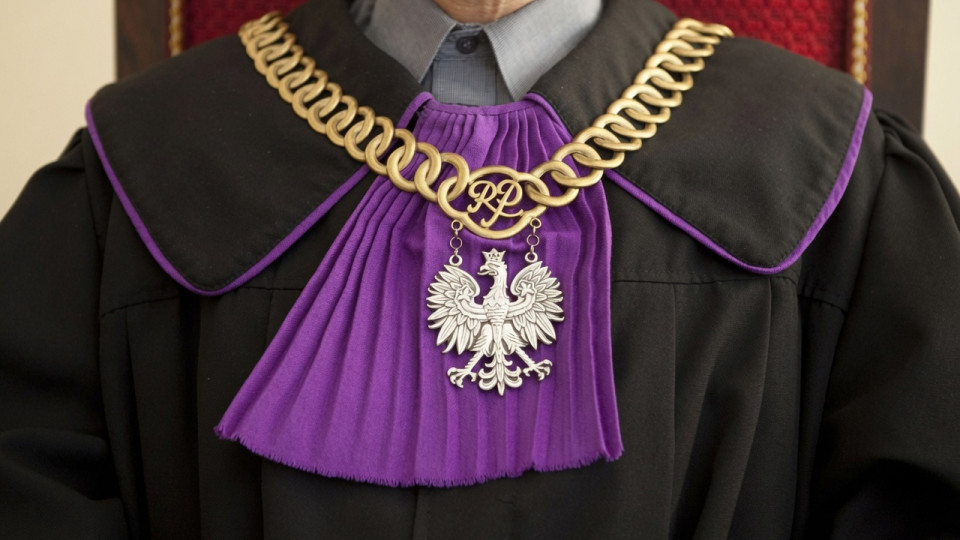










The Supreme Court of Poland concluded that claims for payment of judicial remuneration are subject to labor law provisions regarding the inheritance of unpaid amounts after the employee's death. This rule applies even if the judge passed away after retirement.
The court emphasized that labor law provisions may apply to judges as long as they do not hinder the performance of their public functions.
The judge's family demanded payment of the unpaid funds
The dispute arose after the wife and son of the deceased judge of the Court of Appeal in Łódź filed a lawsuit with the same court.
The judge died in August 2023. At the time of death, he was already retired — since May 3, 2023.
The plaintiffs requested to recover 10,870 zlotys each as part of the unpaid remuneration for the period from January to December 2022.
The lawsuit stated that the deceased's son was entitled to a pension due to the loss of a breadwinner. Therefore, the property rights related to the judge's service should pass to the wife and son in equal shares.
The family also indicated that the Court of Appeal had already paid the difference between the due and actually received remuneration to the judge, but other unpaid amounts remained.
Courts assessed the judge's status differently
The court of first instance recognized the claim as justified and referred to Article 63¹ §2 of the Polish Labor Code.
This provision stipulates that after the death of an employee, property rights arising from labor relations pass in equal shares to the husband or wife and other persons entitled to a pension due to the loss of a breadwinner. If there are no such persons, these rights become part of the inheritance.
The Court of Appeal in Łódź challenged this decision, pointing out that there is no unified approach in Polish legal doctrine regarding the legal nature of a judge's service.
As a result, two positions have emerged.
According to the first, special provisions regulating the status of judges are part of labor law. Therefore, the rules on inheritance of unpaid amounts apply regardless of whether the judge was active or already retired.
Supporters of the second position believe that after retirement, the judge's service relations terminate, so the Labor Code provisions on inheritance of labor payments cannot be applied.
Due to these discrepancies, the District Court in Łódź referred the matter to the Supreme Court of Poland for clarification.
The Supreme Court supported the heirs
The Supreme Court of Poland disagreed with the arguments about the impossibility of applying labor law.
The court ruled that Article 63¹ §2 of the Polish Labor Code also applies in cases where a judge died after retirement.
The decision states that if a judge has the right to go to court to protect claims arising from his service relations, after his death this right passes to the heirs.
The Supreme Court noted that a retired judge receives not a salary but a lifelong monetary allowance provided by law. At the same time, his right to judicial protection of claims related to his service remains valid.
Thus, heirs can claim payment of funds that belonged to the judge during his lifetime but were not paid to him.
What the Supreme Court explained
During the oral justification, Supreme Court judge Piotr Prusinowski stated that the key question was whether the special status of a judge affects the procedure for inheriting his property rights.
According to him, the Supreme Court proceeded from the premise that a judge has a special employee status.
"This is an exceptional status in which the public-law element of administering justice is combined with regulation arising from labor law. Labor law provisions apply to judges as long as they do not limit the performance of their public-law functions," emphasized Piotr Prusinowski.
Subscribe to our Telegram channel t.me/sudua and to Google News SUD.UA, as well as to our VIBER and WhatsApp pages on Facebook and Instagram to stay updated on the most important events.